O

Oringa was born in 1237 at Sancta Croce on the Arno to poor parents who died while she was young.

Read the essentials →
January 10 · Virgin

Bl. Oringa

Bl. Oringa, or Christiana

Oringa was born in 1237 at Sancta Croce on the Arno to poor parents who died while she was young.

Traditional feast

January 10
1914 / pre-1969 calendar, per Baring-Gould (1914)

Current feast

Not verified yet

Represents

Virgin

Their story

Adapted in modern English from Baring-Gould (1914) · original text below

Oringa was born in 1237 at Sancta Croce on the Arno to poor parents who died while she was young. She tended the cattle on her two brothers' farm, and the cows obeyed her voice. When her brothers arranged her marriage to a local farmer, she ran away across the river toward Lucca. Lost in a forest at night and terrified, she was comforted, the story says, by a tame little hare that lay in her lap all night and next morning led her to the road.

At Lucca she worked for a devout family, and stained her skin with walnut juice because her beauty drew unwanted attention. She made a pilgrimage to Mount Gargano, where the archangel Michael was said to have appeared. Coming back, some men tried to lead her astray at dusk, but, the story says, St. Michael appeared beside her and guided her to safety.

Later she went to Rome and served a devout widow named Margaret, who treated her like a daughter. In Rome she was called Christiana. She sometimes fell into ecstasies at prayer and was said to see the future. At seventy she was paralysed, and lay ill for three years. As she died, her face is said to have shone with heavenly light.

Early life

Selected sentences from the original account, unaltered.

The Blessed Oringa was born at Sancta Croce, on the Arno, in the year 1237, of poor parents, who died whilst she was young. The way was long, and night falling, the young girl lost the road, and wandered in a forest.

What they represent

How they teach us to live

Drawn from themes in the original account

Keep their day. Remember them on January 10 with a short prayer, and ask for their help.

Read more

The full original · 448 words

Read Baring-Gould’s full account

Baring-Gould’s sources: Her life, from an ancient MS., in the Convent of S. Clara, at Florence, was published by Silvanus Razzi, and reprinted in the Acta Sanctorum.

The Blessed Oringa was born at Sancta Croce, on the Arno, in the year 1237, of poor parents, who died whilst she was young. She kept the cattle on the farm occupied by her two brothers. The cows were taken by her into the woods to pasture, and they became so docile that they obeyed her voice in all things. When she grew to a marriageable age, her brothers determined that she should become the wife of a small farmer in the parish; but she ran away, and escaping across the river, made her way to Lucca. The way was long, and night falling, the young girl lost the road, and wandered in a forest. At the same time her fancy conjured up horrible forms to frighten her. She would had died of terror, but for the companionship of a little hare which played about her skirts, as tamely as if it had been a favourite kitten, and rested on her lap all night, when she cast herself down in weariness. Next morning, the hare gambolled before her, and led her into the road, after which it ran away. At Lucca she entered the service of a pious family. As she was annoyed on account of her beauty, she stained her skin with walnut juice. Having gone on a pilgrimage to Mount Gargano, on which the archangel Michael had once appeared, for she held the angels in great reverence; on her return, some men with whom she fell in on the road, towards dusk, misled her with evil purpose; but S. Michael himself flashing out of the darkness at her side, protected her, and led her in the right road. Later in life she visited Rome, and took service in the house of a pious widow, named Margaret, who treated her as a daughter rather than as a domestic. At Rome she was called Christiana, instead of her baptismal name of Oringa. She occasionally fell into ecstasies as she prayed, and saw into futurity. When aged seventy she was struck with paralysis, in which she lay three years. As she died, her face is said to have shone with a celestial light.

S. Balthazar , K., one of the Magi, circ. a.d. 54. S. Hyginus , Pope , a.d. 156. S. Leucius , B. of Brindisi, in Italy . S. Palæmon , H., 4th cent. S. Theodosius [name of Roman emperors; Theodosius I (379–395) made Christianity the state religion] , of Antioch, circ. a.d. 412. S. Theodosius the Cœnobiarch , a.d. 529. S. Vitalis , Monk of Gaza, 7th cent. S. Salvius , B. of Amiens, circ. a.d. 615. S. Egwin , B. of Worcester, circ. a.d. 720. S. Paulinus , Patr. of Aquileia , a.d. 803. (See Jan. 28.)
Feast days

Feast: January 10

Nine days · Free

Pray the novena
with us.

One short email a day for nine days. The day's prayer, a line from Bl. Oringa's story, and a nudge to keep going.

Also on January 10
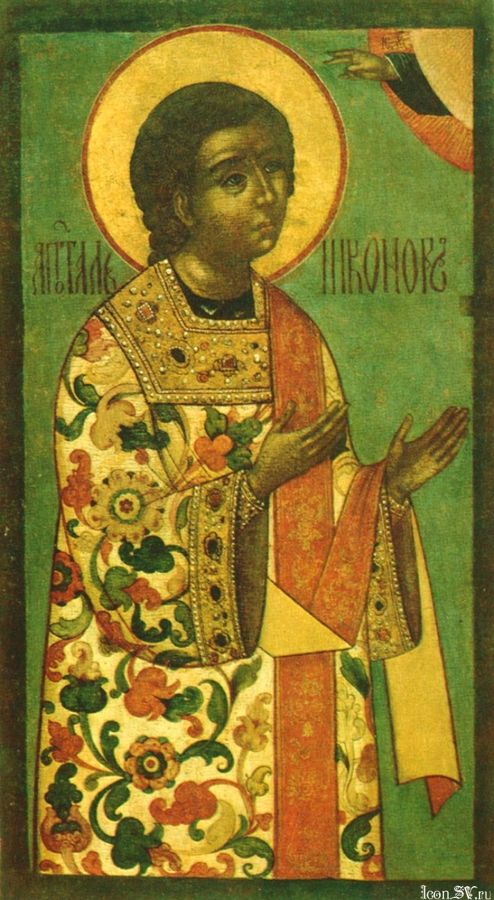
St. Nicanor

St. Nicanor

January 10 · Martyr
T

Sts. Thecla and Justina

January 10 · Virgin
St. Marcian

St. Marcian

January 10 · Priest
← All 1726 saints in the library
Sources & notes

Feast-day sources

Story sources

Sources

Credits

From Sabine Baring-Gould, The Lives of the Saints, new and revised edition (Edinburgh: John Grant, 1914; first edition 1872). Public domain.

From Sabine Baring-Gould, The Lives of the Saints, new and revised edition (Edinburgh: John Grant, 1914; first edition 1872). Public domain in the United States. Reproduced unedited, except for short bracketed notes in grey that we added to explain names and terms (“S.” is the old abbreviation for Saint). Some history and judgments reflect 19th-century scholarship.