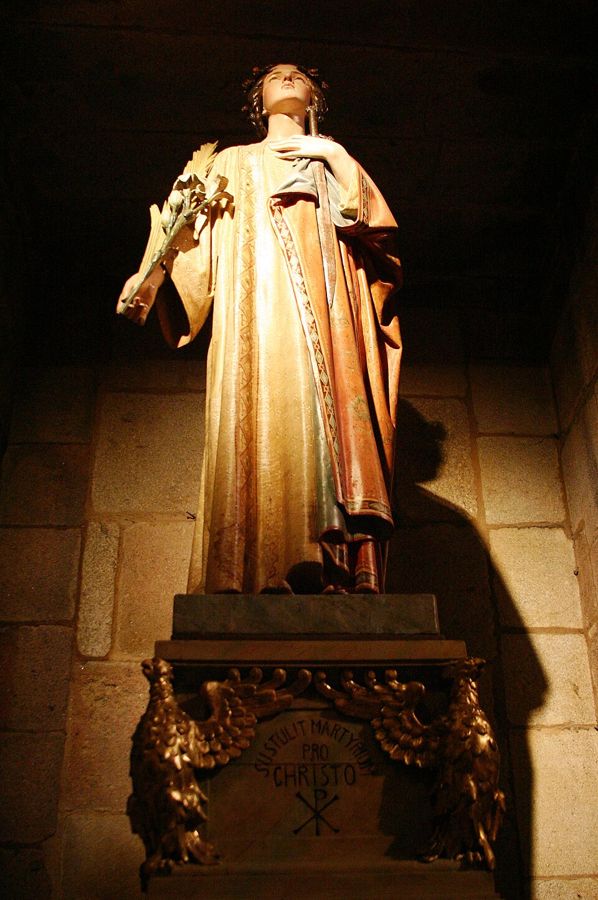
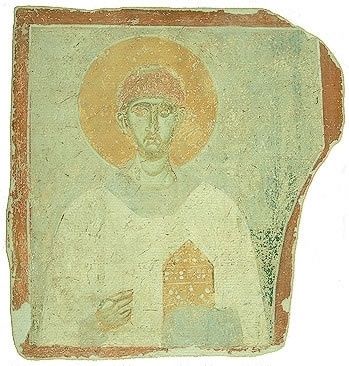
Anicetus was at once arrested, and ordered to be thrown to a lion in the amphitheatre.
Read the essentials →Anicetus was at once arrested, and ordered to be thrown to a lion in the amphitheatre.
August 12
Not verified yet
Martyr
Thin entry · the 1897 book gives only 109 words. We have not filled the gap with invented detail.
At this moment the young Photius, leaping over the barriers, ran across the arena, and kissed his uncle.
Make time for silence. Solitude and withdrawal to pray shape this life.
Keep their day. Remember them on August 12 with a short prayer, and ask for their help.
Anicetus was at once arrested, and ordered to be thrown to a lion in the amphitheatre. But the savage beast, instead of devouring him, crept up to him, and licked his face. At this moment the young Photius, leaping over the barriers, ran across the arena, and kissed his uncle. The emperor ordered both to prison, and they remained incarcerated for three years, forgotten. In 305 Diocletian [Roman emperor 284–305, who began the ‘Great Persecution’ of Christians in 303] abdicated the purple, and retired into Dalmatia. Either just before he left Nicomedia, or after, under a governor especially bigoted against the Christians, Anicetus and Photius were drawn out of prison, and thrown into the furnace heating the public baths of Nicomedia.
Feast: August 12
One short email a day for nine days. The day's prayer, a line from Sts. Anicetus and Photius's story, and a nudge to keep going.
From Sabine Baring-Gould, The Lives of the Saints, new edition in 16 vols. (London: John C. Nimmo, 1897–98); text from the Internet Archive scan (OCR, lightly cleaned; errors possible). Public domain.
From Sabine Baring-Gould, The Lives of the Saints, new edition in 16 vols. (London: John C. Nimmo, 1897–98); text from the Internet Archive scan (OCR, lightly cleaned; errors possible). Public domain in the United States. Reproduced unedited, except for short bracketed notes in grey that we added to explain names and terms (“S.” is the old abbreviation for Saint). Some history and judgments reflect 19th-century scholarship.