B

Faithfulness to Christ when it cost everything.

Read the essentials →
January 19 · Martyr

Sts. Blaithmac and…

Sts. Blaithmac and Companions

Faithfulness to Christ when it cost everything.

Traditional feast

January 19
1914 / pre-1969 calendar, per Baring-Gould (1914)

Current feast

Not verified yet

Represents

Martyr

Their story

Adapted in modern English from Baring-Gould (1914) · original text below

Blaithmac, son of Flann, was an Irish prince who gave up his inheritance to become a monk and abbot. He went to Iona, which was soon raided by Northmen (Vikings; the source also calls them Danes). Wanting martyrdom, he stayed, and urged those who feared death to flee to the mainland.

The raiders burst in during Mass, killed the monks, and demanded the shrine of St. Columba, which had been hidden. He said he did not know where it was and would not tell if he did, and was killed. His name comes from blaith, a flower, so in Latin he is Florigenius or Florus. The Irish annals put his death about 824; the sources differ on the exact year.
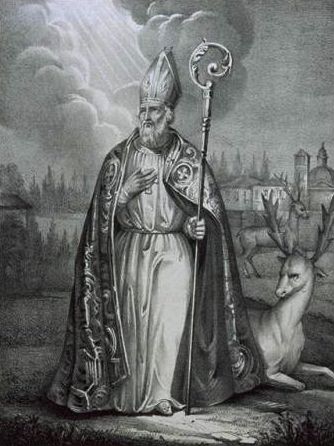
Early life

Selected sentences from the original account, unaltered.

S. Blaithmac was a native of Ireland, son of Flann, perhaps one of the southern Niells, princes of Meath, the names of Flann and Blaithmac having been common in that family.

What they represent

How they teach us to live

Drawn from themes in the original account

Learn from the kind of life it was. Faithfulness to Christ when it cost everything.

Keep their day. Remember them on January 19 with a short prayer, and ask for their help.

Read more

The full original · 253 words

Read Baring-Gould’s full account

Baring-Gould’s sources: Irish Martyrologies. Authority:—The Acts of S. Blaithmac written in verse by his contemporary Walafrid Strabo, and the Irish Annals.

S. Blaithmac was a native of Ireland, son of Flann, perhaps one of the southern Niells, princes of Meath, the names of Flann and Blaithmac having been common in that family. He was heir to a principality, but he abandoned his prospects in this world to become a monk, and afterwards an abbot. Blaithmac had an ardent desire to visit foreign parts, but he was prevented by his friends and companions from leaving Ireland. At length he passed over to Iona, which was shortly after invaded by a party of Northmen. As he was anxious to receive the crown of martyrdom, he determined to remain there whatever might happen, and by his example induced some others to stay with him, advising those who feared death to take refuge on the mainland. While he was celebrating mass the Danes [Viking raiders from Scandinavia] burst into the church, and having slaughtered the monks, demanded of the abbot where was the precious shrine of S. Columba [Irish abbot of Iona (d. 597), apostle of Scotland]. This had been carried off and concealed underground, where the abbot knew not. Accordingly he answered that he was ignorant where it was, and added that even if he had known, he would not have pointed out the spot to them. They then put him to death. The Ulster Annals give his martyrdom in 825-828. The Irish annals generally agree in fixing his death at 823 ( a.d. 824). Mabillon was wrong in supposing it took place in 793. Blaithmac is derived from Blaith, a flower; hence his latinized name is Florigenius or Florus.

Feast days

Feast: January 19

Nine days · Free

Pray the novena
with us.

One short email a day for nine days. The day's prayer, a line from Sts. Blaithmac and…'s story, and a nudge to keep going.

Also on January 19
G

St. Germanicus

January 19 · Martyr
M

Sts. Maris

January 19 · Martyrs
St. Bassian of Lodi

St. Bassian of Lodi

January 19 · Bishop
← All 1726 saints in the library
Sources & notes

Feast-day sources

Story sources

Sources

Credits

From Sabine Baring-Gould, The Lives of the Saints, new and revised edition (Edinburgh: John Grant, 1914; first edition 1872). Public domain.

From Sabine Baring-Gould, The Lives of the Saints, new and revised edition (Edinburgh: John Grant, 1914; first edition 1872). Public domain in the United States. Reproduced unedited, except for short bracketed notes in grey that we added to explain names and terms (“S.” is the old abbreviation for Saint). Some history and judgments reflect 19th-century scholarship.