H

A whole community that stayed faithful to Christ when it cost everything.

Read the essentials →
March 16 · Bishop, Martyr, Deacon, Martyrs

Sts. Hilary

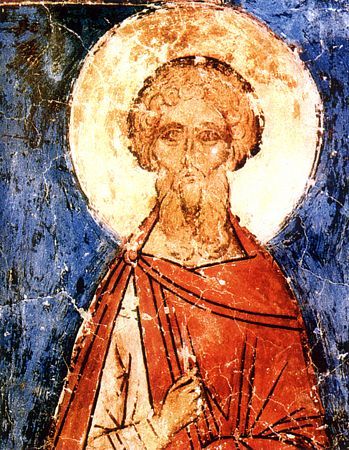
Sts. Hilary, Tatian and Companions

A whole community that stayed faithful to Christ when it cost everything.

Traditional feast

March 16
1914 / pre-1969 calendar, per Baring-Gould (1897)

Current feast

Not verified yet

Represents

Bishop
Martyr
Deacon
Martyrs

Their story

Adapted in modern English from Baring-Gould (1897) · original text below

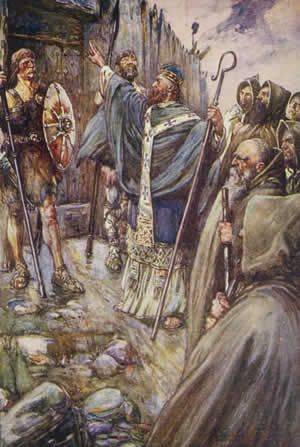
Hilary, bishop of Aquileja in northern Italy, had a deacon, Tatian, whom he made archdeacon. Under the emperor Numerian a pagan priest, Monofantus, got authority from the governor Beronius to bring the bishop to trial. He found Hilary reading with Tatian and told him the governor wanted him; Hilary said they would go in the name of the Lord Jesus Christ.

Hilary came in smiling and told the governor he was bishop of the Christians there. Ordered to sacrifice, he said he had worshipped the living God since childhood and could not worship demons. When the governor scoffed that Christ had been crucified, Hilary answered that if he knew the power of the cross he would abandon idols. Threatened with losing his tongue, he told the governor to do it rather than threaten. He was beaten in the temple of Hercules, his back burned with hot coals, rubbed with haircloth and doused with vinegar and salt, and thrown into prison. Tatian was beaten and imprisoned with him.

That night they prayed and sang, and an earthquake threw down the temple of Hercules. The next day Beronius had Hilary, Tatian, and three Christian prisoners, Felix, Largus and Dionysius, put to death, some beheaded and some run through with swords.

Early life

The book says little or nothing about early life. This is how the account begins.

Saint Hilary, bishop of Aquileja, in Northern Italy, had a deacon named Tatian, whom he appointed to be his archdeacon. In the reign of Numerian, during which they flourished, there was at Aquileja a heathen priest, named Monofantus, who went before the governor Beronius, and obtained from him authority to hale the bishop before his tribunal. Then Monofantus went to the house of Hilary, and found him engaged in reading, together with his deacon Tatian.

What they represent

How they teach us to live

Drawn from themes in the original account

Pray a little every day. Prayer runs all through this account.

Learn from the kind of life it was. A whole community that stayed faithful to Christ when it cost everything.

Read more

The full original · 440 words

Read Baring-Gould’s full account

Baring-Gould’s sources: Roman Martyrology and that of Usuardus. Notker mentions Hilary alone. Hilary and Tatian in that of Bede, and some copies of that of S. Jerome. Authority:—the Acts which are genuine.

Saint Hilary, bishop of Aquileja, in Northern Italy, had a deacon named Tatian, whom he appointed to be his archdeacon. In the reign of Numerian, during which they flourished, there was at Aquileja a heathen priest, named Monofantus, who went before the governor Beronius, and obtained from him authority to hale the bishop before his tribunal. Then Monofantus went to the house of Hilary, and found him engaged in reading, together with his deacon Tatian. He said, "The Governor wants you." Hilary said, "What is that you say, friend?" "I have already said once, the governor wants you." S. Hilary answered, "We will go in the Name of our Lord Jesus Christ." And when they had come to the place of judgment, and the governor saw Hilary enter with a smiling countenance, he asked, "What is thy name?" The bishop answered, "My name is Hilary, and I am bishop of the Christians here." "Well," said the governor, "the command has gone forth that all are to sacrifice to the immortal gods. Therefore be speedy, obey, and go thy way." S. Hilary replied, "From my childhood I have learnt to sacrifice to the living God, and to worship Jesus Christ with pure heart; I cannot worship demons." The governor said, "Christ, whom thou sayest that thou worshippest, was crucified by the Jews." Hilary replied, "If thou knewest the virtue of His cross, thou wouldest leave the error of idols, and adore Him who would heal the wounds of thy soul." "Come," exclaimed the governor, "do as I bid, or I will have thy tongue cut out." "Sir," answered the bishop, "do so, instead of threatening me." Then Beronius had him drawn into the temple of Hercules, and beaten with rods. And as Hilary constantly refused to adore the idols, the governor ordered his back to be burnt with red hot coals, then the raws to be rubbed with coarse hair-cloth, and vinegar and salt to be poured into the wounds. After which he was taken and cast into prison. Tatian, the deacon, was next brought up to be tried, he was sentenced to be beaten, and thrown into prison with his bishop. And during the night they prayed, and sang praises to God, the Lord of heaven and earth; and as they prayed there was an earthquake, and the temple of Hercules was shaken down.

Then, on the morrow, Hilary the bishop, and Tatian the deacon, and Felix, Largus and Dionysius, three Christians then in the prison, were slain by order of Beronius, some of them by having their heads smitten off, and some by having swords thrust through their breasts.
Feast days

Feast: March 16

Nine days · Free

Pray the novena
with us.

One short email a day for nine days. The day's prayer, a line from Sts. Hilary's story, and a nudge to keep going.

Also on March 16
St. Julian of Anazarbus

St. Julian of Anazarbus

March 16 · Martyr
P

St. Papas

March 16 · Martyr
St. Columba

St. Columba

March 16 · Virgin, Martyr
← All 1726 saints in the library
Sources & notes

Feast-day sources

Story sources

Sources

Credits

From Sabine Baring-Gould, The Lives of the Saints, new edition in 16 vols. (London: John C. Nimmo, 1897), digitized text from Project Gutenberg. Public domain.

From Sabine Baring-Gould, The Lives of the Saints, new edition in 16 vols. (London: John C. Nimmo, 1897), digitized text from Project Gutenberg. Public domain in the United States. Reproduced unedited, except for short bracketed notes in grey that we added to explain names and terms (“S.” is the old abbreviation for Saint). Some history and judgments reflect 19th-century scholarship.