M

These brave victims of the plague in Alexandria, who died through ministering to pest-stricken heathens and Christians alike, are commemorated by the Church as examples to all whos

Read the essentials →
February 28 · —

Sts. Martyrs in the…

Sts. Martyrs in the Plague at Alexandria

These brave victims of the plague in Alexandria, who died through ministering to pest-stricken heathens and Christians alike, are commemorated by the Church as examples to all whos

Traditional feast

February 28
1914 / pre-1969 calendar, per Baring-Gould (1897)

Current feast

Not verified yet

Represents

Feast

Their story

Adapted in modern English from Baring-Gould (1897) · original text below

These are the Christians of Alexandria who died caring for plague victims, Christian and pagan alike, and the Church honours them as examples for all who tend the sick. Dionysius, the patriarch, described the epidemic in an Easter letter: after exile, persecution, war and famine, the city was filled with groans, and there was hardly a house without a death.

Most of the faithful, he wrote, nursed the sick without fear or rest and died with those they served; priests, deacons and lay people were among them, and he thought their deaths little short of martyrdom. They took up the bodies of the dead in their arms, closed their eyes, washed and clothed them for burial, and soon received the same care themselves.

Dionysius compared the city's grief to the night the first-born of Egypt were killed. He wrote that while others kept festival, the Christians mourned. Many who had nursed others back to health caught the disease and died. Those who survived followed the example of those who had gone before them.

Early life

Selected sentences from the original account, unaltered.

As when the first-born of Egypt were slain, so is it now; there is a great lamentation, for there is not a house in which is not one dead.

What they represent

How they teach us to live

Drawn from themes in the original account

Look after people who are sick or suffering. The sick come up again and again in this story.

Stay faithful when it costs you. This account is about holding firm under pressure.

Build up the community you belong to. This life was lived with and for a community.

Read more

The full original · 400 words

Read Baring-Gould’s full account

Baring-Gould’s sources: Roman Martyrology. Authority:—A paschal letter by Dionysius, patriarch of Alexandria, quoted by Eusebius. lib. viii. c. 21, 22.

These brave victims of the plague in Alexandria, who died through ministering to pest-stricken heathens and Christians alike, are commemorated by the Church as examples to all whose office or charity calls them to attend to the sick. Dionysius, the patriarch [the title of the bishops of the great ancient sees: Rome, Constantinople, Alexandria, Antioch, Jerusalem], writes of the pestilence which succeeded war and famine in Alexandria, in one of his Easter letters, "To other men the present is a fit season for a festival, but now to us all things are filled with tears; all are mourning, and by reason of the multitudes, already dead and dying, the whole city resounds with groans. As when the first-born of Egypt were slain, so is it now; there is a great lamentation, for there is not a house in which is not one dead. I wish this were all, but we have undergone other calamities before this plague. First, we were driven into exile, and persecuted, and put to death; then came war and the famine, which, indeed, we and the heathen endured alike; and now we are assailed by this pestilence, a calamity to the heathen more dreadful than anything else, but not so to us, but rather a school to try us. Most of our brethren, by their exceeding great love and brotherly affection, not sparing themselves, were constant in their attendance on the sick, ministering to their wants without fear and without cessation, and they have departed most sweetly with those to whom they ministered. Many also, who had healed others, fell victims themselves. The best of our brethren have departed this life in this way, some were priests, others deacons, and some laity of great commendation. This death, with the piety and ardent faith which attended it, appears to be but little inferior to martyrdom itself. Our people took up the bodies of these saints with their open hands and on their bosoms, cleansed their eyes and closed their mouths, carried them on their shoulders, and composed their limbs, and decently washed and clothed them for burial, and those who did this themselves shared in receiving the same offices. Those that survived always followed those going before them. But it was different with the heathen. They repelled those who began to sicken, and avoided their dearest friends. They would cast them out into the roads half-dead, or throw them out when dead without burial, shunning all communication with the sick and infected."
Feast days

Feast: February 28

Nine days · Free

Pray the novena
with us.

One short email a day for nine days. The day's prayer, a line from Sts. Martyrs in the…'s story, and a nudge to keep going.

Also on February 28
N

Sts. Nymphas and Eubulus

February 28 · Feast
S

Sts. Symphorian and…

February 28 · Martyrs
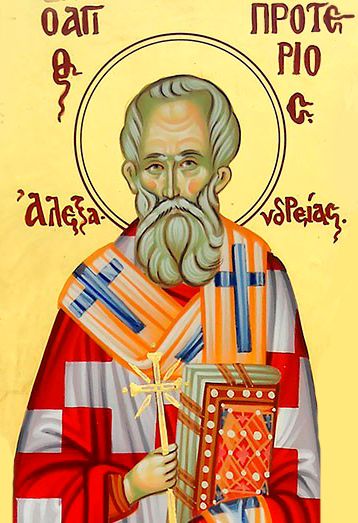
St. Proterius of Alexandria

St. Proterius of…

February 28 · Martyr, Patriarch
← All 1726 saints in the library
Sources & notes

Feast-day sources

Story sources

Sources

Credits

From Sabine Baring-Gould, The Lives of the Saints, new edition in 16 vols. (London: John C. Nimmo, 1897), digitized text from Project Gutenberg. Public domain.

From Sabine Baring-Gould, The Lives of the Saints, new edition in 16 vols. (London: John C. Nimmo, 1897), digitized text from Project Gutenberg. Public domain in the United States. Reproduced unedited, except for short bracketed notes in grey that we added to explain names and terms (“S.” is the old abbreviation for Saint). Some history and judgments reflect 19th-century scholarship.