Read Baring-Gould’s full account
Baring-Gould’s sources: Roman Martyrology, Sacramentary of S. Gregory, ancient Roman Martyrology, Ado. Notker, Usuardus, dec. Authority: — The Acts. There exist two versions of these, one given by Ado is short, the other an amplification, the interpolations being for the most part in the interrogatories. The Acts, as given by Ado, are not, however, in their genuine form; but have unquestionably been embroidered on by fancy. It is, however, probable that there is some foundation in fact for these Acts.] Rufina and Secunda were two virgin sisters in Rome, daughters of Asterius and Aurelia, of honourable family. They were betrothed by their parents to two young patricians, Armen tarius and Verinus, who, like the maidens, were Christians. But when the persecution of Valerian and Gallienus broke out, the two young men renounced their faith to secure their lives. When Rufina and Secunda heard this, they refused to accept them as their husbands, and started in a closed carriage 1 for a villa that belonged to them in Tuscany. Armentarius and Verinus at once appealed to the Count Archisilaus, who arrested them on their road, and they were brought back to Rome, and led before the prefect of the city, Junius Donatus.* He tried ' " Basternse pergebant vehiculo.*' the fourth of Valerian. If the Acts bad been forged, there certainly would have been a mistake in this. Consequently we may conclude that the Acts, as they originally stood, were genuine | but we have only an Interpolated edition. July io.J SS. Rufina and Secunda.
Sin vain to persuade them to renounce their religion, and marry the young patrician renegades. Their constancy aroused his fury. He ordered Secunda, the youngest, to be scourged before her elder sister, hoping to melt the heart of Rufina, and turn her from her purpose through compassion for the young girl.
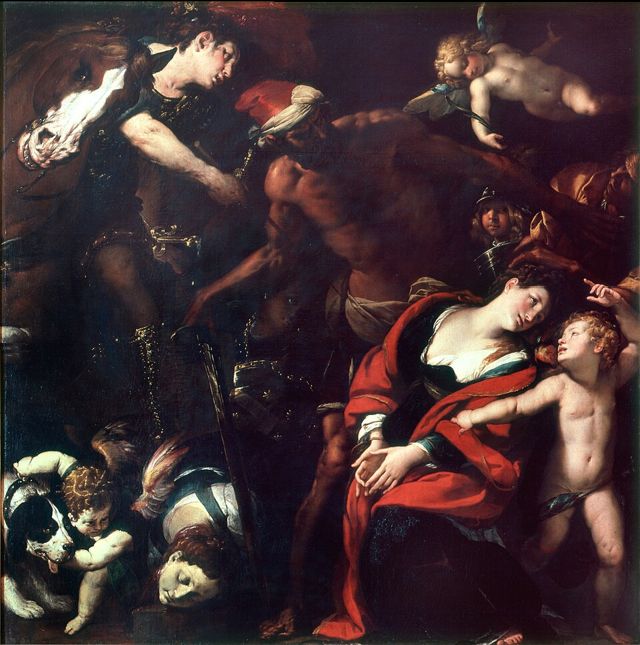
But Rufina cried out, when the first strokes were laid upon her tender white shoulders, “ Monster 1 why dost thou glorify my sister and dishonour me ?” Then Junius Donatus said, “ You are more of a fool than your sister.,, “I am no fool,” answered Rufina, “nor is my sister. But as we are both Christians let us both be beaten.” Finding that nothing he could do would change their purpose, the prefect reluctantly gave orders for their execution on the Via Cornelia, at a place called Buxo. One was decapitated, the other beaten to death. Thus, no doubt, stood the old and genuine account of the martyrdom of these virgins; but it has suffered interpolation; according to which the prefect ordered the damsels to be thrown into the furnace of the public baths, and when the fires died out, and left the maidens unhurt, he had them both attached by the necks to one stone and thrown into the Tiber; but when the water refused to drown them, he ordered them to be taken out upon the Cornelian Road and executed. These additions are so common to the Acts of the Martyrs, which were falsified and enlarged by marvels always monotonously alike, and uniformly preposterous, that we may safely reject them. The main framework is almost certainly trustworthy.
The relics [the bodily remains of a saint, or objects they used, kept with honor] of these martyrs were discovered by pope Anastasius IV., and are now in the Lateran [St. John Lateran, the pope’s cathedral in Rome] basilica of SS. Rufina and Secunda.
Unix i*.