Read Baring-Gould’s full account
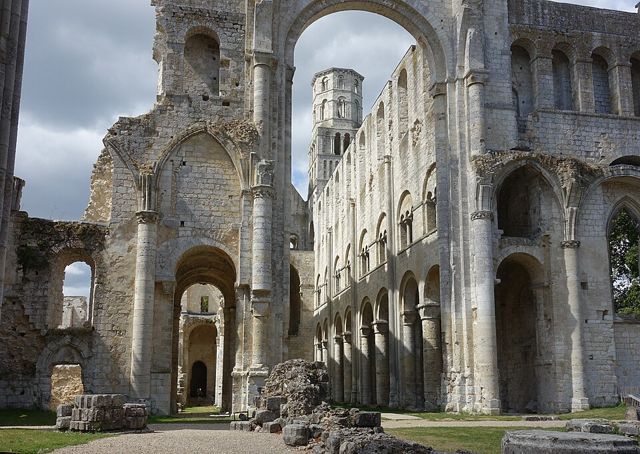
Baring-Gould’s sources: Roman Martyrology, Saussaye's Gallican Martyrology, the Belgian Martyrology of Molanus, &c. Authority: — A Life, by Fulbert, but what Fulbert does not transpire. Mabillon attributed it to Fulbert of Rouen who wrote the life of S. Ouen, and lived in 1080, but it is far more probable that the author was Fulbertus Peccator, monk of Jumieges in 1100. A Life written after 930, by a monk of Jumi&ges was used by Fulbert in his composition, or is a contraction from that of Fulbert.] S. Aichard was bom about the year 624 in Poitiers, of noble parents named Anskar and Ermena; and he was fSept. 15, educated by Ansfried, monk of S. Hillary at Poitiers. On his introduction to Ansfried, the master asked what he was to teach the boy. Aichard abruptly broke in, “Of God and agriculture.” He was then ten years old. After two years he asked leave to revisit his parents; and having obtained permission, he returned home, and took the opportunity of making a pilgrimage to the tomb of S. Jovinus in the Abbey of Ansion, now S. Jouin, near Le Tou£, where he performed his sacred duties “ very curiously,” says his anonymous biographer. Then he requested the abbot to shave his head and give him the monastic habit. The abbot accorded him what he desired, and he took up his residence in the monastery. By the time he had reached the age of fourteen, sixteen, or twenty — the biographers or their copyists are not agreed as to the age — he surpassed even the old men in sanctity. Then he heard one day a voice say, “ They shall go from strength to strength,” and he thought it was a call to him to make some decided advance in his monastic life. He resolved, therefore, to build a monastery on his father’s estates, and as his parents gave their consent, he erected one at Quincy, and affiliated it to the abbey of Jumibges. On the death of S. Philibert, Abbot of Jumieges, in 684, S. Aichard was elected in his room. It is hardly necessary to say that he was the model of an abbot, full of sanctity. He was humble, zealous for the observance of the rule, and full of devotion. Several stories are recorded of him. One Sabbath day (Saturday) when the monks have their hair cut and heads shaved, the hour of nones had past when the abbot found that his head also wanted cropping, so lie called a monk to him to bring his scissors and clip his locks. Now, according to the rule, all barber’s work must be done beiore nones. Scarce had the monk begun clipping the hair of S. Aichard, when the devil entered into the barber, and proceeded to fling him down, sept iS.] SS. Emilias and Jeremias. 251 and howl and foam at the mouth. S. Aichard promptly got the devil into a corner, and asked him why he had dared to i possess a monk. The Evil One replied, “ Because the monk j had transgressed the rule.5' “ It was my fault, I told him to do so,” said the abbot. “ And now, in punishment for my sin, I will wear my hair cropped on one side and long on the other. As for you, depart to hell.” The devil complied with the order — or, at all events, ceased to possess the monk. Then, S. Aichard, rushing to the church, flung himself on the floor before all the brethren, and, with broken heart, and a profusion of tears, implored God not to destroy him body and soul in eternal flames, because he had let his hair be cut after three o’clock on a Saturday afternoon.1 After he had bitterly bewailed his miserable fall, a sign of pardon was granted him, the hair on the cropped side of his head grew the same length as the hair on the other side. S. Aichard died about the year 867, at the age of fifty-three-