Their story
Adapted in modern English from the Catholic Encyclopedia (1913) · original text below
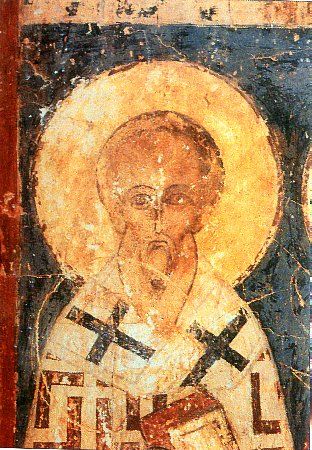
Alexander was first a bishop in Cappadocia. Under Alexander Severus he was imprisoned for the faith. When he was released he went to Jerusalem, and with the consent of all the bishops of Palestine the city's aged bishop made him stay as his coadjutor. Butler says he had studied with Origen at the great Christian school of Alexandria. Alexander allowed Origen, though still a layman, to preach in the churches, defended himself when he was criticized for it, and later ordained him a priest. He was especially praised for the library he built at Jerusalem.
In the persecution of Decius, despite his age, he was carried off to Caesarea in chains with other bishops. Historians wrote that 'the glory of his white hairs and great sanctity formed a double crown for him in captivity'. He survived many tortures. When wild beasts were brought to devour him, some licked his feet. Worn out by his sufferings, he died in prison in 251.
Early life
The book says little or nothing about early life. This is how the account begins.
Thin entry · the 1897 book gives only 74 words. We have not filled the gap with invented detail.
Alexander, a Cappadocian bishop, having come to Jerusalem to venerate the holy places, was elected by revelation of God to take the see of Jerusalem in place of Narcissus, who, on account of his extreme old age, was unable to execute the functions of his office. In the persecution of Decius, when Alexander was advanced in years, with white hair, he was conducted to Cæsarea, where he was imprisoned, and died in his dungeon.
From the Catholic Encyclopedia
1913 · 275 words
Alexander, Saint, who died in chains after cruel torments in the persecution of Decius [Roman emperor 249–251, who ordered everyone to sacrifice to the gods], was first Bishop of Cappadocia [a region of central Turkey], and was afterwards associated as coadjutor [an assistant bishop who will succeed the current one] with the Bishop of Jerusalem, who was then 116 years old. This association came about as follows: Alexander had been imprisoned for his faith in the time of Alexander Severus and on being released came to Jerusalem, where he was compelled by the aged bishop to remain, and assist him in the government of that see. This arrangement, however, was entered into with the consent of all the bishops of Palestine. It was Alexander who permitted Origen, although only a layman, to speak in the churches. For this concession he was taken to task, but he defended himself by examples of other permissions of the same kind given to to Origen himself elsewhere, although then quite young. Butler says that they had studied together in the great Christian school of Alexandria. Alexander ordained him a priest. Especial praise is given to Alexander for the library he built at Jerusalem. Finally, in spite of his years, he, with several other bishops, was carried off a prisoner to Cæsarea, and as the historians say, "the glory of his white hairs and great sanctity formed a double crown for him in captivity". He suffered many tortures, but survived them all. When the wild beasts were brought to devour him, some licked his feet, and others their impress on the sand of the arena. Worn out by his sufferings ho died in prison. This was in the year 251. His feast is kept by the Latins on 18 March, by the Greeks, 22 December.