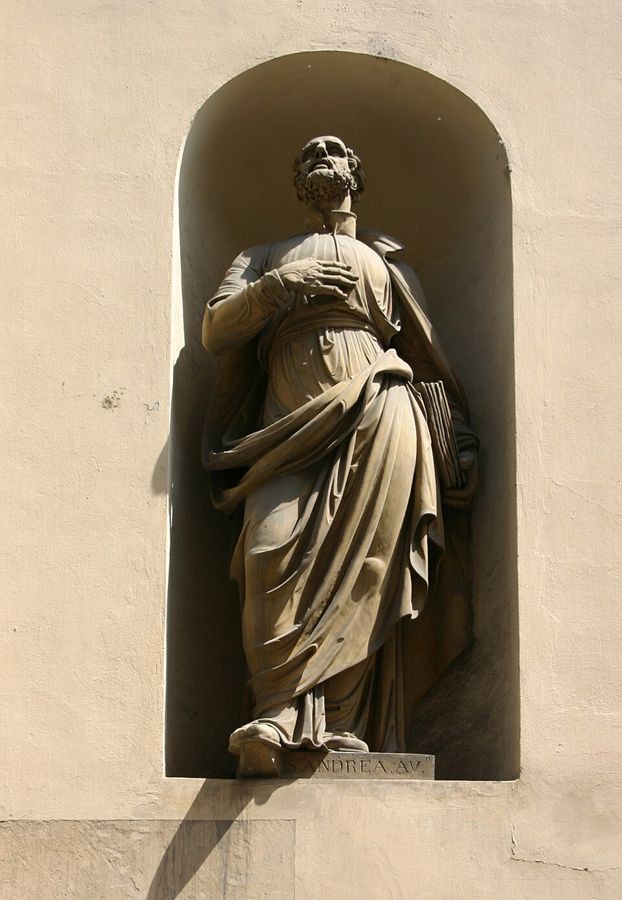
Baring-Gould’s sources: Roman and Theatine Martyrologies. Authorities: — The Annals of the Theatines, and a Life written shortly after his death by the Theatine Giovani Battisd Castaldo, Naples, 1613.] Giovanni and Margherita Avellino, a worthy couple at Castronuovo, in the kingdom of Naples, were given in 1521, a son, whom they called Lancelot. After his first studies were completed, he was sent to Venice to complete a course in the humanities and in philosophy. He was a handsome (Not. to.
…youth, and it is thought that his good looks laid him open to assault by female admirers, but his virtue was unshaken. On his return to Avellino, his nurse, considerably advanced in age, one would suppose, and with her beauty long ago impaired by a burning Italian sun, exhibited the delight and pride which naturally fills the breast of a nurse when her charge returns from a long absence, tall, handsome, and well educated. Her gushing affection and demonstrative admiration startled Lancelot, who, mistaking the poor old woman's love for passion, and regarding her advances as soliciting to evil, took to his heels, and going to the bishop of Castronuovo, asked him to confer on him sacred orders. The bishop consented, ordained him, and he went to Naples to study jurisprudence. He took his doctor’s degree, and was then ordained priest.
He was appointed thereupon to reform a convent at Naples which had fallen into such a condition of disorder as to cause general scandal. Indeed, it had come to such a pass, that it was regarded as a place of ill fame rather than as a convent of virgins. It shows how highly the bishop must have esteemed and trusted him, to have chosen such a young and remarkably handsome priest to convert a convent of looseliving nuns. Lancelot Avellino had a strict guard kept on the nuns, and forbade the clandestine opening of the wicket to men. Those who had been accustomed to visit the nuns were highly incensed at this interference with their liberties and pleasures; and one night, as Avellino issued from a church, a man fell upon him, and struck him in the face so that his nose bled. The affair was exaggerated into a murderous attack with a sword, and the bloody nose into a frightful wound, but as no scar was visible where the pretended gash had been made, those who persisted in believing the magnified version of the incident added to it that every trace of the wound had been made miraculously to disappear. The Nov. xa] •S’. A ndrew A vellino.
supposed assassin probably meant to do no more than frighten the reforming priest The Viceroy of Naples offered to take the matter up and have it investigated, but as Avellino could not identify the man who had struck him, and no one else had seen the fellow, he generously besought the viceroy not to prosecute the inquiry.
Avellino exercised his functions in court as doctor of jurisprudence, gaining friends and reputation. But one day, in order to carry his client’s case, he did not scruple to assert what he knew to be a lie. When he returned home and opened his Bible, his eye fell on the eleventh verse of the first chapter of Wisdom, “Os quod mentitur occidit animam ” (The mouth that telleth lies slayeth the soul). He was so filled with compunction, and so conscious that if he continued a lawyer his mouth would have to accustom itself pretty freely to tell lies, that he determined to renounce the bar for ever. At the same time — being then thirty-five years old — he entered the Order of Theatines, or Regular Clerks, and took the name of Andrew, by which he was to be known to fame. His consecration to God in the Order was made on the Vigil of the Assumption, 1556. When his novitiate was ended he asked permission to visit Rome, not that he might study there the precious relics [the bodily remains of a saint, or objects they used, kept with honor] of antiquity, or admire the wonders of art, or tread the ground every inch of which is redolent with historical association, but entirely, solely, that he might accumulate an overflowing store of indulgences by visiting all the stations. On his return he was made master of the novices, and he held this office for ten years. Then he was elected superior of the Theatine house at Naples. He was sent later to found two new houses, one at Milan, the other at Piacenza. At the former he made acquaintance with S. Charles Borromeo; at the latter he preached so eloquently that he converted several harlots. His success in this direction caused some discontent, and [Nov. xo.
complaints were made to the Duke of Parma, who sent for him. The Duchess of Parma was so pleased with Avellino, that she constituted him her confessor [in old usage, a saint who was not martyred, or who suffered for the faith without being killed] and director. The Duke sent him back to Piacenza, and he remained there in charge of the house he had founded. After a while he was appointed superior to San Paolo at Naples, one of the largest monasteries of the Order. There he preached vigorously against heresy. Lutheran and Calvinistic ideas had infiltrated even Neapolitan society, and there were not a few disposed to rebel against Roman obedience. Some dared whisperingly to scoff at the doctrine of Transubstantiation. Avellino took the matter up, appealed to the secular arm, and had the satisfaction of consigning one at least of the offenders to the flames. He excited the prejudices of the ignorant vulgar to vehement hostility, and their faith to fervid superstition, by assuring them that one of the heretics had gone to the altar to receive communion to escape the secular arm, but had conveyed the host away in his pocket-handkerchief, and had found it miraculously dabbled with blood. The man, as Andrew pretended, had come to him in alarm and remorse. The name of the offender Andrew declined to give up, lest he should have to expiate his crime at the stake. One day he was carrying the Blessed Sacrament to a dying man. A storm raged, the torches of the acolytes were blown out, but the gleam of the incessant lightning flashing on his surplice was taken to be a supernatural irradiation compensating for the extinction of the torches. Before he left the superiorship he had the satisfaction of seeing another house of his Order built in Naples, by the Princess Salmone, and dedicated to Our Lady of the Angels. On the day that the first stone was laid a particle of dust, or a fly, got into the eye of a lady of distinction, and caused the organ great inconvenience. Avellino got the particle out of her eye, and from that moment it miraculously became Nov. wo -S’. Andrew Avellino. 237 easier. One day he was on his way to visit Prince Stilianni on a hired horse. Something startled the animal, and he shied and threw Avellino on the pavement. The saint's foot was entangled in the stirrup, and he would have been infallibly injured had not two bystanders rushed to his assistance, caught the horse by the head, disengaged Avellino’s foot, and remounted him in his saddle. In falling, Andrew had invoked S. Dominic and S. Thomas Aquinas, and he was pleased to fancy that the two passers-by in the street who had rushed to his aid were not simple Neapolitan contadini, or citizens, but the august saints themselves, who had precipitated themselves from Paradise to assist him the moment the horse shied.
At the age of eighty-eight he fell ill, and became delirious. He thought he saw devils crowding round him, and he rushed into bed to escape their claws. One red-hot devil, oxidizing all over in bright sparks, caused him special alarm, and he shrieked for divine help. As this burning devil was making at him his guardian angel quietly slipped behind the demon, caught him with a snap-collar, and drew him backwards out at the door, howling, smoking, and exhaling a sulphurous odour. Andrew Avellino died, or at all events his pulse stopped, on November 10th, 1608. Crowds came to see him, his hair and beard were cut off and distributed as relics. The bier on which he was to be carried proved “miraculously” too short, though a tall man had been carried to burial on it a few days before. He was placed in the church and remained unburied for an unusual length of time. His cheeks did not lose their colour, nor did his limbs lose their flexibility; his eyelids were lifted, and his eyes appeared as bright as when he was alive. Blood and matter exuded from some sores he had on his head and oins, and three bottlesful of this precious secretion were collected. At last he was buried in a vault behind the altar; and, as we may shrewdly suspect, was buried alive when he was in a cataleptic fit His attendants were too anxious to regard the condition of the body as miraculous to suppose that it was due to his being, in reality, in a fit, instead of dead.1 His body was taken up next year, on December 9th, and in 1624 he was beatified by Pope Urban VIII. Clement XI. canonized him in 1712. Sicily and Naples have elected him as their patron. 1 Another most painful instance of a burial alive occurs in the last October volume of the Bollandists [Jesuit scholars who since the 1600s have critically studied the lives of the saints]. The supposed dead man. whilst being carried to burial, made a supreme effort, and moved his head on the bier in the church. This was greeted with exclamations of “A miracle ! ” and acting under this view of the case be was buried.
Nov. xx.J S. Mennas. November n S. Mennas, M. at Cotyteus in Phrygia; a.d. 303. SS. Valentine, Fblician, and Victorinus, MM. at Ravenna; S. Martin [St. Martin of Tours (d. 397), soldier turned bishop], B. <ff Tours; a.d. 401.
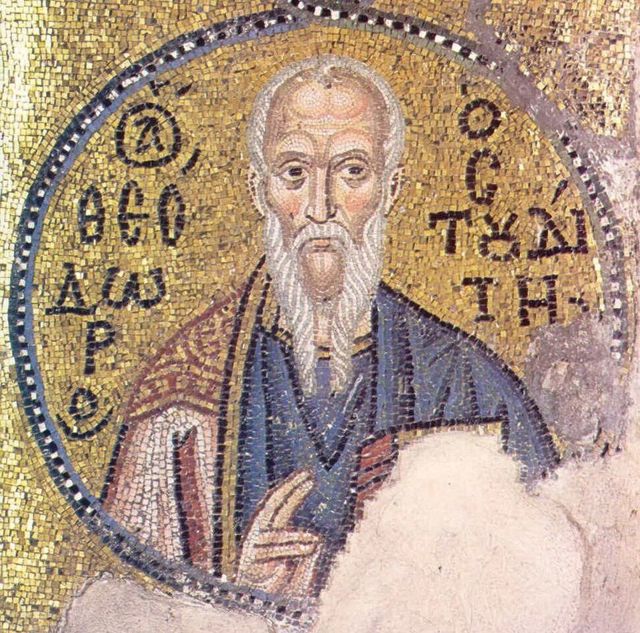
S. Vehanus, B. o/Vence; a.d. 475. S. Bartholomew, Ah. at Grotta Ferrato, near Frascati; $th cent. S. Bbetuin, B. at Maloigne, near Liige; circ. A.D. 65a S. Theodore or the Studium, Ah. C. at Constantinople; a.d. S. Stephen, KJM. c f Servia; a.d. 1333. S* Marttrius, Mk. at Zelensks near Novgorod in Russia; A.D.