St. Ansbert of Rouen

A shepherd who stayed with his people through hard times.

Read the essentials →
February 9 · Bishop

St. Ansbert of Rouen

St. Ansbert of Rouen

A shepherd who stayed with his people through hard times.

Traditional feast

February 9
1914 / pre-1969 calendar, per Baring-Gould (1897)

Current feast

February 9
Secondary source · Wikipedia

Represents

Bishop

Their story

Adapted in modern English from Baring-Gould (1897) · original text below

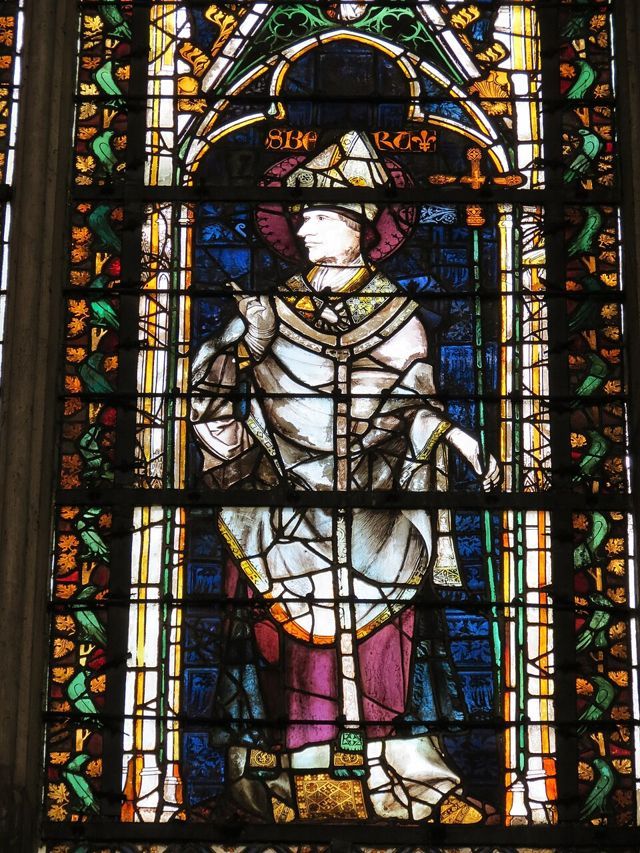
Ansbert, often called Aubert, was at one time chancellor to Clothaire III, and kept his integrity and purity despite the temptations of court life. He eventually left the court and became a monk at Fontenelle. When Abbot Lantbert was elected to the see of Lyons, Ansbert succeeded him as abbot of that famous monastery.

He was confessor to Thierri III, and with the king's consent he was chosen Archbishop of Rouen in 683, after the death of St Ouen. Later Pepin, mayor of the palace, banished him on a false charge of treason to the monastery of Hautmont in Hainault. He died there on 9 February 695. His body was carried to Fontenelle and later to Boulogne, then in 944, for fear of the Northmen, to St Peter's in Ghent. Calvinists dragged it from its resting place in 1578, though some of his relics are believed to have been saved.

Early life

The book says little or nothing about early life. This is how the account begins.

This saint was at one time chancellor to Clothaire III., and in the midst of the temptations of a court, preserved his integrity and purity. At length, quitting the court, he assumed the monastic habit at Fontenelle, and on the election of the abbot Lantbert to the see of Lyons, he succeeded him as abbot of that famous monastery. He was confessor to Thierri III., and was, with his consent, chosen archbishop of Rouen, on the death of S. Ouen, in 683.

What they represent

How they teach us to live

Drawn from themes in the original account

Build up the community you belong to. This life was lived with and for a community.

Learn from the kind of life it was. A shepherd who stayed with his people through hard times.

Read more

The full original · 394 words

Read Baring-Gould’s full account

Baring-Gould’s sources: Roman and other Martyrologies. Authority:—Life by Ansgrad, the monk, dedicated to Abbot Hilbert, the successor of S. Ansbert. This life has, however, suffered from interpolators.

This saint was at one time chancellor to Clothaire III., and in the midst of the temptations of a court, preserved his integrity and purity. At length, quitting the court, he assumed the monastic habit at Fontenelle, and on the election of the abbot Lantbert to the see of Lyons [a bishop’s “see” is his diocese, named from his seat (Latin sedes)], he succeeded him as abbot of that famous monastery. He was confessor [in old usage, a saint who was not martyred, or who suffered for the faith without being killed] to Thierri III., and was, with his consent, chosen archbishop of Rouen, on the death of S. Ouen, in 683. Pepin, mayor of the palace, afterwards banished him, on a false accusation of treason, to the monastery of Hautmont in Hainault, where he died on the 9th February, 695. His body was transported to the abbey of Fontenelle, and afterwards to Boulogne, but in 944, through fear of the Northmen, it was translated to the convent of S. Peter in Ghent; but was dragged from its resting-place by the furious Calvinists, under William of Orange, in 1578; some portions of the sacred relics [the bodily remains of a saint, or objects they used, kept with honor] have, however, we believe, been preserved.

S. Ansbert is often called S. Aubert.

Then when Paphnutius heard these words, and saw that she was fallen asleep, all his bowels were moved, and he fell on the ground, and was as one dead. Now Agapitus came running in, and saw Smaragdus dead, and Paphnutius lying senseless on the ground, so he cast water on his face and said, "What aileth thee, Master Paphnutius?" Then said Paphnutius, "Let me go that I may die." And when he was risen up, he cast himself on the face of the dead monk, and cried, "Woe is me! my sweetest daughter, why didst thou not tell me before, that I might have died with thee?" So Agapitus, having guessed the truth, was amazed, and hasted and told the abbot, who came, and cried "Euphrosyne, spouse of Christ, forget not thy fellow-servants, who dwell in this monastery, but pray for us to our Lord Jesus Christ, that he may make us manfully contend to reach the port of safety, and to have our portion with Him, and with all His saints." Then he called all the brethren together, and they buried Euphrosyne reverently. And after that her father came and dwelt in the same cell, and was there for ten years, and after that he migrated to God, and they laid him beside his daughter.
Feast days

Feast: February 9

Nine days · Free

Pray the novena
with us.

One short email a day for nine days. The day's prayer, a line from St. Ansbert of Rouen's story, and a nudge to keep going.

Also on February 9
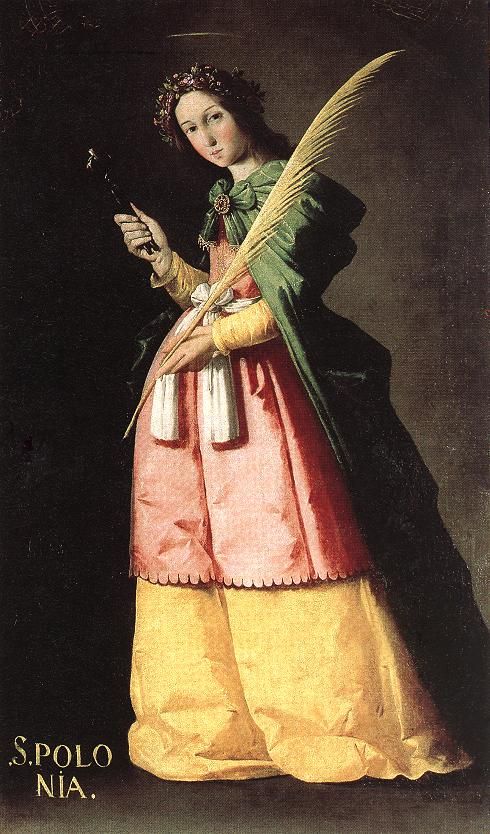
St. Apollonia

St. Apollonia

February 9 · Virgin, Martyr
N

St. Nicephorus

February 9 · Martyr
A

St. Athracta or Taraghta

February 9 · Virgin
← All 1726 saints in the library
Sources & notes

Feast-day sources

Story sources

Sources

Credits

Image: Baie 5 cathédrale Rouen Ansbert.JPG · Giogo · CC BY-SA 3.0, via Wikimedia Commons

From Sabine Baring-Gould, The Lives of the Saints, new edition in 16 vols. (London: John C. Nimmo, 1897), digitized text from Project Gutenberg. Public domain.

Image: Giogo, Wikimedia Commons (CC BY-SA 3.0)

From Sabine Baring-Gould, The Lives of the Saints, new edition in 16 vols. (London: John C. Nimmo, 1897), digitized text from Project Gutenberg. Public domain in the United States. Reproduced unedited, except for short bracketed notes in grey that we added to explain names and terms (“S.” is the old abbreviation for Saint). Some history and judgments reflect 19th-century scholarship.