B

A shepherd who carried a whole region through hard times.

Read the essentials →
November 9 · Archbishop

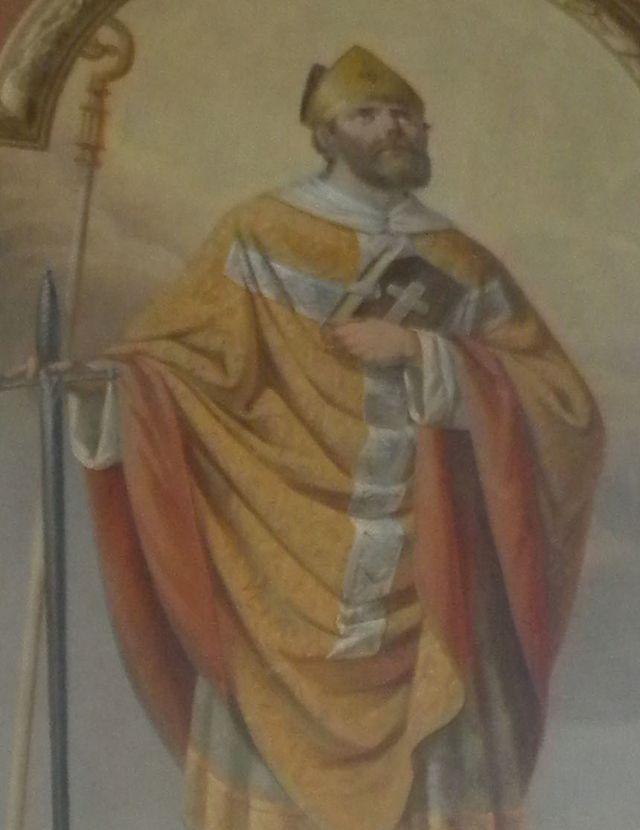
St. Benignus of Armagh

St. Benignus of Armagh

A shepherd who carried a whole region through hard times.

Traditional feast

November 9
1914 / pre-1969 calendar, per Baring-Gould (1897)

Current feast

Not verified yet

Represents

Archbishop

Their story

Adapted in modern English from the Catholic Encyclopedia (1913) · original text below

Benignus (in Irish, Benen) was the son of Sesenen, a chieftain in what is now County Meath. St Patrick baptised him, and he became Patrick's favourite disciple. His name was given for his gentle nature.

He went with Patrick on all his travels and helped him in his missions. His gift was music: he was known as 'Patrick's psalm-singer', helped organise the choral services, and is said to have drawn thousands to Christ with his voice. In 450 he became Patrick's coadjutor in the see of Armagh.

Tradition credits him with helping compile the Senchus Mor law code and with material for the Psalter of Cashel and the Book of Rights. He resigned in 467 and died at the end of that year. The Catholic Encyclopedia warns that he is often confused with another Benignus, of Kilbannon, a different man of the same time.

Early life

The book says little or nothing about early life. This is how the account begins.

Thin entry · the 1897 book gives only 175 words. We have not filled the gap with invented detail.

In or about the year 442 S. Patrick is said to have founded a monastery at Druimlias, and to have placed over it his pupil Benignus, who, it is added, governed it twenty years. On the death of S. Patrick, about 465, Benignus was with unanimous consent of the clergy and laity raised to the see of Armagh. He had been S. Patrick's right-hand man, and he worthily succeeded him.

What they represent

How they teach us to live

Drawn from themes in the original account

Build up the community you belong to. This life was lived with and for a community.

Learn from the kind of life it was. A shepherd who carried a whole region through hard times.

From the Catholic Encyclopedia

1913 · 409 words

Date of birth unknown; d. 467, son of Sesenen, an Irish chieftain in that part of Ireland which is now County Meath. He was baptized by St. Patrick, and became his favorite disciple and his coadjutor [an assistant bishop who will succeed the current one] in the See of Armagh (450). His gentle and lovable disposition suggested the name Benen, which has been Latinized as Benignus. He followed his master in all his travels, and assisted him in his missionary labors, giving most valuable assistance in the formation of choral services. From his musical acquirements he was known as "Patrick's psalm-singer", and he drew thousands of souls to Christ by his sweet voice. St. Benignus is said not only to have assisted in compiling the great Irish code of Laws, or Senchus Mor, but also to have contributed materials for the "Psalter of Cashel", and the "Book of Rights". He was present at the famous synod which passed the canon recognizing "the See Of the Apostle Peter" as the final court of appeal in difficult cases, which canon is to be found in the Book of Armagh. St. Benignus resigned his coadjutorship in 467 and died at the close of the same year. His feast is celebrated on the 9th of November. Most authorities have identified St. Patrick's psalm-singer with the St. Benignus who founded Kilbannon, near Tuam, but it is certain, from Tirechán's collections in the Book of Armagh, that St. Benignus of Armagh and St. Benignus of Kilbannon were two distinct persons. The former is described as son of Sesenen of County Meath, whilst the latter was son of Lugni of Connaught, yet both were contemporaries. St. Benignus of Kilbannon had a famous monastery, where St. Jarlath was educated, and he also presided over Drumlease. His sister, Mathona, was Abbess of Tawney, in Tirerrill.

CAPGRAVE, Nova Legenda Angliæ (1516), fol. 36, for the oldest lives of the saint; see also HARDY, Descriptive Catalogue, etc., 1, 89; WARE-HARRIS, Antiquities of Ireland. 1, 34. II 6: O'HANLON, Lives of Irish Saints (9 November), XI; WHITLEY STOKES (ed.), Tripartite Life of St. Patrick, Rolls Series (London, 1887), in index s. v. BENÉN, BENIGNUS; Bibl. Hagiogr. Lat. (1898), 172, 1324; FORBES in Dict. of Christ. Biog., 1, 312. The very ancient Leabhar-na-gceart or Book of Rights, said to have been compiled by BENIGNUS was edited by O'DONOVAN for the Celtic Society (Dublin. 1847). BENIGNUS is also said to have been the original compiler of the Psalter of Cashel (see CASHEL).
Read more

The full original · 175 words

Read Baring-Gould’s full account

Baring-Gould’s sources: Irish Martyrologies. Authority: — Mention in the Lives of S. Patrick.] In 433 S. Patrick was on his way to Tarah, where he purposed spending Easter. Leaving his boat at the mouth of the Boyne, he and his companions set out on foot for the plain of Breg, in which the city of Tarah stood. On their way, and, as it seems, very soon after getting out of the boat, they went to the house of a man of rank, named Seschnen, there to pass the night They were well received, and his host was so heartily disposed to embrace the faith that S. Patrick baptized him and all his family. A son of his — whom at his baptism the saint, considering his sweet disposition, called Benignus — became so attached to Patrick as to insist on following him. S. Patrick received him with pleasure, and thenceforth Benignus became one of his favourite disciples.

In or about the year 442 S. Patrick [apostle of Ireland (5th century)] is said to have founded a monastery at Druimlias, and to have placed over it his pupil Benignus, who, it is added, governed it twenty years. On the death of S. Patrick, about 465, Benignus was with unanimous consent of the clergy and laity raised to the see of Armagh [a bishop’s “see” is his diocese, named from his seat (Latin sedes)]. He had been S. Patrick's right-hand man, and he worthily succeeded him. Parts of Ireland into which S. Patrick had not penetrated, such as Kerry and Clare, had heard the Gospel from the lips of Benignus. There is some difficulty about fixing the date of his death. The Irish annalists are agreed in fixing as the date the year 468. The “ Tripartite Life of S. Patrick” puts it later; but the annalists are probably correct. A story is told of his having resigned his see and gone to Glastonbury, but it is without foundation. He died at Armagh and was buried there, after having received the last sacraments from the hands of Jarlath, who succeeded him.

Feast days

Feast: November 9

Nine days · Free

Pray the novena
with us.

One short email a day for nine days. The day's prayer, a line from St. Benignus of Armagh's story, and a nudge to keep going.

Also on November 9
S

St. Salaun

November 9 · Confessor
St. Victorinus

St. Victorinus

November 9 · Bishop, Martyr
T

St. Theodotus of Laodicea

November 9 · Bishop
← All 1726 saints in the library
Sources & notes

Feast-day sources

Story sources

Sources

Credits

From Sabine Baring-Gould, The Lives of the Saints, new edition in 16 vols. (London: John C. Nimmo, 1897–98); text from the Internet Archive scan (OCR, lightly cleaned; errors possible). Public domain.

From “Catholic Encyclopedia (1913)/St. Benignus,” The Catholic Encyclopedia (New York: Robert Appleton Company, 1907–1914), via Wikisource. Public domain. Matched by name and feast date; text unedited except for our bracketed notes in grey.

From Sabine Baring-Gould, The Lives of the Saints, new edition in 16 vols. (London: John C. Nimmo, 1897–98); text from the Internet Archive scan (OCR, lightly cleaned; errors possible). Public domain in the United States. Reproduced unedited, except for short bracketed notes in grey that we added to explain names and terms (“S.” is the old abbreviation for Saint). Some history and judgments reflect 19th-century scholarship.