Q
St. Quirinus
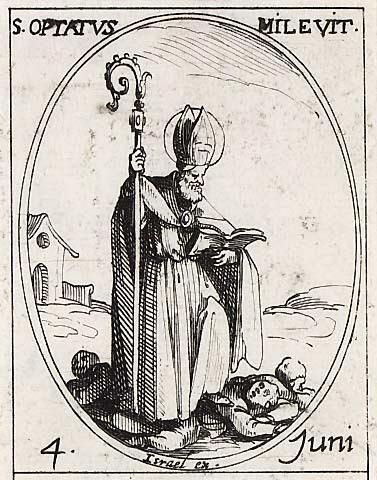
St. Optatus
A whole life given to God with an undivided heart.
June 4
Not verified yet
Virgin
S. Columba (d. 597) is said to have baptized S. Nennocha — two hundred years before she was born ! Her mother, Moneduc, is said to have been the daughter of Constantine, king of Cornwall and Devon, who died A.D. 576,* and he is said to have been descended from Julius Caesar.
Share your faith, in words and by example. Preaching and conversion are central here.
Learn from the kind of life it was. A whole life given to God with an undivided heart.
' S. NENNOCHA, V. (8th cent.) [Venerated in Brittany.1 Authority: — The Acts preserved at Quimper, which are, however, fabulous. They were written in the 13th cent from oral traditions, and are full of anachronisms, and the Bollandists [Jesuit scholars who since the 1600s have critically studied the lives of the saints] do not publish them in their entirety. As specimens of the anachronisms we may adduce these. S. Columba [Irish abbot of Iona (d. 597), apostle of Scotland] (d. 597) is said to have baptized S. Nennocha — two hundred years before she was born ! Her mother, Moneduc, is said to have been the daughter of Constantine, king of Cornwall and Devon, who died A.D. 576,* and he is said to have been descended from Julius Caesar. And S. Germain of Auxerre (<t 448) is made contemporary with S. Turian, B. of Dol, in the 8th cent., and is sent from Ireland by S. Patrick [apostle of Ireland (5th century)] (d. 465) to Britain. But the Acts, it is very evident, are made out of popular Breton ballads. In one place the writer translates into metre the reply of Moneduc to her daughter. J The legend of S. Nennocha is pure fable, through which one can scarce discern the outlines of history. According to the legend there was a king in Wales named Breochan, who with his wife Moneduc had fourteen sons, who all deserted him that they might preach the Gospel. Breochan then promised he would yield tithe of all his gold and lands if God would give him another child. In course of time Moneduc brought forth a little girl, who was baptized by the name of Nennocha-Guengustl, and was then given 1 Invoked In a Breton Utany of the xoth cent. * See March nth, p. 914. S. Francis Caracciolo.
to be fostered by Gurhentil, a kinsman of the king, and his wife Guenarganb At the age of fourteen Nennocha re. turned to her father’s house, and was sought in marriage by a prince of Ireland. But S. Germain being then at her father’s palace, he persuaded her to embrace the religious life. Breochan sadly gave his consent Then, the news having spread abroad, a great multitude assembled to accompany S. Nennocha in her renunciation of the world. Among these were four bishops, a crowd of priests and virgins. They all took ship together and sailed to Brittany, and landed at Pullilfyn. The king of the country gave S. Nennocha land at Ploermel, and there she founded a great monastery where she resided till her death.
Feast: June 4
One short email a day for nine days. The day's prayer, a line from St. Breacha's story, and a nudge to keep going.
From Sabine Baring-Gould, The Lives of the Saints, new edition in 16 vols. (London: John C. Nimmo, 1897–98); text from the Internet Archive scan (OCR, lightly cleaned; errors possible). Public domain.
From Sabine Baring-Gould, The Lives of the Saints, new edition in 16 vols. (London: John C. Nimmo, 1897–98); text from the Internet Archive scan (OCR, lightly cleaned; errors possible). Public domain in the United States. Reproduced unedited, except for short bracketed notes in grey that we added to explain names and terms (“S.” is the old abbreviation for Saint). Some history and judgments reflect 19th-century scholarship.