N
Sts. Niceta and Aquilina
W
Sts. Wulfhad and Rufin
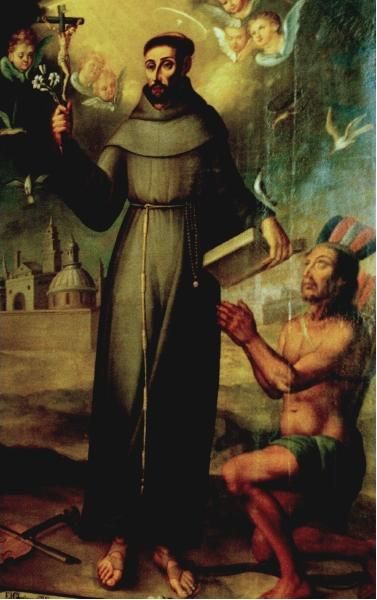
A whole life given to God with an undivided heart.
July 24
Not verified yet
Virgin
One day she fell down in a cataleptic fit, and was taken up as dead. Her sisters had her washed, laid out, placed on a bier and carried to church, where the funeral mass was said.
Pray a little every day. Prayer runs all through this account.
Learn from the kind of life it was. A whole life given to God with an undivided heart.
One day she fell down in a cataleptic fit, and was taken up as dead. Her sisters had her washed, laid out, placed on a bier and carried to church, where the funeral mass was said. But suddenly, in the midst of the service, Christina jumped out of her coffin, ran after the scared mourners, in her winding sheet, scattering them in all directions, and then scrambled up a pillar to one of the rafters of the roof on which she seated herself, “like a bird.” One sister alone remained in the church, and the priest who, with a trembling voice, finished; the mass. 1 When the priest had taken off his chasuble, he came into the church and forced Christina to descjend from her perch, where she had taken refuge, it is asserted, to escape the smell of the peasants, 2 which to her refined perceptions was especially repugnant, as it is at the present day to English travellers, unused to the odours of garlic.
Christine was led home by her sisters, and was given her breakfast, which she ate heartily. When her appetite was satisfied, she told a wonderful tale. She had been carried in spirit to Hell, where she saw many of her acquaintances, then to Purgatory, where she also recognized friends; and then was conducted to Heaven, and was given her choice to remain there, or to return to earth, and liberate by her prayers and sufferings those unfortunate souls she had seen in the flames of their purgation. Without hesitation ' 1 “Cumque pro depositione ejus missarnm oblatio fieret, subito commotum corpus exsurrexit in feretro, statimque instar avis evecta templi trabes ascendit. Fugientibus ergo cunctis, qui aderant, sola soror aetate major cum timore remansit usque post Missam immobilis perseverans." 2 " Horrebat enim, ut quidam autumant, subtilitas ejus spiritus, odorem corporum humanorum.”
she chose the latter alternative. “When the priest said the first Agnus Dei qui tollis peccata mundi, I was standing in spirit before the throne in heaven; at the third Agnus Dei, my soul was restored by the angels to my body/' Christine now began to roam about the country, to get away, as she pretended, from the scent of men which offended her nostrils. For this purpose she climbed to the tops of trees, scrambled to the summits of ^church towers, and balanced herself beside the weather-cock. Her sisters and other relations naturally concluded that Christine was deranged, or, as they expressed it, “full of devils,” 1 and therefore had her caught and shackled.
But she broke loose, and ran off to Lidge, where she rushed headlong into the church of S. Christopher, and asked the priest to communicate her. He naturally demurred to give the holy Sacrament to a wild-looking girl, with her hair flying about her shoulders, of whom he knew nothing, and he made an excuse that he was busy. Then she ran out of the church, and rushed into another one, and made the same demand to the priest. He proved more compliant than the priest of S. Christopher, but he, too, was somewhat dismayed when he saw the communicant start up, race out of the church, and rush down the steep hill towards the Meuse. He ran after her, sorely perplexed in mind, and came upon the priest of S. Christopher, who was tottering after the girl to find out something about her.
Both gave pursuit, and followed Christine to the water's edge, when to their amazement and alarm, they saw her dash into the Meuse, and swim the broad stream, without 1 “ Putantes earn plenatn daemonibus." hesitation. They only breathed freely when they saw her stand wringing out her dripping clothes on the further bank.
Christine’s conduct became stranger than before; she crept into bakers’ ovens, and had to be forcibly drawn out. Sometimes she would dash into the midst of a fire and scatter the blazing brands about with her naked feet. In winter she would run into the river Meuse until the priest of the parish came and ordered her out. She delighted in letting herself go under the sluice of a miller’s water conduit, and shoot with the stream over the wheel, and astonish the spectators by coming up unhurt out of the water below. Or she would stand close to the wheel, and let the water rush and spray over her, in the coldest, freezing weather.
Her attitude in prayer was characterized with eccentricity at least, for she used to coil herself into a ball. 1 And when the fervour of her devotion was over, she suddenly threw out her legs and arms, and resumed her natural shape. 2 She also ran barefoot along the tops of palings, or balanced herself on them whilst she prayed. At last her sisters, blushing (erubescentes) for the annoyance caused by Christine’s conduct to their family — for every one regarded her when alive as possessed with devils; it was only after her death she was worshipped as a saint — engaged a strong man to catch her, as best he could, and chain her up.
But she was too fleet and slippery for him to capture her by fair means, and he only brought her to the ground by striking her on the leg with a cudgel, and 1 “Cum oraret, et contemplationis in ea gratia divina descenderet, velut calefacta cera, omnia membra ejus in unum globum concludebantur, nec poterat in eis nisi tantum corpus sphsericum deprehendi.”
2 “ Exteudebantur membra, quae informi prius materia claudebantur.” ►5 ijr July 24. j S. Christina the Wonderful. 53 7 as he supposed, breaking her thigh-bone. She was unable to walk, and a cart was brought to the spot; she was placed in it, and was thus conveyed to her sisters' house, and thence, for greater security, to Lidge, where she was locked up in the cellar of a surgeon's house to which she was sent to be cured of her broken leg. The surgeon applied splints and bandages, gave her food, and made her a bed, but bound her by chains to a pillar in the midst of the cellar.
In the night.Christine rose, shook off her splints — the bone was not broken — wrenched off her chains, pulled up a flag-stone, beat a hole in the wall of her prison, and scrambled through it, as the grey dawn was breaking. After this escape her sisters and relatives abandoned all attempts at securing her.
One day she visited the parish church of Wellen, near S. Trond, and finding the cover off the font, jumped into it, and sat herself down in the baptismal water. This, says her grave biographer, had the effect of subduing the more lively manifestations of her devotion, and thenceforth she was better able to endure the smell of human beings. 1 Every scrap of food she ate was begged or taken. It was the same with her clothes. She wore a ragged white gown, with patches of divers colours, and sewn together with threads of bark of linden or sallow, or pinned together with twigs. She had sleeves of different colours. When a sleeve was torn off she asked anyone she met for another.
On the occurrence of a death in the town or neighbourhood, she would haunt the house like a banshee, howling, 1 “Quo facto, hoc inibi didtur consecuta, quod eontemperatior ex tunc fult modus ejus vitae hominibus, quietiusque habuit postea, et melius pati potuit odorem hominum ’’ writhing, interlacing her legs and arms “ as if all her bones were flexible."
She delighted especially to visit the dying, and would draw lively pictures of the condition their souls would be in, in purgatory, to their edification, if not to their comfort.
She was taken into the house and given a night’s lodging by the kind sisters of S. Catharine’s, outside the town of S. Trond, and astonished them not a little with her wonderful antics. One day as she was talking to them, she suddenly curled up into a ball, and began to roll round the room, “like a boy’s ball, without any signs of her members appearing.” And then spread herself out flat on the floor, and ventriloquized. “No voice or breath issued from her mouth and nose, but only her breast and throat resounded with an angelic harmony.”
Louis, count of Loos, entertained a high regard for her, and was wont to receive her admonitions with respect, as if from a mother; and she had access to his castle and presence when she liked. One day she came upon him over the wall of the churchyard when he was lying down among his men at arms, and looking down on him from the top of the wall, she said, “Oh, how good-looking you are, my lord ! ”
“Hark! Count, what praise you are getting,” said the soldiers, laughing. “ Oh, it is not me she is praising, but Him who gave me my good looks,” answered the count. “That is right,” said the mad woman, nodding approvingly. “But surely you ought to love Him better for having given you such a handsome face.” When Count Louis was dying, he sent for Christine, and getting with difficulty out of bed, knelt at her feet, and confessed to her all his sins from childhood to manhood. Then he got into bed again and died. 1 After which Christine used to wander moaning about the castle, and water with her. tears all the spots where the count had committed sins, as indicated by the ghost of the dead count which appeared to her.
Towards the end of her life she spent most of her time in the convent of S. Catharine, and there was attacked with mortal sickness.
When she was apparently insensible, the superior, Sister Beatrice, said to her, “ Christine ! you have always obeyed me, return now to life."
Christine opened her eyes and said, “ Beatrice ! why do you trouble me? I was on my way into the next world. Now tell me quickly what you want, that I may be gone.”
Then Beatrice put the question to her she wished, received her answer, and next moment the spirit had fled. She died in the year 1224, on July the 24th. Twenty-five years after, one morning before dawn, an old woman came to the convent door and said, “ I have been sent by divine revelation to tell you, that the body of that most holy woman, Christine, is not receiving proper respect. If you neglect to give it sufficient honour it will be ill with you. Farewell.” And she departed and was seen no more.
On the strength of this message, the body of poor Christine was dug up, and enshrined. Miracles attended the elevation of the body, and thenceforth S. Christine the Wonderful has received veneration as a saint in Belgium; and her name has been inserted in the Bene1 He died a.d. izi8 3 when Christina was aged 68. dictine and Cistercian [strict Benedictine reform begun at Cîteaux in 1098] Martyrologies, and in the Gallican Martyrology of Saussaye. Her relics [the bodily remains of a saint, or objects they used, kept with honor] are exposed to the devotion of the faithful in the church of S. Catherine at Milen, outside S. Trond, and on her festival every year a mass is said in her honour.
Feast: July 24
One short email a day for nine days. The day's prayer, a line from St. Christina the…'s story, and a nudge to keep going.
From Sabine Baring-Gould, The Lives of the Saints, new edition in 16 vols. (London: John C. Nimmo, 1897–98); text from the Internet Archive scan (OCR, lightly cleaned; errors possible). Public domain.
From Sabine Baring-Gould, The Lives of the Saints, new edition in 16 vols. (London: John C. Nimmo, 1897–98); text from the Internet Archive scan (OCR, lightly cleaned; errors possible). Public domain in the United States. Reproduced unedited, except for short bracketed notes in grey that we added to explain names and terms (“S.” is the old abbreviation for Saint). Some history and judgments reflect 19th-century scholarship.