S
St. Salaun
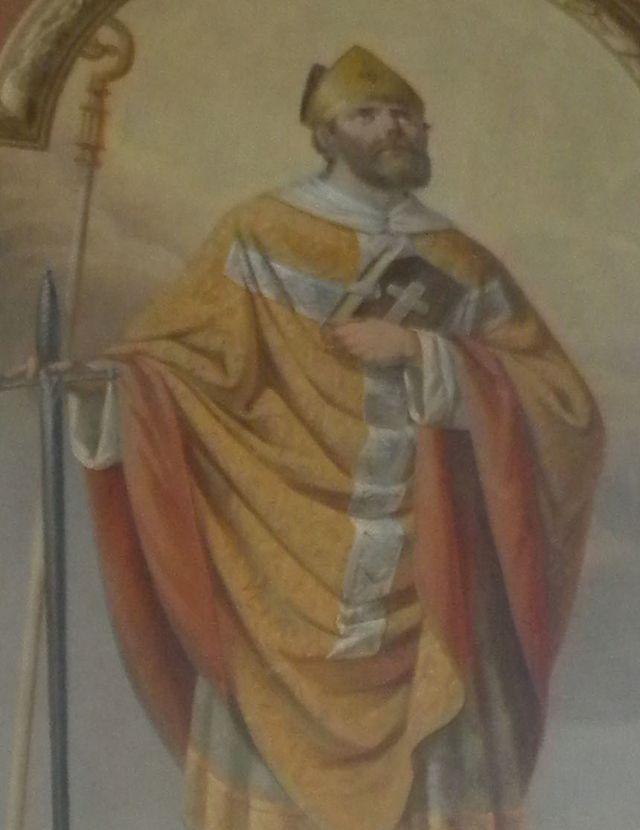
St. Victorinus
T
Faithfulness to Christ when it cost everything.
November 9
Not verified yet
Priest
Martyr
Thin entry · the 1897 book gives only 139 words. We have not filled the gap with invented detail.
…imitating the Fathers of the Egyptian deserts. A woman of rank in the neighbourhood cast eyes of passion on him, and as he indignantly repulsed her advances, in a fit of revenge she sent two of her servants to murder him. His head was cut off.
Learn from the kind of life it was. Faithfulness to Christ when it cost everything.
Keep their day. Remember them on November 9 with a short prayer, and ask for their help.
…imitating the Fathers of the Egyptian deserts. A woman of rank in the neighbourhood cast eyes of passion on him, and as he indignantly repulsed her advances, in a fit of revenge she sent two of her servants to murder him. His head was cut off. He is represented as carrying it. As he kept a watch on his eyes, and bashfully covered them with his hands when the lady cast her warm glances on him, he is often represented with one hand covering the eyes of the head he holds with the other hand. The place where he was assassinated bears his name, and has become a place of pilgrimage.
S. Clair is invoked by those affected with inflamed eyes. He is sometimes by error represented as a bishop, being mistaken for his namesake, a bishop of Nantes.
Feast: November 9
One short email a day for nine days. The day's prayer, a line from St. Clair's story, and a nudge to keep going.
From Sabine Baring-Gould, The Lives of the Saints, new edition in 16 vols. (London: John C. Nimmo, 1897–98); text from the Internet Archive scan (OCR, lightly cleaned; errors possible). Public domain.
From Sabine Baring-Gould, The Lives of the Saints, new edition in 16 vols. (London: John C. Nimmo, 1897–98); text from the Internet Archive scan (OCR, lightly cleaned; errors possible). Public domain in the United States. Reproduced unedited, except for short bracketed notes in grey that we added to explain names and terms (“S.” is the old abbreviation for Saint). Some history and judgments reflect 19th-century scholarship.