S. Epiphanius says the same.
Read the essentials →S. Epiphanius says the same.
September 25
September 25 (also listed: October 30, November 10)
Feast
Thin entry · the 1897 book gives only 145 words. We have not filled the gap with invented detail.
S. Epiphanius says the same. Hegesippus, being the earliest ecclesiastical historian of whom fragments remain, is the best authority we have for this statement He says that he was the father of Simon. Alphaeus, the father of Levi, cannot have been the same man, nor probably was Cleopas, the disciple of Emmaus.
Keep their day. Remember them on September 25 with a short prayer, and ask for their help.
S. Epiphanius says the same. Hegesippus, being the earliest ecclesiastical historian of whom fragments remain, is the best authority we have for this statement He says that he was the father of Simon. Alphaeus, the father of Levi, cannot have been the same man, nor probably was Cleopas, the disciple of Emmaus. Mary, the wife of Cleopas, is believed to have been the sister of Mary the Virgin. Their children were James and Joses, Jude and Simeon, cousins of the Lord.
S. Cleopas was regarded as patron of the Teutonic Order. The Cleopas commemorated in the Roman Martyrology is he who lived at Emmaus, and the Martyrology adopts the legend that he was massacred by the Jews in the very house where the Lord had been made known to him by the breaking of bread. There is no historical evidence that this was the case.
Feast: September 25
One short email a day for nine days. The day's prayer, a line from St. Cleophas's story, and a nudge to keep going.
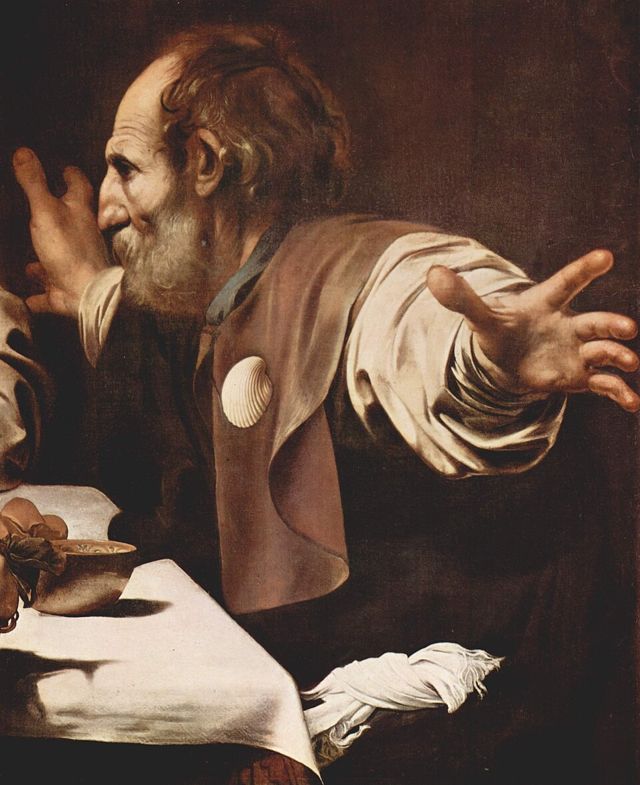
Image: Michelangelo Caravaggio 016.jpg · Caravaggio · Public domain, via Wikimedia Commons
From Sabine Baring-Gould, The Lives of the Saints, new edition in 16 vols. (London: John C. Nimmo, 1897–98); text from the Internet Archive scan (OCR, lightly cleaned; errors possible). Public domain.
Image: Caravaggio, Wikimedia Commons (Public domain)
From Sabine Baring-Gould, The Lives of the Saints, new edition in 16 vols. (London: John C. Nimmo, 1897–98); text from the Internet Archive scan (OCR, lightly cleaned; errors possible). Public domain in the United States. Reproduced unedited, except for short bracketed notes in grey that we added to explain names and terms (“S.” is the old abbreviation for Saint). Some history and judgments reflect 19th-century scholarship.