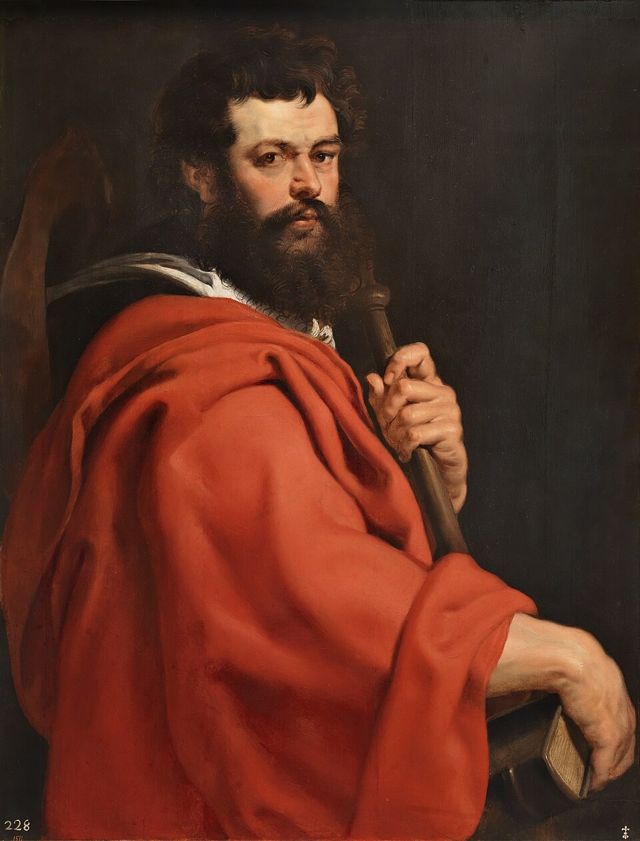
Faithfulness to Christ when it cost everything.
July 25
Not verified yet
Martyr
Thin entry · the 1897 book gives only 163 words. We have not filled the gap with invented detail.
The relics of S. Cucuphas were taken from Barcelona by Charlemagne in 777, and given to S. Fuldrad, who placed them in his monastery of Lebraw in the Vosges. But under Louis the Pious, in 835, the body was translated to S. Denys, near Paris. But the Barcelonese indignantly refuse to believe that they were deprived of their martyr’s body, and exhibit it there, wanting only the head.
Build up the community you belong to. This life was lived with and for a community.
Learn from the kind of life it was. Faithfulness to Christ when it cost everything.
The relics [the bodily remains of a saint, or objects they used, kept with honor] of S. Cucuphas were taken from Barcelona by Charlemagne [king of the Franks, crowned emperor in 800] in 777, and given to S. Fuldrad, who placed them in his monastery of Lebraw in the Vosges. But under Louis the Pious, in 835, the body was translated to S. Denys, near Paris. But the Barcelonese indignantly refuse to believe that they were deprived of their martyr’s body, and exhibit it there, wanting only the head. This body was discovered in the monastery of S. Cucuphas, near Barcelona, in the following manner: — A monk, Lazarus, was possessed by two devils named Zenab and Ynt, and to drive them out, the abbot placed upon him the body of an unknown martyr, “Martyr occultus,” they possessed in the church. The devils howled with pain, the abbot questioned them, SS. Thea and Others.
and they declared that the unknown martyr was S. Cucuphas. This “ invention ” took place on April 29th, 1079; and that day is observed as a festival at Barcelona.
Feast: July 25
One short email a day for nine days. The day's prayer, a line from St. Cucuphas's story, and a nudge to keep going.
From Sabine Baring-Gould, The Lives of the Saints, new edition in 16 vols. (London: John C. Nimmo, 1897–98); text from the Internet Archive scan (OCR, lightly cleaned; errors possible). Public domain.
From Sabine Baring-Gould, The Lives of the Saints, new edition in 16 vols. (London: John C. Nimmo, 1897–98); text from the Internet Archive scan (OCR, lightly cleaned; errors possible). Public domain in the United States. Reproduced unedited, except for short bracketed notes in grey that we added to explain names and terms (“S.” is the old abbreviation for Saint). Some history and judgments reflect 19th-century scholarship.