A
Sts. Antoninus
B
St. Brice of Tours
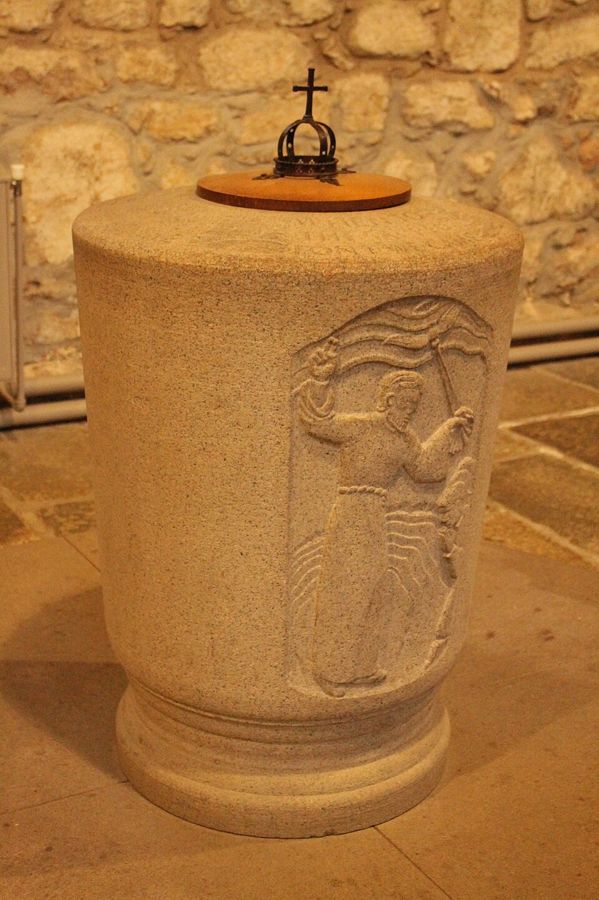
A shepherd who stayed with his people through hard times.
November 13
Not verified yet
Bishop
Thin entry · the 1897 book gives only 121 words. We have not filled the gap with invented detail.
Criech was probably dedicated to this saint, but his name has suffered corruption into S. Teavneck. At Methlich is S. Denick's fair, on the second Tuesday in November. S. Devinick's well is on the opposite side of the Ythan.
Learn from the kind of life it was. A shepherd who stayed with his people through hard times.
Keep their day. Remember them on November 13 with a short prayer, and ask for their help.
Criech was probably dedicated to this saint, but his name has suffered corruption into S. Teavneck. At Methlich is S. Denick's fair, on the second Tuesday in November. S. Devinick's well is on the opposite side of the Ythan. Bishop Forbes suggests that S. Devinic may be the saint to whom Landevedneck, near the Lizard Point, in Cornwall, is dedicated. But this can scarcely be. The knowledge of the apostle of Caithness could not well have reached Cornwall and Brittany, in which province is also a church with the same dedication, Lan Devenach. The saint commemorated in Cornwall and Brittany is probably S. Dyfynog, son of Medrod ab Cawrdaf ab Caradog, whose church was in Brecknockshire, and his festival February 13.
Feast: November 13
One short email a day for nine days. The day's prayer, a line from St. Devinic's story, and a nudge to keep going.
From Sabine Baring-Gould, The Lives of the Saints, new edition in 16 vols. (London: John C. Nimmo, 1897–98); text from the Internet Archive scan (OCR, lightly cleaned; errors possible). Public domain.
From Sabine Baring-Gould, The Lives of the Saints, new edition in 16 vols. (London: John C. Nimmo, 1897–98); text from the Internet Archive scan (OCR, lightly cleaned; errors possible). Public domain in the United States. Reproduced unedited, except for short bracketed notes in grey that we added to explain names and terms (“S.” is the old abbreviation for Saint). Some history and judgments reflect 19th-century scholarship.