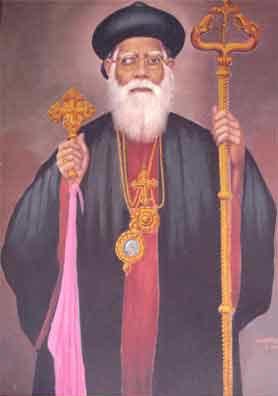
St. Dionysius, Pope

Paul of Samosata, bishop of Antioch, condemned by a synod for heretical opinions, and for introducing the pomp of pagan ceremonial into Christian worship, had staked his lot on the

Read the essentials →
December 25 · —

St. Dionysius

St. Dionysius, Pope

Paul of Samosata, bishop of Antioch, condemned by a synod for heretical opinions, and for introducing the pomp of pagan ceremonial into Christian worship, had staked his lot on the

Traditional feast

December 25
1914 / pre-1969 calendar, per Baring-Gould (1897)

Current feast

February 24
Secondary source · Wikipedia

Represents

Feast

Their story

Adapted in modern English from the Catholic Encyclopedia (1913) · original text below

Dionysius was a priest of Rome under Pope Stephen and took part in the controversy over baptism by heretics; Bishop Dionysius of Alexandria wrote to him as an excellent and learned man.

After Pope Sixtus II was martyred in 258, the see stayed empty for almost a year. Dionysius was chosen on 22 July 259 as the persecution eased. Soon Emperor Gallienus issued an edict of toleration, and Dionysius restored the Church's property and organisation.

When Dionysius of Alexandria was accused of speaking loosely about the Son, the pope held a synod and issued a letter condemning both Sabellianism and the idea that the Son was created, and asked the bishop to explain himself, which he did. When the Goths ravaged Cappadocia, the pope sent consolation and a large sum to ransom captive Christians. He died in December 268.

Early life

Selected sentences from the original account, unaltered.

Thin entry · the 1897 book gives only 134 words. We have not filled the gap with invented detail.

A subtle Greek heresy could only be adjudicated on by Greeks, or by Latins perfect masters of Greek; and Dionysius, by birth and education, was qualified for this task.

What they represent

How they teach us to live

Drawn from themes in the original account

Keep their day. Remember them on December 25 with a short prayer, and ask for their help.

From the Catholic Encyclopedia

1913 · 587 words

Date of birth unknown; d. 26 or 27 December, 268. During the pontificate of Pope Stephen (254–57) Dionysius appears as a presbyter of the Roman Church and as such took part in the controversy concerning the validity of heretical baptism (see Baptism under sub-title Rebaptism). This caused Bishop Dionysius of Alexandria to write him a letter on baptism in which he is described as an excellent and learned man (Eusebius [Eusebius of Caesarea (d. c. 339), the first historian of the Church], Hist eccl. VII, vii). Later, in the time of Pope Sixtus II (257–58), the same Bishop of Alexandria addressed Dionysius a letter concerning Lucianus (ibid., VII, ix), who this Lucianus was is not known. After the martyrdom of Sixtus II (6 August, 258) the Roman See remained vacant for nearly a year, as the violence of the persecution made it impossible to elect a new head. It was not until the persecution had begun to subside that Dionysius was raised (22 July, 259) to the office of Bishop of Rome. Some months later the Emperor Gallienus issued his edict of toleration, which brought the persecution to an end and gave a legal existence to the Church (Eusebius, Hist. eccl., VII, xiii). Thus the Roman Church came again into possession of its buildings for worship, its cemeteries, and other properties, and Dionysius was able to bring its administration once more into order. About 260 Bishop Dionysius of Alexandria wrote his letter to Ammonius and Euphranor against Sabellianism in which he expressed himself with inexactness as to the Logos and its relation to God the Father (see Dionysius of Alexandria). Upon this an accusation against him was laid before Pope Dionysius who called a synod at Rome about 260 for the settlement of the matter. The pope issued, in his own name and that of the council, an important doctrinal letter in which, first, the erroneous doctrine of Sabellius was again condemned and, then, the false opinions of those were rejected who, like the Marcionites, in a similar manner separate the Divine monarchy into three entirely distinct hypostases or who represent the Son of God as a created being, while the Holy Scriptures declare Him to have been begotten; passages in the Bible, such as Deut., xxxii, 6, Prov., viii, 22, cannot be cited in support of false doctrines such as these. Along with this doctrinal epistle Pope Dionysius sent a separate letter to the Alexandrian Bishop in which the latter was called on to explain his views. This Dionysius of Alexandria did in his “Apologia” (Athanasius, De sententia Dionysii, V, xiii, De decretis Nicænæ synodi, xxvi). According to the ancient practice of the Roman Church Dionysius also extended his care to the faithful of distant lands. When the Christians of Cappadocia [a region of central Turkey] were in great distress from the marauding incursions of the Goths [Germanic peoples who invaded the Roman Empire, many of them Arian Christians], the pope addressed a consolatory letter to the Church of Caesarea and sent a large sum of money by messengers for the redemption of enslaved Christians (Basilius, Epist. lxx, ed. Garnier). The great synod of Antioch which deposed Paul of Samosata sent a circular letter to Pope Dionysius and Bishop Maximus of Alexandria concerning its proceedings (Eusebius, Hist. eccl., VII, xxx). After death the body of Dionysius was buried in the papal crypt in the catacomb of Callistus.

Liber Pont., ed. Duchesne, I, ccxlviii, 157; Langen, Geschíchte der römischen Kirche (Bonn, 1881), I, 352 sqq.; Hagemann, Die römische Kirche (Freiburg im Br., 1864), 344 sqq., 432 sqq.; Hefele, Konziliengeschichte, 2nd ed., I, 255 sqq.; Bardenhewer, Geschichte der altkirchlichen Literatur (Freiburg im Br., 1903), II, 581 sq.
Read more

The full original · 134 words

Read Baring-Gould’s full account

Baring-Gould’s sources: Roman Martyrology. Authorities: — S. A than, de Sent Dionysi. Euseb. H. E. lib. vii. c. 26; and the Liber Pontific.] Dionysius, probably a Calabrian, succeeded S. Sixtus on the throne of S. Peter. Pope Damasus was able to ascertain nothing more of his origin than that he was a monk before he was made Pope. He subdivided the parishes of Rome, and constituted parishes outside its walls. He denounced S. Dionysius of Alexandria, a prelate of the highest sanctity and orthodoxy, on account of some doubtful expressions, as a heretic, and as the forerunner of the arch-heretic, Arius. Dionysius replied to the Pope in a long letter, in which he explained his views; and as Dionysius of Rome did not proceed to excommunication, he was probably satisfied with them. In 269 the fathers of the second council of Antioch expressed their veneration for his memory and orthodoxy.

Paul of Samosata, bishop of Antioch, condemned by a synod for heretical opinions, and for introducing the pomp of pagan ceremonial into Christian worship, had staked his lot on the fortunes of Zenobia.

On the fall of that princess, the bishops appealed to the pagan emperor, Aurelian [Roman emperor 270–275], to expel the heretic from his see. Aurelian did not altogether refuse to interfere in this unprecedented case, but, with laudable impartiality, declined to allow the case to be examined by the declared enemies of Paul in the East, and referred him for trial to the bishops of Rome and Italy. A subtle Greek heresy could only be adjudicated on by Greeks, or by Latins perfect masters of Greek; and Dionysius, by birth and education, was qualified for this task. He passed sentence of excommunication on PauL

Feast days

Feast: February 24
Traditional: December 25

Nine days · Free

Pray the novena
with us.

One short email a day for nine days. The day's prayer, a line from St. Dionysius's story, and a nudge to keep going.

Also on December 25
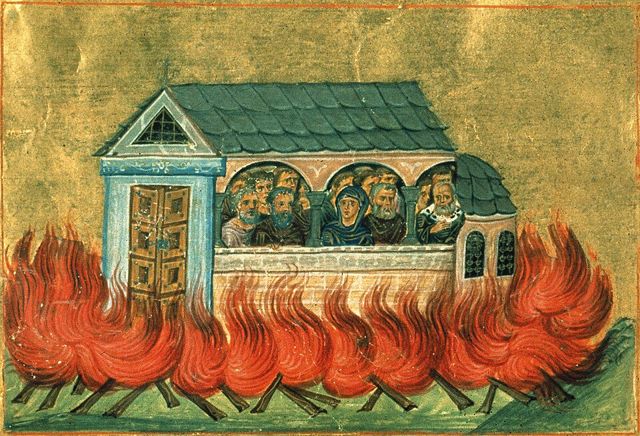
Sts. Martyrs at Nicomedia

Sts. Martyrs at Nicomedia

December 25 · Feast
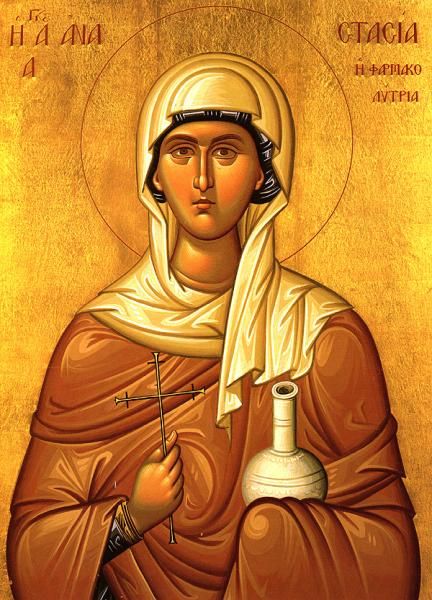
St. Anastasia

St. Anastasia

December 25 · Martyr
A

St. Adalsendis

December 25 · Virgin
← All 1726 saints in the library
Sources & notes

Feast-day sources

Story sources

Sources

Credits

Image: Geevarghese Mar Dionysius of Vattasseril.jpg · Anonymous Artist · Public domain, via Wikimedia Commons

From Sabine Baring-Gould, The Lives of the Saints, new edition in 16 vols. (London: John C. Nimmo, 1897–98); text from the Internet Archive scan (OCR, lightly cleaned; errors possible). Public domain.

Image: Anonymous Artist, Wikimedia Commons (Public domain)

From “Catholic Encyclopedia (1913)/Pope St. Dionysius,” The Catholic Encyclopedia (New York: Robert Appleton Company, 1907–1914), via Wikisource. Public domain. Matched by name and feast date; text unedited except for our bracketed notes in grey.

From Sabine Baring-Gould, The Lives of the Saints, new edition in 16 vols. (London: John C. Nimmo, 1897–98); text from the Internet Archive scan (OCR, lightly cleaned; errors possible). Public domain in the United States. Reproduced unedited, except for short bracketed notes in grey that we added to explain names and terms (“S.” is the old abbreviation for Saint). Some history and judgments reflect 19th-century scholarship.