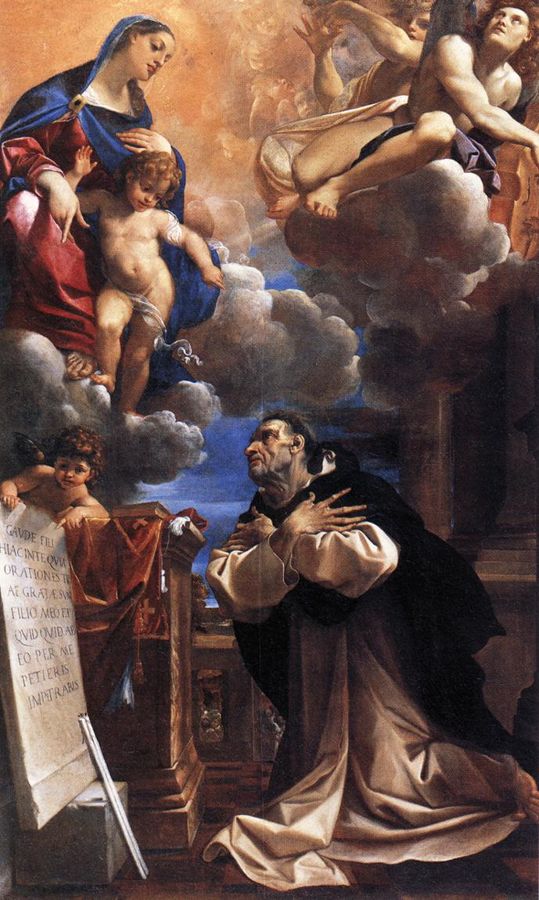
A shepherd who stayed with his people through hard times.
July 8
Not verified yet
Bishop
Confessor
Thin entry · the 1897 book gives only 239 words. We have not filled the gap with invented detail.
(Among the Ancient Martyrologists only Hrabanus Mauras, who puts him down on Sept 8th, without calling him a bishop. The monastic martyrologies of Wyon, Dorganius and Menard us, on July 8th, as also Saussaye. But Canisius, Ferrari us, the Bollandists, and the Irish Kalendars, on July 8th.
Build up the community you belong to. This life was lived with and for a community.
Stay faithful when it costs you. This account is about holding firm under pressure.
Share your faith, in words and by example. Preaching and conversion are central here.
Learn from the kind of life it was. A shepherd who stayed with his people through hard times.
Irish bishop and patron of Disenberg (Disibodenberg), born c. 619; died 8 July, 700. His life was written in 1170 by St. Hildegarde, from her visions. St. Disibod journeyed to the Continent about the year 653, and settled in the valley of the Nahe, not far from Bingen. His labours continued during the latter half of the seventh century, and, though he led the life of an anchorite [a hermit, sometimes walled into a cell beside a church], he had a numerous community, who built bee-hive cells, in the Irish fashion, on the eastern slopes of the mountain. Before his death he had the happiness of seeing a church erected, served by a colony of monks following the Rule of St. Columba, and he was elected abbot-bishop, the monastery being named Mount Disibod, subsequently Disenberg, in the Diocese of Mainz. Numerous miracles are recorded of the saint. Some authors are of the opinion that his death really took place on 8 Sept., whilst the date 8 July is that of the translation [the solemn moving of a saint’s relics to a new shrine] of his relics [the bodily remains of a saint, or objects they used, kept with honor] in the year 754, St. Boniface being present.
(Among the Ancient Martyrologists only Hrabanus Mauras, who puts him down on Sept 8th, without calling him a bishop. The monastic martyrologies of Wyon, Dorganius and Menard us, on July 8th, as also Saussaye. But Canisius, Ferrari us, the Bollandists [Jesuit scholars who since the 1600s have critically studied the lives of the saints], and the Irish Kalendars, on July 8th. Authorities ' The life of S. Disibod, written very late, in 1170, by S. Hildegard, from visions she saw. This is utterly worthless historically, and Mabillon did not consider it deserving of insertion in his "Acta Sanctorum [the Bollandists’ huge collection of saints’ lives] Ord. S. Benedict [father of Western monks (d. c. 547), author of the Rule]!.'’ The only trustworthy notices of the Saint are by Hrabanus Mauras and Marianus Scotus, and these are very scanty.] S. Disibod, said to have been an Irish bishop, came into Germany and preached in the neighbourhood of Mainz; he lived on Mount S. Disibod or Dysenberg, and died in 674. The meagre account of their patron not satisfying the monks of the Benedictine [monks following the Rule of St. Benedict] Monastery there, they had recourse to the visionary, S. Hildegard, in 1170, and she wrote a life from revelations made to her; which, however, carefully evades giving any exact information, and deals in generalities. It tells us neither the names of the parents of Disibod, nor the place in Ireland of which he was bishop, nor the name of the king of Ireland who persecuted him and obliged him to fly, nor the name of the monastery in which he was trained; nor, in a word, anything worth knowing.
Feast: July 8
One short email a day for nine days. The day's prayer, a line from St. Disibod's story, and a nudge to keep going.
From Sabine Baring-Gould, The Lives of the Saints, new edition in 16 vols. (London: John C. Nimmo, 1897–98); text from the Internet Archive scan (OCR, lightly cleaned; errors possible). Public domain.
From “Catholic Encyclopedia (1913)/St. Disibod,” The Catholic Encyclopedia (New York: Robert Appleton Company, 1907–1914), via Wikisource. Public domain. Matched by name and feast date; text unedited except for our bracketed notes in grey.
From Sabine Baring-Gould, The Lives of the Saints, new edition in 16 vols. (London: John C. Nimmo, 1897–98); text from the Internet Archive scan (OCR, lightly cleaned; errors possible). Public domain in the United States. Reproduced unedited, except for short bracketed notes in grey that we added to explain names and terms (“S.” is the old abbreviation for Saint). Some history and judgments reflect 19th-century scholarship.