E

A shepherd who stayed with his people through hard times.

Read the essentials →
May 5 · Bishop

St. Eadbert of…

St. Eadbert of Lindisfarne

A shepherd who stayed with his people through hard times.

Traditional feast

May 5
1914 / pre-1969 calendar, per Baring-Gould (1897)

Current feast

May 6
Secondary source · Wikipedia

Represents

Bishop

Their story

Adapted in modern English from Alban Butler's Lives of the Saints

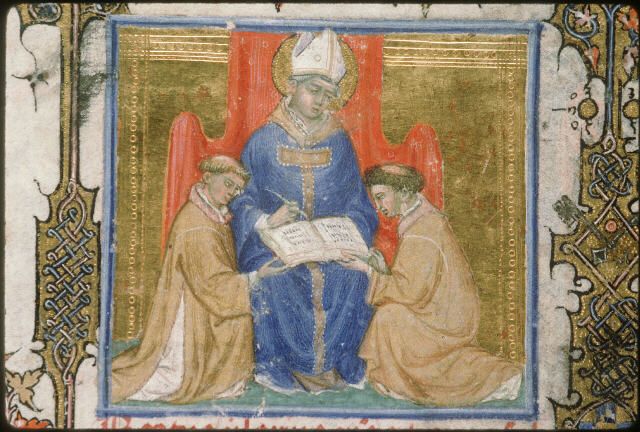
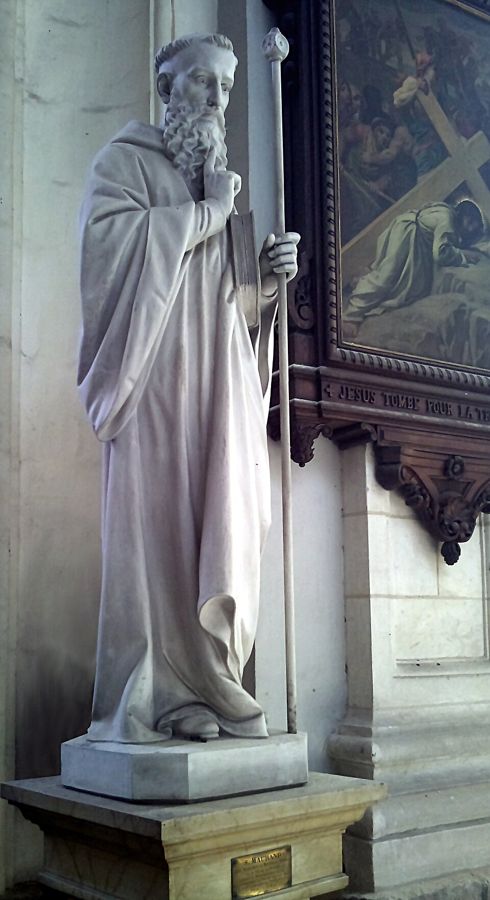
Bede (the English monk-historian, d. 735) says Eadbert excelled both in knowing the Scriptures and in keeping God's commands. Every year he set aside a tenth of his goods for the poor. In 687 he succeeded St Cuthbert as bishop of Lindisfarne and governed the church for eleven years.

Twice a year, in Lent and for forty days before Christmas, he withdrew alone to the sea-girt place where Cuthbert had once lived. About eleven years after Cuthbert's burial the monks, with Eadbert's approval, opened his grave. According to Bede they found the body whole and flexible and the clothes fresh. They brought some of the garments to Eadbert in his retreat; he kissed them and had the body laid in a new coffin.

Soon afterwards Eadbert fell ill, and he died on 6 May. He was buried in Cuthbert's old grave, beneath the coffin of the saint. Bede also records that Eadbert covered the wooden church of Lindisfarne with lead.
Early life

The book says little or nothing about early life. This is how the account begins.

Thin entry · the 1897 book gives only 0 words. We have not filled the gap with invented detail.

What they represent

How they teach us to live

Drawn from themes in the original account

Learn from the kind of life it was. A shepherd who stayed with his people through hard times.

Keep their day. Remember them on May 5 with a short prayer, and ask for their help.

Read more

The full original · 0 words

Read Baring-Gould’s full account

Baring-Gould’s sources: Roman and Anglican Martyrologies. Some late Martyrologists, as Maurolycus, Canisins, Menardus, Bucelinus, &c., have confounded him with S. Egbert, who died at Iona, and who is commemorated on April 24th. Authority Bede’s Eccl. Hist. iv. 29, 30, and his life of S. Cuthbert, u. 12-] S. Eadbert is said to have been bom amongst the South Saxons. He succeeded S. Cuthbert in the see of Lindisfarne, and Bede describes him as a man excelling in knowledge of the Holy Scriptures, and in observance of the angelic precepts. He administered the Church of Lindisfarne for about ten years; during which time it was his custom twice in the year — Advent and Lent — to make a retreat into the islet, where S. Cuthbert had resided, before he went to Fame. There he could be alone with God and his own soul, surrounded by the tumbling grey waves of the Northern ocean. He was present when the body of S. Cuthbert was translated, eleven years after the death of this great prelate, and the body was found perfectly fresh and incorrupt. Shortly after this event, Eadbert fell sick and died. He was placed in the sepulchre of S. Cuthbert

Feast days

Feast: May 6
Traditional: May 5

Nine days · Free

Pray the novena
with us.

One short email a day for nine days. The day's prayer, a line from St. Eadbert of…'s story, and a nudge to keep going.

Also on May 5
M

St. Maximus of Jerusalem

May 5 · Bishop
St. Hilary of Arles

St. Hilary of Arles

May 5 · Bishop
St. Maurontius

St. Maurontius

May 5 · Abbot
← All 1726 saints in the library
Sources & notes

Feast-day sources

Story sources

Sources

Credits

From Sabine Baring-Gould, The Lives of the Saints, new edition in 16 vols. (London: John C. Nimmo, 1897–98); text from the Internet Archive scan (OCR, lightly cleaned; errors possible). Public domain.

From Sabine Baring-Gould, The Lives of the Saints, new edition in 16 vols. (London: John C. Nimmo, 1897–98); text from the Internet Archive scan (OCR, lightly cleaned; errors possible). Public domain in the United States. Reproduced unedited, except for short bracketed notes in grey that we added to explain names and terms (“S.” is the old abbreviation for Saint). Some history and judgments reflect 19th-century scholarship.