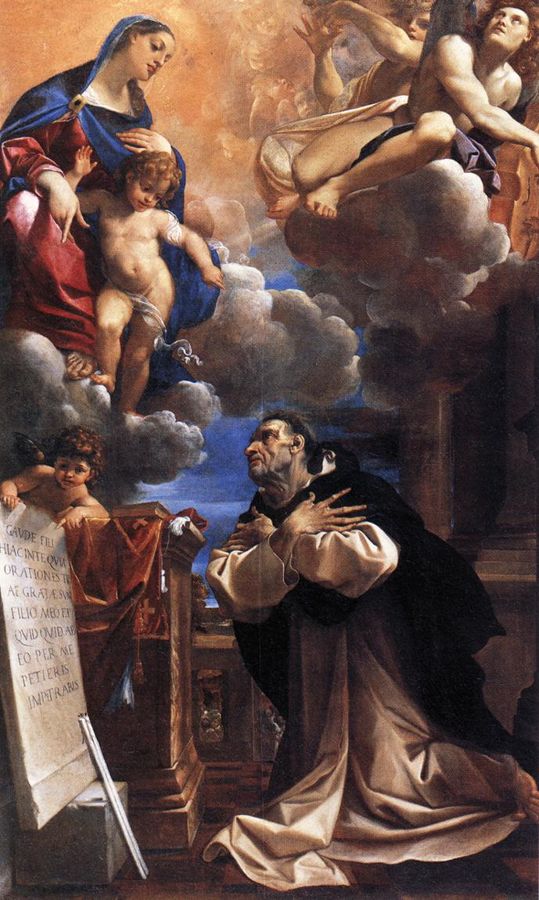
Trying to rule as a Christian, not just in name.
July 8
Not verified yet
King
Confessor
J»iy80 Almost his only war was with the Welsh, because Idwal, son of Ruderic the Great, a prince of North Wales, refused to pay tribute.
Learn from the kind of life it was. Trying to rule as a Christian, not just in name.
Keep their day. Remember them on July 8 with a short prayer, and ask for their help.
It is difficult to distinguish, in the conflicting accounts of historians, what is true about Edgar. The land was in peace during his reign, and his rule seems to have been just and firm. To preserve his kingdom against the Danes [Viking raiders from Scandinavia] and Norsemen, Edgar, like Alfred, kept up a great fleet, which sailed along the coasts watching for the private ships of the invaders.
King Edgar often visited and cruised about in his fleet, and he also went through his kingdom to see that justice was done, and to punish wrong-doers. He encouraged Germans and Flemings to settle in the country, and endeavoured to establish intercourse and commerce with the Continent.
1 See Life of S. Odo (July 4th), and Life of S- Dunstan (May 19th). J»iy80 Almost his only war was with the Welsh, because Idwal, son of Ruderic the Great, a prince of North Wales, refused to pay tribute. In 963, Edgar invaded his lands, and, if we may believe William of Malmesbury, forced him to pay a tribute of 300 wolves’ heads yearly; this tribute was paid for only three years, by which time the wolves were exterminated out of the Principality of Wales.
It was not till Edgar had reigned thirteen years that he was crowned king, at Bath, and after his coronation (in 973) he sailed with his fleet round Wales to Chester, and there six, or as some say, eight, of his vassal kings came with their fleets and did homage. These eight are said to have been Kenneth, king of the Scots, Malcolm of Cumberland, Maccus of the Isles, and five Welsh princes. These eight kings rowed the Lord of all Britain in a boat, while Edgar himself steered, from the royal palace at Chester to the minster of S. John, where they prayed, and went back the same way. It was perhaps at this time that the incident occurred related by William of Malmesbury. Edgar was a little man, but strong and skilful with his sword. One night Kenneth of Scotland said at a banquet, il How strange it seems that we kings should have to serve such a little fellow.” Now this was related to Edgar, and he called Kenneth apart into the forest, and said, li Draw thy sword, and lay on manfully, and we will prove which is fittest to reign. Men should not be swift with their tongues and sluggish with their swords.” Then Kenneth fell at his feet, and besought his pardon for what he had said.
On the death of archbishop Odo of Canterbury, in 9 59, his room was filled by S. Dunstan, who exercised great sway over the king, and had much to do with the government of the realm. Then S. Dunstan turned the secular canons out of many of the chief churches of England, and filled their places with monks. Edgar showed him the utmost respect. One Sunday the king was out hunting. Whilst he was out Dunstan fell asleep, and dreamt he had been present at mass. The king returned as S. Dunstan heard the u Ite missa est ” in his dream. il Now let us have mass sung,” said the king. “ It is too late,” answered the bishop, “ I have just done assisting at it.” The king took the hint, and never went out hunting on Sunday again. King Edgar does not seem to have been remarkably strict in his morals, if we may credit the various stories told of him. 1 He once carried off a nun from her convent, and was reprimanded by S. Dunstan and put to penance, that he should not wear his crown for seven years. He married twice. His first wife was Ethelfleda, called the White and the Duck, daughter of Ordmar, the earl. After her death he married, in 964, Elfrida, daughter of Ordgar, earl of Devon, the widow of Ethelwald, earl of the East Angles. She bore him two sons, Edmund, who died young, in 971, and Ethelred. Edgar was also the father of S. Edith of Polesworth, by a woman named Wulfrida, a nun. A very romantic story is told of the loves of Edgar and Elfrida, which is found in William of Malmesbury and in Geoffrey Gaimar, but as their authority was only popular tradition and ballads, not too much reliance can be placed on it. Nevertheless there is probably some foundation for it. 1 The story told briefly is as follows: — Edgar, hearing of the beauty of Elfrida, daughter of Ordgar, earl of Devon, sent his friend Ethelwald to see her, and ascertain if she was as fair as fame related. Ethelwald fell in love with » He was, says William of Malmesbury, *• libidinosus iu rirgines." her, and asked her hand of Ordgar for himself. Having received his consent, he hurried back to the king and told him that the report was exaggerated, the maiden was only plain, but as she was rich, and the heiress of Ordgar, he asked Edgar to suffer him to take her to be his own wife. The king gave his consent, and Ethelwald married Elfrida, and became by her the father of a boy whom he persuaded the king to stand godfather to, and to whom he gave the name of Edgar. Then Ethelwald was glad, for he knew that according to the laws of the Church, they had become connected by a spiritual relationship, which would prevent the king from ever marrying Elfrida.
Now the report reached the king that Elfrida was the loveliest woman in England, and that Ethel wald had deceived him; and when he was hunting in the West, perhaps on the royal chase of Dartmoor, he sent word to Ethelwald that he would visit him at his castle of Harewood. 1 Ethelwald was in dismay, and he told his wife how he had been sent to seek her hand for the king, and how he had kept her for himself, and dreading the king’s displeasure, he implored her to disguise her beauty. But when Elfrida heard the story she waxed wrath, and dressed herself in her most costly dresses, decked herself in all her jewels, and came out to meet the king in all her radiant beauty. Edgar became madly, passionately enamoured. The result was an intrigue and a resolution to destroy Ethelwald. As they were together hunting one day in the woods round Harewood, and when they were alone, the king smote Ethelwald with a javelin 1 Harewood on the Tamar; not, as Yorkshire antiquaries pretend, Harewood near Leeds. This isdear from Gaimar, for the king, to get rid of Ethelwald, sent him into Yorkshire, where be was killed, and then Elfrida came up from Devon to meet the king, attended by all the nobles of the West. The whole story is delightful in Gaimar, it is told so graphically and with such picturesque details. that he died j 1 and he took Elfrida to be his wife; and to expiate their offence, erected a convent in the Harewood forest.
King Edgar died in 975, and was buried at Glastonbury. He was only thirty-two years old when he died. Why he should have received veneration as a Saint one is at a loss to see; except that he let S. Dunstan and the monks have their own way in ecclesiastical matters, instead of opposing them and supporting the secular clergy against their encroachments like his brother Edwy.
1 So William ef Malmesbury, but according to Galmar, the king slew him, by the sword of the rebels in Yorkshire, whither he bad sent him to be out of the way. The slaying of Ethel wald In the wood is perhaps a reminiscence of a mythological story among the Anglo-Saxons akin to the Nibelungen Lied. Ethel wald is Sigurd, Elfreda is Kriemhild, Edgar Is Etsel and Hagen In one. Mr*] •S'.S’. Anatholia and Audax.
Feast: July 8
One short email a day for nine days. The day's prayer, a line from St. Edgar's story, and a nudge to keep going.
From Sabine Baring-Gould, The Lives of the Saints, new edition in 16 vols. (London: John C. Nimmo, 1897–98); text from the Internet Archive scan (OCR, lightly cleaned; errors possible). Public domain.
From Sabine Baring-Gould, The Lives of the Saints, new edition in 16 vols. (London: John C. Nimmo, 1897–98); text from the Internet Archive scan (OCR, lightly cleaned; errors possible). Public domain in the United States. Reproduced unedited, except for short bracketed notes in grey that we added to explain names and terms (“S.” is the old abbreviation for Saint). Some history and judgments reflect 19th-century scholarship.