St. Edward

Faithfulness to Christ when it cost everything.

Read the essentials →
March 18 · King, Martyr

St. Edward

St. Edward

Faithfulness to Christ when it cost everything.

Traditional feast

March 18
1914 / pre-1969 calendar, per Baring-Gould (1897)

Current feast

Not verified yet

Represents

King
Martyr

Their story

Adapted in modern English from Baring-Gould (1897) · original text below

King Edgar died in 975. His first wife, Ethelfleda, had died soon after bearing their son Edward. In 964 Edgar married Elfrida, daughter of the earl of Devon, and she bore him Edmund, who died young, and Ethelred. On Edgar's death Edward, then thirteen, a good and upright youth who feared God, was chosen king, to the anger of Elfrida, who wanted the throne for Ethelred.

In 979, at seventeen, Edward was murdered. The source points out that he did not die for the faith, but because he was a good youth unjustly and cruelly killed, people honoured him as a saint and called him Edward the Martyr. The Anglo-Saxon Chronicle says no worse deed had been done since the English came to Britain, but says only that he was killed at evening at Corfe. Later chroniclers blame his own people, and Florence of Worcester and William of Malmesbury blame his stepmother.

Malmesbury's version runs like this. Hunting near Corfe, where Elfrida and Ethelred lived, the tired and thirsty king rode alone to the gate. Elfrida came out, kissed him and had a cup brought. As he drank, at her sign a servant stabbed him. He spurred his horse to rejoin his companions but fell, caught his foot in the stirrup and was dragged to his death, leaving a trail of blood. Elfrida had him buried at Wareham without royal honours and not in consecrated ground.

The story goes on that a light from heaven shone over the grave and wonders happened there. When young Ethelred wept for the brother who had always been kind to him, his mother beat him with a candle. Later she set out to see the miracles for herself, but her horse would not move. Shaken, she withdrew to the convent of Wherwell to do penance. Edward's body was moved to Shaftesbury. In art he holds a cup and a dagger, or sometimes a falcon.

Early life

Selected sentences from the original account, unaltered.

His first wife was the beautiful Ethelfleda, who died shortly after the birth of her son Edward. After her death Edgar married, in 964, Elfrida, daughter of Ordgar, earl of Devonshire, and she became the mother of two sons by him, Edmund, who died young, and Ethelred. As soon as king Edgar was dead, Edward, who was thirteen years old, a good youth, upright in all his dealings, and fearing God, was elected to the crown, much to the discontent of Elfrida, who desired to see her son Ethelred on the throne.

What they represent

How they teach us to live

Drawn from themes in the original account

Learn from the kind of life it was. Faithfulness to Christ when it cost everything.

Keep their day. Remember them on March 18 with a short prayer, and ask for their help.

Read more

The full original · 735 words

Read Baring-Gould’s full account

Baring-Gould’s sources: Anglican Martyrologies, also modern Anglican Kalendar. Roman Martyrology. The elevation of his body, June 20th; his translation, Feb. 18th. Authorities:—The Chronicle of John of Brompton, Osbern of Canterbury, William of Malmesbury.

In the year 975, King Edgar died, and was buried at Glastonbury. He had been twice married. His first wife was the beautiful Ethelfleda, who died shortly after the birth of her son Edward. After her death Edgar married, in 964, Elfrida, daughter of Ordgar, earl of Devonshire, and she became the mother of two sons by him, Edmund, who died young, and Ethelred. As soon as king Edgar was dead, Edward, who was thirteen years old, a good youth, upright in all his dealings, and fearing God, was elected to the crown, much to the discontent of Elfrida, who desired to see her son Ethelred on the throne.

March 18.

In the year 979, when Edward was aged seventeen, he was murdered. Now, certainly he was not a martyr for the Christian faith, nor for right and truth in any shape; but he was a good youth, and was unjustly and cruelly killed, so people looked on him as a saint, and called him Edward the Martyr. The Anglo-Saxon Chronicle greatly laments his death, and says that a worse deed had never been done since the English came into Britain. It does not, however, say who killed him, but only that he was killed at eventide, at Corfe Castle. Henry of Huntingdon says that king Edward was killed by his own people; Florence of Worcester, that he was killed by his own people by order of his step-mother, Elfrida. William of Malmesbury, in one part of his book, says he was killed by earl Elfhere, but this is improbable, as no reason for such an act appears. But in recording his death, Malmesbury attributes the crime to Elfrida, and tells the story thus:—

When Edward was elected, Elfrida hated him, because she wished her own son, Ethelred, to be king, and she ever sought how she might slay Edward. Now, one day the young king was hunting in Dorsetshire, hard by the castle of Corfe, where Elfrida and Ethelred her son dwelt. And the king was weary and thirsty, so he turned away alone from his hunting, and said, "Now will I go to rest myself at Corfe, with my step-mother Elfrida, and my brother Ethelred." So king Edward rode to the gate of the house, and Elfrida came out to meet him, and kissed him. And he said, "Give me to drink, for I am thirsty." And Elfrida commanded, and they brought him a cup, and he drank eagerly. But while he drank, Elfrida made a sign to her servant, and he stabbed the king with a dagger; and when the king felt the wound, he set spurs to his horse, and tried to join his comrades, who were hunting. But he slipped from his horse, and his leg caught in the stirrup, so he was dragged along till he died, and the track of his blood showed whither he had gone. And Elfrida bade that he should be buried in Wareham, but not in holy ground, nor with any royal pomp. But a light from heaven shone over his grave, and wonders were wrought there. But when the child Ethelred heard of his brother's murder, he began to cry and bewail him, for Edward had always been very kind to the little boy. His mother, stung by her conscience, and angry with him for his lamentations, rushed on the child to beat him, and having no stick at hand, she pulled a wax candle out of its socket, and thrashed him with it. But afterwards, when she heard of the mighty works which were done at the grave of king Edward, how the sick were healed, and the lame walked, she resolved to go and see the miracles with her own eyes. But when she mounted her horse to ride, the horse would not stir. So Elfrida's hard heart was shaken, and she became alarmed about her sin that she had committed, and she retired into the convent of Wherwell, that she might repent in ashes the wickedness she had done. The body was afterwards translated to the minster at Shaftesbury (June 20th).

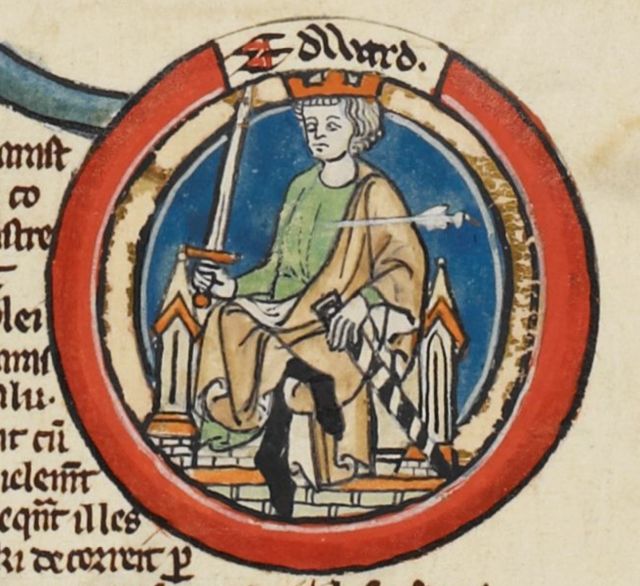
S. Edward is usually drawn with a youthful countenance, having the insignia of royalty, with a cup in one hand and a dagger in the other. Sometimes he has a sceptre instead of the cup; and at other times a falcon, in allusion to his last hunt.

March 19.
Feast days

Feast: March 18

Nine days · Free

Pray the novena
with us.

One short email a day for nine days. The day's prayer, a line from St. Edward's story, and a nudge to keep going.

Also on March 18
St. Gabriel, Archangel

St. Gabriel

March 18 · Feast
St. Alexander of Jerusalem

St. Alexander of…

March 18 · Martyr, Bishop
N

St. Narcissus of Gerona

March 18 · Martyr, Bishop
← All 1726 saints in the library
Sources & notes

Feast-day sources

Story sources

Sources

Credits

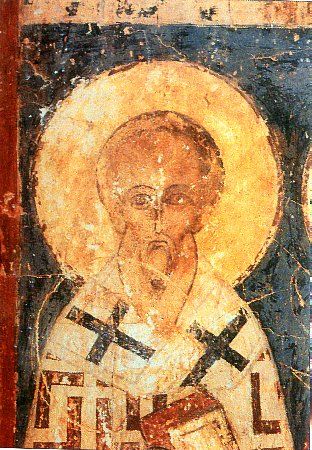
Image: Edward the Martyr - MS Royal 14 B VI.jpg · Unknown authorUnknown author · Public domain, via Wikimedia Commons

From Sabine Baring-Gould, The Lives of the Saints, new edition in 16 vols. (London: John C. Nimmo, 1897), digitized text from Project Gutenberg. Public domain.

Image: Unknown authorUnknown author, Wikimedia Commons (Public domain)

From Sabine Baring-Gould, The Lives of the Saints, new edition in 16 vols. (London: John C. Nimmo, 1897), digitized text from Project Gutenberg. Public domain in the United States. Reproduced unedited, except for short bracketed notes in grey that we added to explain names and terms (“S.” is the old abbreviation for Saint). Some history and judgments reflect 19th-century scholarship.