St. Egwin of Worcester

Egwin was of the royal blood of the Mercian kings and was born at Worcester.

Read the essentials →
January 11 · Bishop, Confessor

St. Egwin of Worcester

St. Egwin of Worcester

Egwin was of the royal blood of the Mercian kings and was born at Worcester.

Traditional feast

January 11
1914 / pre-1969 calendar, per Baring-Gould (1914)

Current feast

December 30
Secondary source · Wikipedia

Represents

Bishop
Confessor

Their story

Adapted in modern English from Baring-Gould (1914) · original text below

Egwin was of the royal blood of the Mercian kings and was born at Worcester. He was elected bishop in 692. He rebuked the illicit unions of some of the great men in his diocese and pushed hard to reform everyone's morals. That stirred up a party against him, and with the king's connivance he was driven out of his diocese.

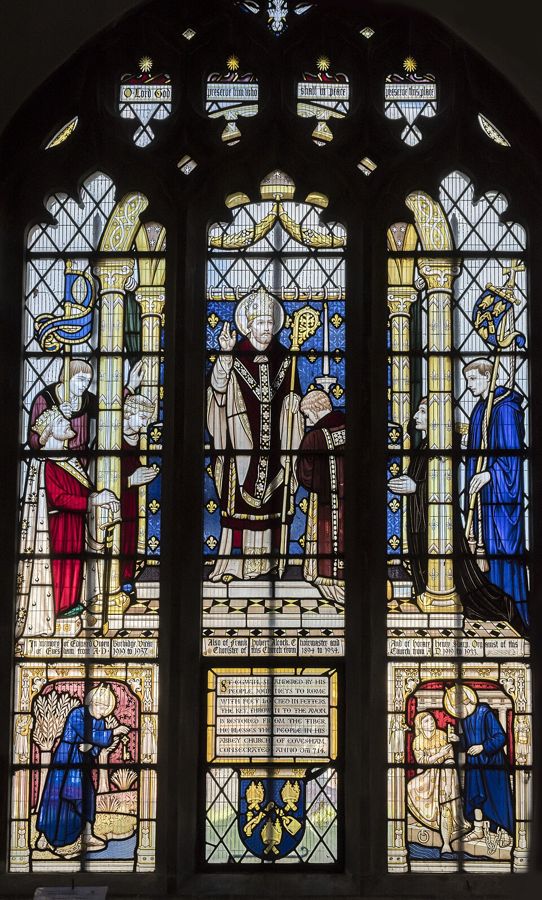
Egwin accepted it meekly and decided to go on pilgrimage to Rome. A popular medieval legend says he also wanted to atone for sins of his youth. He locked iron fetters on his feet and threw the key into the Avon. As he neared Italy on a ship from Marseilles, a huge fish landed on deck, and when it was cut open the key to his fetters was inside. He took this as the will of heaven and freed his legs. Another version has the fish caught in the Tiber after he had seen the Pope. William of Malmesbury dismissed the whole story as an idle legend.

After he came home, Egwin founded the famous abbey of Evesham in honour of the Blessed Virgin, with the help of Kenred, King of Mercia. He later made a second journey to Rome with Kenred and Offa, King of the East Saxons. He died on 30 December 717 and was buried at Evesham. His relics were probably moved on 11 January, the day many English martyrologies keep his feast.

Early life

Selected sentences from the original account, unaltered.

S. Egwin was of the royal blood of the Mercian kings, and was born at Worcester, in the reign of Ethelred and Kenred. According to a popular mediæval legend, he also resolved to expiate at the same time certain sins of his youth, by putting iron fetters on his feet, which were fastened with a lock, and he cast the key into the Avon.

What they represent

How they teach us to live

Drawn from themes in the original account

Keep their day. Remember them on January 11 with a short prayer, and ask for their help.

Read more

The full original · 393 words

Read Baring-Gould’s full account

Baring-Gould’s sources: The life of S. Egwin was written by his contemporary, S. Brithwald, Archbishop of Canterbury. This original has not descended to us, but a fragment of a somewhat later recension of this life exists; and a still later life, probably an amplification of that by Brithwald. Moreover, S. Egwin is mentioned by Matthew of Westminster, Florence of Worcester; William of Malmesbury also speaks of him in his Acts of the English Bishops.

S. Egwin was of the royal blood of the Mercian kings, and was born at Worcester, in the reign of Ethelred and Kenred. He was elected Bishop in 692. By his zeal in rebuking the illicit connexions formed by some of the great men in his diocese, and vehemence in reforming the corrupt morals of all, he stirred up a party against him, and with the connivance of the King, he was expelled his diocese. Egwin, meekly bending to his fate, determined to make a pilgrimage to Rome. According to a popular mediæval legend, he also resolved to expiate at the same time certain sins of his youth, by putting iron fetters on his feet, which were fastened with a lock, and he cast the key into the Avon. As he neared Italy, on a ship from Marseilles, a huge fish floundered upon deck, and was killed and cut open; when, to the surprise of the Saint, in its belly was found the key to his fetters. He accepted this as an expression of the will of heaven, and released his limbs. According to another version of the story, the fish was caught in the Tiber, after S. Egwin had appeared before the Pope in Rome; but William of Malmesbury doubts the whole story as an idle legend.

After his return, with the assistance of Kenred, King of Mercia [the Anglo-Saxon kingdom of the English Midlands], S. Egwin founded the famous abbey of Evesham, under the invocation of the Blessed Virgin. After this he undertook a second journey to Rome, in company with Kenred, and Offa, King of the East Saxons. S. Egwin died on the 30th December, 717, and was buried in the monastery of Evesham. The translation [the solemn moving of a saint’s relics to a new shrine] of his relics [the bodily remains of a saint, or objects they used, kept with honor] probably took place on Jan. 11th, on which day many English Martyrologies mark his festival.

FOOTNOTES:

[38] Theodoret, lib. i. c. 11.

S. Arcadius , M., in Africa, circ. a.d. 260. SS. Satyrus , Cyriacus , Mosentius , MM. SS. Tigris , P., and Eutropius , MM. , a.d. 404. S. John , B. C. of Ravenna, circ. a.d. 495. S. Cæsaria , V., at Arles, circ. a.d. 530. S. Victorinus , Ab., in Spain , a.d. 560. S. Benedict [father of Western monks (d. c. 547), author of the Rule] Biscop , in England , a.d. 703. SS. XXXVIII, Monks , MM., in Ionia, circ. a.d. 750. S. Aelred , Ab. of Rievaulx, in Yorkshire , a.d. 1166.
Feast days

Feast: December 30
Traditional: January 11

Nine days · Free

Pray the novena
with us.

One short email a day for nine days. The day's prayer, a line from St. Egwin of Worcester's story, and a nudge to keep going.

Also on January 11
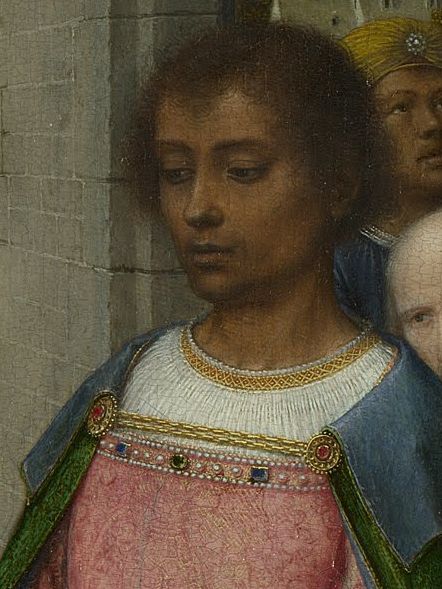
St. Balthazar

St. Balthazar

January 11 · King
H

St. Hyginus

January 11 · Feast
P

St. Palæmon

January 11 · Hermit
← All 1726 saints in the library
Sources & notes

Feast-day sources

Story sources

Sources

Credits

Image: Evesham, St Lawrence's church window (38248535402).jpg · Jules & Jenny from Lincoln, UK · CC BY 2.0, via Wikimedia Commons

From Sabine Baring-Gould, The Lives of the Saints, new and revised edition (Edinburgh: John Grant, 1914; first edition 1872). Public domain.

Image: Jules & Jenny from Lincoln, UK, Wikimedia Commons (CC BY 2.0)

From Sabine Baring-Gould, The Lives of the Saints, new and revised edition (Edinburgh: John Grant, 1914; first edition 1872). Public domain in the United States. Reproduced unedited, except for short bracketed notes in grey that we added to explain names and terms (“S.” is the old abbreviation for Saint). Some history and judgments reflect 19th-century scholarship.