E

Using power to serve.

Read the essentials →
May 18 · Queen

St. Elfgyva

St. Elfgyva

Using power to serve.

Traditional feast

May 18
1914 / pre-1969 calendar, per Baring-Gould (1897)

Current feast

Not verified yet

Represents

Queen

Their story

Adapted in modern English from Baring-Gould (1897–98) · original text below · little is known

(The surviving account on this page begins partway through the story.)

Widowed young, Queen Elfgyva devoted herself to the suffering and was called the support of the needy. Her heart was wrung by the scandalous conduct of her eldest son Edwy, who became king in 955; his brother and successor Edgar was, Baring-Gould says, no better.

William of Malmesbury says she secretly paid fines for condemned people and gave her finest garments to the first poor person she met. He adds that even malice could find nothing to criticise in her. She retired to the convent of Shaftesbury, founded by King Alfred, and died there.

Struggles & surrender

What they wrestled with, and how they gave it to God

  • A son's misconduct ·
    Source: Baring-Gould, Lives of the Saints. Her heart was wrung by the scandalous conduct of her son King Edwy.

Early life

Selected sentences from the original account, unaltered.

Thin entry · the 1897 book gives only 232 words. We have not filled the gap with invented detail.

The poor young queen had lost her husband early, but this was the least of her sorrows.

What they represent

How they teach us to live

Drawn from themes in the original account

Give to people in need. The account records care for the poor.

Make time for silence. Solitude and withdrawal to pray shape this life.

Build up the community you belong to. This life was lived with and for a community.

Learn from the kind of life it was. Using power to serve.

Read more

The full original · 232 words

Read Baring-Gould’s full account

Baring-Gould’s sources: Anglican Martyrologies, but by some on May 5th. By Mayhew on June 30th. Authorities: — William of Malmesbury, Florence of Worcester, and Roger of Hoveden.] S. Elfgyva was queen of Edmund the Magnificent, who came to the throne of England in 940, succeeding his brother Athelstan. Edmund did not reign long. In the year 945 he was keeping the feast of S. Augustine of Canterbury at Pucklechurch, in Gloucestershire, and there came into the hall one Liofa, a robber, whom he had banished six years before. This man went and sat down by one of the chiefs, near the king himself. Edmund bade his cup-bearer remove him; but instead of going, Liofa tried to kill the cup-bearer. Then the king got up and went to help his servant, and seized Liofa by the hair and threw him on the ground, but the robber had a dagger, and stabbed the king from below. Liofa was cut to pieces at.once by the king's men, but Edmund died of the wound. Elfgyva and Edmund had two sons, Edwy and Edgar, but as they were very young, Edred, the brother of Edmund, was chosen to succeed him. He must have been a young man himself, for his elder brother Edmund gt * May i8.] S. Elfgyva, 255 was only twenty-four when he was killed. Edgar was born in 943.

The poor young queen had lost her husband early, but this was the least of her sorrows. In her widowhood she laboured to heal the wounds of the sufferers. “She was the adviser and ennobler of the whole kingdom, the consoler of the Church, the support of the needy and the oppressed.” 1 But her heart was wrung by the vicious conduct of Edwy, her eldest son, whose wantonness became a general scandal. Edwy became king in 955, and was succeeded by his brother Edgar, whose morals were in no way superior. William of Malmesbury says of the queenmother, “ She was a woman intent on good works, and gifted with such affection and kindness, that she would even secretly discharge the penalties of those culprits whom the sad sentences of the judges had publicly condemned. That costly clothing, which, to many women, is the occasion of evil, was to her a means of liberality; as she would give a garment of the most beautiful workmanship to the first poor person she saw. Even malice itself, as there was nothing to carp at, might praise the beauty of her person, and the work of her hands.” 3 She retired at length into the convent of Shaftesbury, which had been founded by King Alfred, and there died. 1 Osbem in Vit. S. Dunstani.

2 William of Malmesbury. English Chron., lib. ii., u. 8.
Feast days

Feast: May 18

Nine days · Free

Pray the novena
with us.

One short email a day for nine days. The day's prayer, a line from St. Elfgyva's story, and a nudge to keep going.

Also on May 18
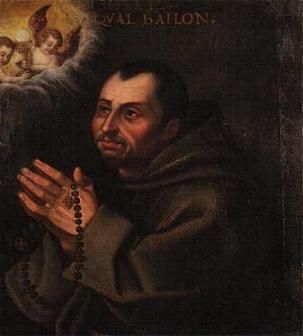
St. Paschal Baylon

St. Paschal Baylon

May 18 · Confessor
T

Sts. Theodotus and…

May 18 · Martyrs
F

St. Felix of Spalato

May 18 · Bishop
← All 1726 saints in the library
Sources & notes

Feast-day sources

Story sources

Sources

Credits

From Sabine Baring-Gould, The Lives of the Saints, new edition in 16 vols. (London: John C. Nimmo, 1897–98); text from the Internet Archive scan (OCR, lightly cleaned; errors possible). Public domain.

From Sabine Baring-Gould, The Lives of the Saints, new edition in 16 vols. (London: John C. Nimmo, 1897–98); text from the Internet Archive scan (OCR, lightly cleaned; errors possible). Public domain in the United States. Reproduced unedited, except for short bracketed notes in grey that we added to explain names and terms (“S.” is the old abbreviation for Saint). Some history and judgments reflect 19th-century scholarship.