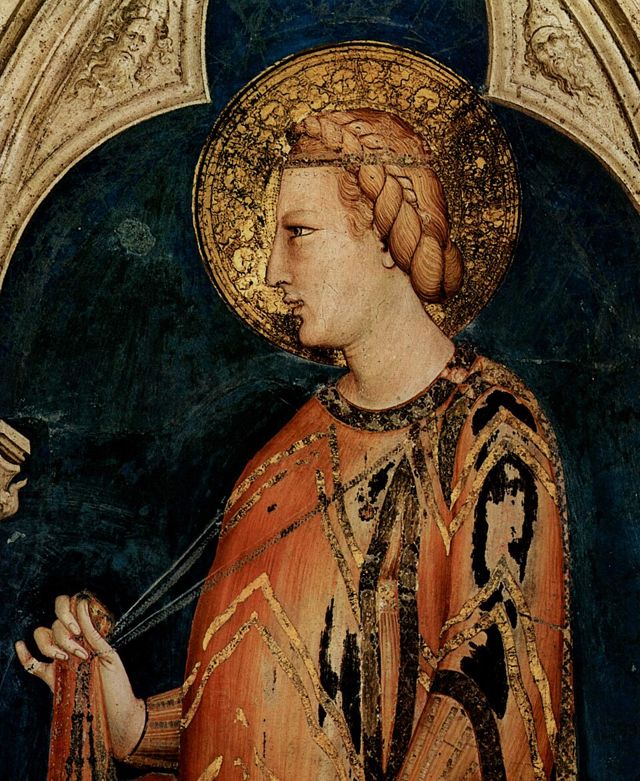
Baring-Gould’s sources: Roman Martyrology. Canonized by Gregory IX. in 1235. Authorities: — (1) “Libellus de dictis Quatuor ancillarum S. Elisabeths,” written in 1234; in Mencken, “Script, rer. Germ.” ii. 2007-2034, slightly abbreviated, but nothing of importance omitted. “In Prologo continentur inanes laudum tituli et tsdioss de virtutum Elisabeths repetitiones; quas, pace Lectoris, omittimus.” (2) “Epistola Conradi de Marburg ad Papam (Gregorium IX.) de vita S. Elisabeths.” The earliest account of the saint, but very deficient in details. In Leo Allatius, 'Zvfifwcrcr, Colon. Allobrog. 1653, p. 269; and in Kuchenbecker, “Analecta Hassiaca,” ix. 107. (3) “Vita S. Elisabeths, auct. Theodorico de Apolda,” author also of a Life of S. Dominic, written probably in 1289, the foundation of later biographies — a much overrated work; in Struve, Acta Literaria e MSS. ii. I; Kollar, Vett. analecta, i. 885. (4) A Life of Ludwig IV., by Berthold, the chaplain of Ludwig, written in Latin, large extracts from which are incorporated in the “Chronica Pontificum et archiepiscoporum Magdeburgensium,” in the Hannover Library, and the greater part in the Annales Reinhardtsbrunnenses (ab. 1026-1335), ed. Wegele, Thiiringischen Geschichtsquellen, i. Jena, 1854. This was composed certainly before 1289, and was added to up to 1308-1315. A German translation was made by Friedrich Kodiz von Salfeld, ed. H. Riickert, Leipzig, 1851. Kodiz did his work between 1315 and 1323. (5) An old German rhyming Life of S. Elizabeth, originally composed by an unknown poet in seven books, of which an excerpt was given by Graff, “ Diutiska,” i. p. 344-489. Dronke published 193 more verses in the Anzeiger, vi. p. 54* With the assistance of this poem a “ Rhyming Chronicle of S. Elizabeth ” was written by Johann Rothe, according to Bodmer and Grater, Bragur, vi. 2, p. 137. This rhyming chronicle is in Mencken, “ Scr. rer. Germ.” ii. p. 2033-2102, and consists of 4500 verses. (6) “ Hsec est forma de statu mortis Landgravise de Thuringia,” in Martene and Durand, Ampl. Coll. i. 1245-56. (7) “Vita S. Elisabeths, filis Andres Hungaris, auctore Cssario Heisterbachensi” (d. 1240) is merely a recasting of the narrative of the four maids of Elizabeth. (8) Johann Rothe (d. 1434), “ Chronik von Thiiringen.” Rothe was formerly monk at Eisenach, afterwards chaplain to Anna, the Landgravin at Eisenach. In Mencken, ii., the portion referring to S. Elizabeth, p. 1697-1729. (9) Wadding, “Annales Minorum,” Roms, 1732, vols. i. ii. (10) Adam Baring (Ursinus) von Molberg, “Chronica Thuringis vemaculum” (1547), in Mencken, “ Scr. rer. Germ.” iii., the portion referring to S. Elizabeth, Hermann, landgrave of Thuringia and Hesse, was married first to the daughter of the Elector of Saxony, and when she died childless, secondly to Sophia of Bavaria, by whom he had four sons — Ludwig, Hermann, Henry, and Conrad. Hermann died young.
One day during the year 1211, as Hermann, landgrave of Thuringia, sat among his minnesingers in his castle, the Wartburg, the renowned poet Klingsor of Hungaria announced to him that on the self-same night Gertrude of Meran, consort of Andrew II. of Hungary, would give birth to a daughter, the destined bride of his eldest son, Ludwig.1 This daughter, Elizabeth, was at once demanded in marriage for his son by the landgrave, and she was carried in a silver cradle to the Wartburg, attended by the gallant knight Walter von Vargila. The arrival of the baby-bride was honoured with festivities, and as symbol of their union, 1 The prophecy of Klingsor was delivered during the famous Wartburg Contest of:he Minnesingers, an account of which we have in rhyme by one of those present, Wolfram von Eschenbach. An account is also given in the Life of Ludwig by his jhaplain Berchthold; 465 lines are devoted to it in the Rhyming Chronicle. Nov. i9.] S. Elizabeth of Hungary.
the two little children were rocked to sleep in the same cradle.1 The children grew up together from infancy in much love, regarding each other as brother and sister. In the year 1215, Hermann the landgrave died at Gotha, and his body was brought to Eisenach, and buried in the church of S. Catherine. Ludwig, his eldest son, succeeded him, he was then fifteen, his little bride was only nine or ten years old.
The young landgrave was a boy of great promise. His chaplain Berchthold says of him, “ He was a youth of nobleness of character and of delightful holiness. As he now came to the full bloom of youth, he seemed full of all virtues, great goodness, and mild compassion although in the first years of succeeding his father he had to endure much opposition and hostility, yet his natural virtue and sincerity did not suffer, for his mind was ever musing on heavenly things/’ The Rhyming Chronicle thus sums up his character, “ In his childish years he began to bear himself right princely. He was a handsome youth, and did all things with prudence and advice. It grieved him to hear of any wrong. From his youth up he feared God, and was sternly set against evil. He loved the right, and he would not endure those who opposed it, but dismissed them from his court and favour. He who was deceitful, and lied, and misled people with false words, dared not face Ludwig.” Elizabeth was not kindly treated by Sophia, the mother of the young landgrave. She was prejudiced against the child, and thought her son might make a more advantageous match. The ladies of her attendance and the servants caught the feeling of their mistress, and behaved harshly, dae und gesprungen und manch frolich lydlichen gesungen. Dae legten sy die Kinder bey zu einem vorspiell sold es sey.” — Vita Rhythm. [Nov. ig.
even insolently, to the poor child. Ludwig stood chivalrously by her, and refused to listen to proposals for a dissolution of engagement. But he could not be always at home, and in his absence she suffered. Her heart clung with intense love to the handsome boy who was affianced to her. She had no one else to love; her mother had been assassinated in 1212; she had no friend in the Wartburg, and she turned instinctively to the Church, the home of the sorrowful. Adam Baring says, “ Elizabeth was perfect in body, handsome, brown complexioned, earnest in her conduct, modest in all her ways, kindly in speech, fervent in her prayers, and overflowing in her charity to poor people, peacefully disposed towards her attendants, considerate of her maids, and full of virtues and godly love at all times.” At the same time Ludwig “ was not too tall nor yet too short; he had a handsome loveable face, was cheerful, kindly, and modest as a young maid, clean in person and in his dress and habits, wise, provident, patient, manly, honourable, and truthful, and to his men very trusty, and to the poor chari table; ”
One feast of the Assumption, the Landgravin Sophia, with her daughters Agnes and Elizabeth and the young betrothed of Ludwig, went in state to the church of Our Lady at Eisenach to hear high mass sung by the knights of the Teutonic Order,1 and gain the indulgences accorded on that day. Elizabeth of Hungary was sad at heart, having recently met with illusage, and feeling greatly her desolation. The noble ladies were richly dressed, and wore their coronets set with pearls and precious stones. As they swept into the church, Elizabeth looked up at a great solemn crucifix near the door. Instantly she took off her coronet, laid it on the bench, and 1 “ Dae sprach Sophia die lantgrevin.... Wir gehen gein Eysenach in die Stadt, dae man heut vil ablas hat, in der kirchen vnser lieben frawen; dae wollen wir uns beschawen. Dae singen schone messen die deutzschen herren.” Nov. IQ.l S. Elizabeth of Hungary.
fell on her knees before the Crucified. Sophia was angry and rebuked her. “ Stand up ! what mean you by falling down like an old worn-out horse on the ground, and casting off your coronet ? Are you a silly child still, and is the crown too heavy for your temples ? Stand up, and don’t remain bowed like a common peasant.” Elizabeth with tears in her eyes replied, “ Dear lady, I pray thee let me alone; there stands the form of the sweet, merciful Christ, crowned with thorns, and I cannot pass Him with a chaplet of gold and pearls on my head.” And she poured forth the burden of her heart in silent prayer. Her tears ran down her cheeks, and Sophia and her daughters had some difficulty in screening her from the crowd \ for they had no wish that her grief at their ill treatment should become generally known. When Elizabeth was ten years old she chose for herself a patron. It was customary in those days for children to put cards, or candles, on the altar, on which the names of saints and apostles were written, and then to draw card or candle, blindfolded, from the altar; the name written on what they had drawn was to be that of their patron. Elizabeth thrice drew S. John the Divine, and ever after she regarded him as her special guardian saint.1 The landgravin not only ill-treated her, and repelled the love of the child, but she allowed her to be wounded at heart by sneers at her birth. “ She may be a king’s child,” was said, “ but her mother was a concubine,” 2— a gratuitous insult based on no foundation of truth. It is not to be wondered at that Elizabeth dreamt she was visited by the spirit of her mother, to console the weeping child, and ask her prayers that God 1 De Dictis iv. Ancillarum. “Unde cum secundum consuetudinem Dominarum, omnium Apostolarum nominibus vel in candelis vel in carta scriptis singulariter, simulque super altare mixtum compositis singulos sibi Apostolos forte eligentibus; ipsa Elyzabeth.... tribus vicibus beatum Johannen recepit Apostolum," &c. Ap. Menck. ii. p. 2013; cf. also de Rothe, Chron. Thuring. p. 1703. a “ Sy were eyn Konnigis kint, sy were eynes geburis tochtir.”— Rothe, p. 1703. VOL. XIV.
might shorten the period of her purification and admit her into His rest.1 But Ludwig was always a comfort to her, when at home. The ancient German metrical Life gives a pretty picture of their love. “ God looked upon her very sore sorrows and gave that the landgrave loved her dearly in his heart. And when he came to Eisenach, and they were alone together for a while, then he began to treat her very tenderly, and to console her as best he could. And he spake to her friendly words, and these helped her greatly. And when he was ridden forth over the fields after princely fashion, and went to any great city, where costly things are exposed for sale, then he bought her always something that pleased him or was rare — a pater-noster of coral (rosary),2 or a picture, or a pretty little cross, or whatever he found which she was not likely to have seen before. And so he always brought her a present as token that he had been thinking of her. He never came empty, but always brought either a knife, or a bag, or gloves. And as the time came for him to return, she ran lovingly to meet him, and he took her on his arm, and he gave her what he had brought home for her.” On one occasion Ludwig had not returned, or sent her any little present. Elizabeth pined for his coming, but time passed, and there was no token that she was remembered. He was, in fact, busy, so deeply engaged at Reinhardtsbora that he could not go back to Eisenach. The malicious court ladies, and perhaps also Sophia and her daughters, began to hint to Elizabeth that Ludwig was tired of her, was going to send her back to Hungary, and look out for a wife who was not so devoted to works of piety and to the virtues of a cloister. The poor, solitary girl felt this keenly. 1 “ Diz geschach, alzo diz kint Elsebeth sibin jar alt war, do quam dy muthir deine kinde dez nachtis vor, unde sprach, Liebiz kint, ich ben gestorbin.” — Rothe, p. 1701. 2 Quite a novelty; as the rosary was first introduced by S. Dominic about 1210. S. Elizabeth of Hungary.
At last she could bear the suspense no more, and she confided her trouble to the trusty knight Walther von Vargila, who had brought her in her silver cradle from Hungary, and had received from her mother earnest exhortations to be a true champion to the little child. Walther at once rode off to Reinhardtsborn, and asked Ludwig humbly what his intentions were, for the poor little girl who loved him was unhappy among the harsh ladies of the Wartburg. Ludwig pointed to a great mountain, “ Do you see that mountain ? Were it all of pure gold from base to crown, I would cast it away as waste drops before I would surrender my claim to Elizabeth. Let them say what they will, Elizabeth shall be mine.”
“ My Lord,” said the trusty Walther, “ what token shall I take back to the little maiden ? She has been looking out and longing for a present from you.”
“ Take this, which is for her,” answered Ludwig, and he drew from his pouch an ivory looking-glass, on the back ot which was carved a crucifix.1 In 1218, Ludwig was dubbed knight in S. George’s Church at Eisenach, on S. Kilian’s Day, by the bishop of Naumburg.2 This was followed by a tournament and great festivities. Elizabeth looked on, and saw her young bridegroom conduct himself valiantly in the lists, bearing, no doubt, her colours, and doing battle for her honour. And now he was at home and she could pour out some of her troubles into his faithful heart. Jutta, a servant girl who was with her all her girlhood and till after she married, declared, on the death of S. Elizabeth, that “ she endured heavy and open persecution from the relations, and vassals, 1 Theodoricus, 1. i. c. 7. “ Proferensque de bursa sua dedit nobili illi quod penes se habebat speculum duplex, eneis inclusum sedibus, una parte simplex vitreum, et in parte altero ymaginem preferens crucifixi.*' But Vitar hyth.: “ Sincn spiegell gab er Ime.... von helffenbein.”
1 “ Do schynete en der bischot von der Nuwinborg zeu ritter.” — Rothe, p. 1703. and councillors of her betrothed; they were always trying to induce him, by every means in their power, to repudiate her, and send her back to the king, her father. Flying from their contempt, she took refuge, as she was wont, in God alone, and in submitting herself wholly to His will and commending herself to His hands. But, in spite of all, and contrary to all anticipation, she had in her betrothed a secret consoler in all her sorrow and affliction.” As a little child, she had been driven to find playmates among the poor peasant girls; now, grown nearly to womanhood, finding only cold looks in the castle, she sought the grateful smiles on the faces of the sick whom she ministered to in their cottages.
In 1219, Archbishop Siegfrid of Mainz excommunicated Ludwig and his deceased father, about some trifling matter, apparently of boundaries. Ludwig was greatly incensed, assembled an army, and invaded the archbishopric, burned villages, defeated the troops of the prelate, and caused such devastations that the archbishop was obliged to come to terms with him and raise the ban from him and his father. Next year, 1220, the Landgrave Ludwig celebrated his marriage with Elizabeth. He was then twenty years old, and she fifteen. The wedding was celebrated with great splendour, and lasted three days, with feasting, tournaments, dancing, and minstrelsy.
As soon as the festivities were over, she returned to hei favourite occupation of looking after the poor. In plain clothes she visited the meanest cottages, sat by the sick on their pallets, and gave them the food and warm coverings she had herself brought them. Never weary in her holy work, never shrinking from the poorest beggar, never repelling the most ungrateful of those whom she assisted, she became an object of wonder and admiration to the suffering and needy of the whole neighbourhood. Shortly after the marriage, S. ELIZABETH OF HUNGARY.
After the Painting by Hans Holbein (the elder). One of the wings of the Altar-piece of S. Sebastian in the Pmakothek, Munich. Nov. ig.
Nov. i9.] 5. Elizabeth of Hungary. 423 Ludwig said to his wife, “ Dear sister ” — he had so called her since they were little children together — “ your father is sending an embassy to congratulate us on our union, now I pray you lay aside that very plain dress, and appear before them in noble attire.” “ Dear brother,” she answered, “ I will do my best not to shame you.” And she appeared in a silk suit embroidered with pearls, which she had not worn before, and in which her beauty shone refulgent. Her biographers suppose it was miraculously brought her from heaven, but there is no occasion for imagining anything of the sort; it was, no doubt, a rich dress given her at her wedding, perhaps by her husband.
Next year, she and Ludwig, attended by an escort of the noblest of the land, Count Henry of Schwarzburg, Henry of Stolberg, Meinhard of Molburg, Rudolf of Vargila, and others, paid a visit to Andrew, King of Hungary. They were received with great honour, with feasts and tournaments; and when they returned, Andrew gave them “ a newly-made coach filled with money and precious things.” When the whole party had returned from Hungary, Ludwig invited all to a banquet at Wartburg, after which they were to separate. Elizabeth, on her return, had gone at once to see her poor people, and when all were seated at the table she had not come in. She had been detained, listening to piteous stories, and now she was hastening up the rock on which the Wartburg stands, to be in time for the banquet. At the door of the hall she saw a poor naked wretch, haggard with hunger and cold, lying prostrate, and begging for something to cover him. He had heard that the good landgravin was returned, and had crawled up the steep path, and fallen at her gate. She had no money with her. She hastily promised to send him out food; but the poor man, showing his rags, entreated her rather to give him a wrap against the cold, for night was coming on. Moved at his misery, she plucked off her silk mantle, cast it over him, and went into the hall and took her place at table. Ludwig looked at her, and said, “ My sister dear, where is your mantle ? ” “ Hanging up in my room/’ she answered, reddening. Then she bade one of her maids bring her one, and she ran and fetched her another mantle, and placed it over her shoulders, to the satisfaction of her husband.
The Landgrave Ludwig was guardian of Meissen for his nephew, Henry, a minor, the son of his half-sister Jutta by Albrecht, Margrave of Meissen. Directly that the margrave died, Ludwig entered Meissen, and arranged everything necessary for the government of the principality. Four years after, Jutta, much against her brother's will, married Poppo, Count of Henneberg, and this led to strife and mutual invasion of territories with sword and flame. In 1223, Elizabeth gave birth to a son, and named him Hermann.
About the same time1 Agnes, the sister of the Landgrave Ludwig, was married to the Duke of Austria, at Niirnberg. In 1224 Elizabeth bore her husband a daughter, at Wartburg, and it was baptized Sophia. The child was aftenvards married to the Duke of Brabant. Next year she had another daughter, which was also named Sophia, after her grandmother. She became eventually a religious, and died at Kitzingen. It is touching to see in the naming of the two little girls after their grandmother, the efforts made by Elizabeth to soften the harsh woman whose animosity had embittered her life, and who still resided in the Wartburg to be a thorn in her side, and to attempt to make mischief between her and her husband. One day Elizabeth had a very sick leper carried into the castle and laid on her husband’s bed; he was from home, and she could thus be at 1 John Rothe says 1223, but Baring, 1227. IWMV sny i, ii^jj ' ■ S. ELIZABETH— THE MIRACLE.
“ I see only Jesus Christ.” Nov. in. S. Elizabeth of Hungary. hand to nurse the dying man, who was in such a condition from disease that no one else could be got to nurse him. Unexpectedly Ludwig returned from Naumburg. His mother rushed to meet him. and angrily bade him follow her and see what Elizabeth had done — she had actually brought infection to the room of her husband. Ludwig accompanied his indignant mother to the chamber, she drew back the curtains, threw off the clothes, and said, “See what Elizabeth has dared to do.” “ I see only Jesus Christ ministered to in the person of His sick member,” answered the landgrave.1 In 1225 Ludwig went to meet the Emperor Frederick II. in Apulia, to which he came from Sicily, but returned almost directly to Germany. This was a year of great distress. Heavy gales beat down the corn, and shook the grain out of the ears; then followed rain, and the wheat rotted on the sodden fields. Many died of starvation. Elizabeth opened her granaries on the Wartburg, and gave com to the poor, and sent it to those too weak to climb the steep rock. She built a hospital at the foot of the castle rock, in which she nursed twenty- eight sick folk. The steward and others complained that she was wasting the stores. They told her husband, on his return, of what she had done. He bade them in no way hinder her. The people were feeding on roots, hay, berries; they had devoured their horses and asses; it was necessary to empty the granaries to save life. One day, says the legend, as he was walking up the steep path to the castle, he met Elizabeth with her lap full of loaves. “ What have you there?” he asked, and, drawing her mantle away, he saw that her lap was full of roses. Looking up, he beheld a cross shining in the air over her head.2 1 The story has, of course, been improved into their really finding Christ on His Cross in the bed. But it is easy to see how such an answer of the landgrave may have furnished material for the fabulist. a An old myth of Freya, the Goddess of Nature, whose lap is now filled with corn, Her attendant, Irmentrude von Horselgau, says, “ Under the castle of Wartburg there was a great house in which she placed many infirm persons, who could not get to the distribution of general alms, and in disregard of the laborious ascent and descent, she visited them daily, consoling them and talking to them of patience and the health of the soul, and she satisfied each according to his fancy with drink or food. Even did she sell her ornaments in order to support them; and although she was scrupulous about fresh and pure air everywhere else, yet she did not revolt from the offensive odours which hung about the diseased in the heat of summer, and which her servants could not endure, and grumbled at. She had, moreover, in the same house many poor little children, whom she took good care of, and treated them with such gentleness and sweetness that they were wont to call her Mother, and when she entered the house they crowded round her; and among these she showed special love to the scrofulous, infirm, weak, and deformed, taking their little heads in her hands and rocking them on her bosom. And she brought little boys as an amusement little crocks, pewter rings, and other trifling treasures for children, and as she rode from the town to the castle, she had all these toys in her mantle. One day by accident they fell down from the rock on a stone, and although they fell on a stone, yet none were broken, and she was able to distribute them uninjured among the boys.” 1 When she heard of poor women being confined, she hastened to visit them, and lend or give them things they might be in need of. She was careful not to give in profu and then with chips of wood, and then with flowers, according to the season — the wood for fuel in winter. This myth, lingering on in the memory of the people, has attached itself to numerous saints. S. Nothburga had loaves and chips; S. Elizabeth of Hungary, S. Elizabeth of Portugal, S. Germaine Cousin, loaves and roses. Same story of S. Zita, S. Casilda, S. Verena, S- Roselina, S. Rose of Viterbo, S. Martha of Troyes, S. Diego of Alcala, S. Louis of Toulouse, &c. 1 De Dictis iv. Ancillarum, pp. 2017-8.
Nov. i9<] ■5\ Elizabeth of Hungary. 427 sion in money, so as to make the people beggars, but with wise discretion, giving scythes or reaping-hooks to poor men in order that they might work for their living. She delighted in being godmother to the poor children, so as to be able to claim spiritual relationship with them.
One day when the great fair was being held at Eisenach, Ludwig went to the market-place for amusement, and saw there a poor pedlar with a box, selling thimbles, needles, drums, flutes, black-lead, brooches, and spoons. The landgrave asked him whether he earned much from his pack. The pedlar answered, “ Gracious sir, I am ashamed to beg, and I am not strong enough to do field-work. If I might go in peace from one of your towns to another I should earn, with God’s help, enough from this pack to do comfortably.” The prince was moved with compassion, and said to the pedlar, “ Very well, you shall have my permission, and you may trade in all my territory freely/’ Then he said to his chamberlain, “Give him ten shillings and my letters of free conduct.” And turning to the pedlar, he said, “ I will go shares with you in your pack. Swear to be true in your reckoning with me. Lay out the money in wares; I will hold you safe from molestation, and at the end of the year you return to me, and we will share profits.” The chapman was delighted, he promised to be faithful to his sleeping-partner, and went on his way. At the end of the year the pedlar came with his account to the Wartburg, and the profits were so considerable, that the landgrave was able to clothe all his court with his share. Every year the profits increased. The chapman could no longer carry his pack, he was obliged to buy an ass, and he laid his wares in two panniers. He became more venturesome, and went to Venice, bought “gold rings and brooches, head-gear, ribands, precious stones, goblets, ivory looking-glasses, tablets, table-knives, adders’ tongues, coral rosaries (pater-nosters) and the like.” On his way back he passed through the territories of the Prince Bishop of Wurzburg. Some Franconians, coveting his goods, which they wanted to give to their wives and sweethearts, and could not afford to buy, waylaid him as he left Wurzburg, and robbed him of his packs and ass. He arrived at Eisenach very doleful, and told his lord and comrade1 all his misadventure. The landgrave said to him, “ My dear comrade, don’t trouble yourself about our pack, and look nowhere for it.”2 Then he gathered together his knights and retainers, and suddenly fell on the estates of the bishop of Wurzburg, burning villages, and desolating the land. The bishop asked what was the reason of the onslaught. Ludwig replied that the pack and ass of his comrade were stolen; and he should burn and destroy till the ass was restored, with the two panniers, and everything in them, just as the pedlar had packed them. The ass and all the property of the company were speedily produced and returned. So Ludwig went back with them to Eisenach in triumph.
One festival, Ludwig was looking from a window in Eisenach at the peasants dancing in the market-place. A slim young woman, the wife of a humble tradesman in the town danced so gracefully and looked so beautiful, that the prince said, “ It is a pleasure to see her dance.” “ If you like,” said an attendant, “ I will carry her off to your castle for you.” Ludwig turned sharply upon him, flaming with indignation and shame. “ Man,” said he, a as you value my favour, not another word of this sort. Leave the poor innocent thing alone. Woe to the ruler who, instead of being the refuge of his people from those who do them wrong, is the wrongdoer himself.” As Ludwig went through his courtyard one night, a lion which had been kept caged 1 “ Quam kegin Ysenach zcu syme herrin vnde gesellin trurig.” — Rothe. 2 “ Myn libir geselle, betruwe dich nicht vmme vnsim kram, vnde zeuch ouch nergin.” — Ibid.
6'. Elizabeth of Httngary. met him. The beast had broken forth. Ludwig raised his fist, threatened him, and the lion crouched at his feet. The attendants who ran up at his call had much difficulty in chaining the lion again.
About five years after her marriage, Elizabeth fell under the influence of a man who was to darken the rest of her life, and whose baleful power over her timid, yielding spirit blighted all its best and noblest aspirations. This was Conrad of Marburg, an inquisitor, apparently a Franciscan, who was commissioned by the Pope to hunt out and destroy such heretics as the pleasant Thuringian land was found to harbour.
It is necessary to give an outline of this man’s life, that the character of the director may be thoroughly appreciated, who, when once he got Elizabeth in his iron grasp, never released his hold till he had crushed the trembling, pure life out of the fragile body. Conrad of Marburg 1 was, there can be no question, of low birth. In 1212, eighty heretics were burnt alive at Strassburg, and Trithemius mentions Conrad as “ inquisitor apostolicus” who gave them over to the flames. But earlier accounts of this persecution do not mention him, and Trithemius probably mistook. Certainly, however, Conrad was at that time, and later, inquisitor in Lower Germany. Conrad, a native of Marburg, one of the castles and estates of the landgrave, pushed himself into notice with Ludwig, and his asceticism and zeal attracted the reverence of the simple prince, who had not the faculty to see, behind this mask of religion, the baseness, envy, and cruelty which made a hell of this infamous man’s heart. Berthold, the chaplain of Ludwig, says that his master held Conrad in such honour that he allowed the friar to present to all the livings to which he had nomination. Berthold says, “ He preached throughout the whole of Germany with 1 See Dr. C. L. Th. Henke, “Konrad von Marburg,” Marb. 1861. apostolic commission, and an innumerable crowd of clerks and people followed him; for they all held him to be a saintly and upright man, some following him with love, others trembling. He assured the Landgrave Ludwig that it was a less sin to kill sixty men than to appoint improperly to a living.” Ludwig in a weak moment gave consent to Elizabeth’s vowing perpetual obedience to this man as her director, little dreaming that by so doing he was condemning her soul to the rack, and her body to death. In 1227, Pope Gregory IX. was in communication with Conrad, praising his zeal in the extermination of heretics, and, in a glow of enthusiasm over the energy with which they had been tortured and butchered, designating Conrad as his “ dilectus filius.” He gave him a commission to proceed against German priests guilty of immorality, and afterwards constituted him Visitor of German monasteries and convents. A letter ot the Pope in 1231 praises the success Conrad had achieved in rooting out heresy in Germany, and extending to him further and fuller liberty to act against all unhappy wretches suspected of holding independent views. He was urged to devote himself solely to persecution, not to pause and rest on his laurels after the most wholesale massacre, but to nerve his arm for fresh destruction. All those who harboured heretics, who gave a cup of cold water to a suspected person, were involved in a common condemnation, and threatened with similar extermination. Whosoever gave him a hint where to catch a heretic, or a harbourer of such, was to be rewarded with indulgence for three years, with remission of all sins, and freedom from obligation during those three years to do penance for them, however heinous they might be. Twenty days’ indulgence was granted by the Pope to all who should listen to one sermon' of Conrad’s against the heretics. In 1233 the Pope further commissioned him to extend absolution to murderers and incendiNov. i9.] •S'. Elizabeth of Hungary. 43 1 aries on condition that they armed themselves to destroy heretics in their neighbourhood or their own families. Conrad wrote exultingly to Gregory IX. of havoc wrought amongst the heretics at Leiden and Stedinger. In 1232, “ innumerable heretics/’ says the Erfurt chronicler, “ were burned by him.” On the 5th May, 1232, he sat and gloated over the agonies of four poor wretches writhing in flames at Erfurt. At this time, says the Gerstenberg Chronicle, “ many knights, priests, and other honourable persons were seized, some recanted, others were burned behind the castle of Marburg, amongst them a poor woman; wherefore the place is still called the Heretics-beck.” Such were the tender mercies shown to his native place. It was precisely at the time when Frederick II. was in hostility with the Pope, and his son Henry had been instigated by Gregory IX. to take up arms against his father, that the inquisition in Germany became an alarming power, and Conrad was able to give full rein to his natural ferocity and vindictiveness. For whoever sided with the emperor against his rebel son became involved in excommunication, suspected of heresy, and marked for ruin. In his excommunication of Frederick, launched from Perugia, the Pope had denounced as equal in infamy, the Cathari, the Paulicians, the poor men of Lyons, and the emperor. Conrad, “ supported by the esteem of the Pope,” says the Trhves Chronicle, “ became so bold, that he treated king and bishop as common folk.” He associated with himself two others, worse than himself, Conrad Tors and Hans the One-eyed and One-handed. Both these men had been formerly heretics, but had changed from the persecuted to the persecuting form of faith. The first was now a Dominican. In 1231 he had assumed on his own authority to be judge and executioner, and at the head of a rabble had committed many poor creatures to the flames on the smallest suspicion. “ Better,” said he, “that a hundred innocent persons be burned than that one guilty one should escape.” Even knights and nobles had been araigned before Conrad Tors, who made this agreement with the bishops and judges, “ We will burn the rich people, and you shall divide their lands, the bishops one half, the temporal authorities the other half.” 1 Conrad of Marburg took these two wretches under his protection, and associated with himself also a fanatical girl of twenty, named Alaidis, “ femina vaga,” who had quarrelled with her family, and whose relations with Conrad perhaps ought not to be inquired into too closely. Another of his allies in his bloody work was a jail-bird named Amfried; and there were others of the same stamp, forming the inquisitorial army marching under the protection of Papal authority.
The fear of this host fell on all the country. They arrested whoever they chose, and many innocent persons, to save their lives, confessed themselves to have been heretics, but to be open to conviction, and ready to do penance. Conrad shaved their heads, and ordered them to be kept under surveillance. Whoever denied the imputation was burned at once, on the same day, without appeal. The Archbishop of Mainz wrote to Pope Gregory a letter of remonstrance. The terror inspired by these ruffians caused false evidence to be given, and innocent persons to be denounced. The trembling victims were asked, he said, to name their fellow heretics, and when they were unable to do so, a list of names was read, and the victims cried out which were guilty.2 Thus the Counts of Sayn, Arnsberg, and Solms, and the Countess Lotz were accused. Thus, said the archbishop, the wife, in her terror, denounced her husband, the servant his master, the master his servant. Those with shaved 1 Annales Wormatienses.
2 “ Nescio quem accusem, dicite mihi nomina, de quibus suspicionem habetis,” &c. Letter of Archb. Siegfried to the Pope in Aiberici CHrr,nWni. •S. Elizabeth of Hungary.
heads were bribed by the intimidated people to tell them the secret of escape. Other Dominicans and Franciscans threw their energies into the grand crusade and butchery, and the whole of North Germany trembled. But it had become unendurable. King Henry held a Diet at Mainz on July 25, 1233, and Count Henry von Sayn appealed to the assembled princes and bishops against the Papal Inquisitor. Conrad of Marburg had summoned him for trial, and had threatened to storm and plunder his wealthiest castles with an army of women.1 The count claimed to be a good Catholic, and all the bishops present attested that he was so. Conrad was present and defied them. He bore the papal authority to try heretics, and the count was denounced to him. The archbishops of Mainz, Cologne, and Treves [Trier in Germany] in vain endeavoured to dissuade the papal inquisitor from proceeding against a man of unblemished orthodoxy. Conrad at once began to preach in Mainz his crusade, and to declaim against the Diet, the Archbishop Siegfried, and King Henry, to collect a horde of fanatics about him. absolve murderers and incendiaries who joined him, and arm them for a massacre. The mob threatened the count of Sayn. He appealed to the Diet for protection; the archbishop was obliged to appear before the mob and assure them that the count was a good Catholic.
Conrad left Mainz to return to Marburg. On his way, on July 30, 1233, he and his companion the Franciscan Gerhard were waylaid and killed by some nobles who had been insulted and shaved by him, or had relatives similarly disgraced. According to Trithemius the murderers were the Lords of Dernbach. He fell on his knees, and in abject terror begged for mercy. They sternly answered that he “ Quem affirmabant equitasse in cancro, dicentes nisi confiteretur, quod castra sua, quae erant peroptima, ipsi cum veteribus muliebris vellent auferre et inquirere." - Annal. Worm.
should meet with the mercy that he had shown to others, and was cut down. His brothers in arms met a similar fate. Tors was killed in Elsass by the knight of Miilnheim, whom he had accused of heresy, and dragged before his tribunal. Hans with the One Eye was hung at Friedberg. When Gregory IX. heard of the murder of Conrad, and of the scandals and atrocities committed by his inquisitor, he said, “ The Germans have ever been mad, and therefore it befitted them to have mad judges.” But later he changed his mind, and wrote in October, 1233, to the bishops of Germany, and to the archbishop of Mainz, and the bishop of Hildesheim, describing Conrad of Marburg as a second Thomas h Becket, deserving canonization, and requiring the murderers to be put under the ban, and an interdict laid on the places that harboured them; and urging that the persecution of heretics should not be relaxed by the untimely death of Conrad. No punishment was, however, accorded to the murderers. King Henry refused to proceed against them in the Diet held at Frankfort in 1234, and one bishop even urged that the body of Conrad should be exhumed and burnt as that of a heretic and criminal. Conrad of Marburg has found a certain amount of veneration, and is even designated as “ the Blessed,” but he has not, as yet, been formally canonized.
It has been necessary to sketch the history of this man, that the reader may have a correct idea of the character of the director whose influence was to weigh on, and indeed crush the life of Elizabeth. He had been allowed, as has been said, to become the director of Elizabeth, and even to impose on her a vow of implicit obedience to his will. During the long absences of Ludwig from home Conrad gradually extended his authority, till he domineered over the meek landgravine with unbounded insolence. One instance alone need be given to show the pride and violence of the Nov. i9. j S* Elizabeth of Hungary. 435 man. Conrad had to preach at Eisenach one day, and he expected Elizabeth and all her ladies in waiting to be present. But the margravine of Meissen, her husband’s halfsister, was coming that day. There had been so much illfeeling between Jutta and Ludwig that Elizabeth thought it doubly necessary for her to be ready to receive the margravine in person on her arrival. Conrad, marking the absence of Elizabeth and her ladies, sent a message to her that he renounced his charge of her conscience. She hastened next day to him, threw herself at his feet with all her ladies, and implored his pardon. This he only granted on condition that they should strip to their shirts, and be lashed with his knotted scourge. They shudderingly submitted, as, gloating his eyes on their bare shoulders, he beat them without more mercy than he had displayed to heretics dancing in the flames of their pyre.
Pope Honorius III. had urged Christendom to make another effort to recover Jerusalem. Frederick II. was to lead the crusade. It was preached throughout Germany; the most liberal promises were made to those who joined. Honorius died in 1227, and Gregory IX. succeeded him as the crusaders assembled. Ludwig, the landgrave of Thuringia, was persuaded by the bishop of Hildesheim, and a large sum of money offered him by the emperor, to take the cross. He did not, however, tell his wife for some time, and kept concealed the cross marked on his habit; but when the time approached when he must be making his preparations to depart he broke the news to her, saying that he went for the sake of Christ, and to recover His tomb from the hands of infidels, and that it would be unseemly were he to remain behind, when the emperor and so many princes were going to the East. She bowed to the inevitable, but with a presentiment of evil. He arranged all that was necessary for the well government of his land during his absence, vol. xiv. 5 and then departed with his troops to Smalkald, accompanied by his brothers Hermann and Conrad, his mother Sophia, his beloved wife and little children. As he left Elizabeth, he showed her his ring. “ Dear sister,” said he, “ look at this signet ring, with the Lamb of God engraved on the stone. Should this be brought you, it will be a token of my death. Then God bless you and the fruit of your womb. Then forget me not, sweet sister, in your prayers to God.” So he parted from her and his children, his mother and all whom he loved, on S. John the Baptist’s day, 1227. Frederick II. was at Melfi, in Apulia, awaiting the arrival of the soldiers of the cross. The long expected crusade was to start in August. To a great extent it was a failure. Few came from England, fewer still from France; the main strength of the enterprise lay in the Germans, who came over the Alps under the landgrave of Thuringia and the bishop of Augsburg. The German host arrived in Apulia, and their emperor, leaving his wife Yolande at Otranto, joined them at Brindisi. He rode thither in the heat, against the wishes of his physicians, who feared the worst from his imprudence, since his health was giving way. As it was, the constitutions of the northern men could not bear the heat of an Italian summer; they were more than a week engaged in freighting their ships with provisions and water; the power of the sun was so great that they thought it must melt even solid metal; Brindisi was an ill-chosen trysting-place, being most unhealthy. The badness of the air, and the rain that fell, killed off many of the crusaders. The bishops of Angers and Augsburg died; and the landgrave fell ill at Otranto. The surviving warriors set sail, Frederick and Ludwig among them. But, after remaining at sea for three days, the emperor fell ill, and, unable to endure the roughness of the waves and the unhealthy season, put back. The nobles of the East, who surrounded him, advised him to delay his voyage, as his S. Elizabeth of Hungary.
health was shaken. He put about, and returned to Otranto. They had set sail from Brindisi on the feast of the Nativity of Our Lady (September 8); Frederick was with the landgrave for a while in his ship, till they reached the islet of S. Andrew, when they parted. The sickness of Ludwig came on him at Otranto, and when the expedition put to sea he lay in his bed with death before his eyes. The patriarch [the title of the bishops of the great ancient sees: Rome, Constantinople, Alexandria, Antioch, Jerusalem] of Jerusalem ministered to him the last sacraments, and when the unlucky expedition put back to Otranto with the sick emperor, it brought with it also the body of the landgrave. Before he died he removed his ring, and gave it to a trusty knight to bear to Thuringia and give to his mother, without mentioning to anyone else what had befallen him, so that the news might not reach Elizabeth suddenly, but that his mother might be able gently to break it to her. His last thoughts were on her. The crusade seemed a total failure. The fighting-men who reached the Holy Land, when they heard that the emperor was incapacitated by ill-health from heading them, returned to Europe. Gregory IX. was furious. The emperor sent a deputation to explain to him the reasons of the failure. Gregory would not listen, but gathering about him as many bishops as he could collect, he excommunicated the recreant crusader, and despatched his violent sentence to all Christian kingdoms.
The harbinger of bad news arrived in Thuringia, and the dowager landgravine Sophia went to Wartburg, to the Lazarhouse, and sent to the castle for Elizabeth, and when she came made her sit at her side. Then said Sophia to her, “ Dear daughter, you must pluck up good courage, and not be too grieved at the misfortune that has befallen your lord, my son, for all has fallen out according to the ordinance of God.” Elizabeth did not understand that he was dead, but supposed he had been taken prisoner, and she answered, “ Is my brother then a captive ? Surely, with God's help and the assistance of his friends, he can be recovered.” Then said her mother-in-law to her, “Be patient, my dearest daughter; take this little ring which he has sent you, for he is indeed dead.”
When she heard this, Elizabeth turned white, then red, and then springing up, ran to the top of the house, as if out of her mind, gasping, “ Dead, dead, dead !” It was all she could say. The ladies hasted after her, held her, and forced her to sit down, and tried to console her. After a while she began to cry, her hands sank on her lap, and she sobbed, “ Lord God ! Lord God ! he is dead, and all the world is dead to me,” and then she moaned, “lama poor, desolate widow. He alone can comfort me, Who forsaketh not the fatherless and the widow.”1 No sooner had the landgrave Henry heard of the death of his brother than he determined to seize the government of the principality for himself. Ludwig's son, Hermann, was a child of only four years old. Henry’s counsellors advised him to take means that the child should not come to maturity, and to secure Thuringia for himself and his children. Henry drove Elizabeth from the Wartburg without compunction, without allowing her even money to maintain her position. She went sorrowfully forth with her three little children, followed by some of her faithful attendants. It was a sad procession that descended the rocky path from the castle to the town of Eisenach. Elizabeth carried her baby in her arms; one of the maids led the two other children by the hands. Other servants carried bedding or 1 “Dae sprach ire Swiger, Er ist todt. Dae wurde sy bleich vnddarnach rodt. Dy arm fylen ir in den Schos. Dy hende sy in einander schlos. Ach herre Got, herre Got, sy sprach. Nu ist mir alle dy welt toedt.”— Chron. Rhym. “Do sy daz gehorte, do stunt sy uff, vnde ging snellis gehins obir daz muer huez hene vnde ted also ab sy nicht mer redelichkeyd hette, vnde sprach, Gestorbin, Gestorbin, Gestorbin ! Do gingin er dy Frowin nach, vnde satztin sy nidir, vnde trosten sy.”— Rothe, p. 1718. s. ELIZABETH DRIVEN FROM THE WARTBURG. Nov. 19. kS. Elizabeth of Hungary.
clothes in their arms, or the little trifles they valued, and which they had been allowed to take with them. The dowager landgravine Sophia stood weeping at the castle gate. Henry and Conrad had given peremptory orders that Elizabeth and all her servants and ladies in waiting were to be sent forth, and to take with them nothing that they could not carry, and that no one in Eisenach or in the whole land of Thuringia should give them shelter or food if they did not at once leave the country. Henry feared lest Elizabeth, by staying in Thuringia, should rally around her a strong party and oppose him in his design of securing the principality for himself. Rudolf of Vargila, son of her old friend Walther of Vargila, was away, banner-bearer to Frederick II. in his crusade. Hermann, Truchsess of Schaltheim, Henry, Marshal of Ebersburg, Meinhardt of Molburg, and all the chief nobles and allies of her husband were in Apulia or in the East. Now was the time for the landgrave Henry to rid the country of her and her son, before the return of the crusaders. Elizabeth went into the town and sought shelter from some of the citizens. They dared not receive her. At last she found shelter in an outhouse of an inn, where the taverner kept his crockery, and which adjoined the pigstye.1 There she spent the night, but her rest was broken by the skittle-playing and the noise of the drinking men, who cursed and swore, and dashed the skittle-balls against the walls of the outhouse. After midnight, when all grew stiller, and the bells of the Minorite church began to tinkle, she went forth to the dimly-lighted church, and heard the friars sing Te Deum in their matins. The song of praise she thought she could join in, in spite of all her troubles. Next day she sought hospitality at the doors of the burghers of Eisenach, but met with refusal everywhere. They dared not receive her lest 1 “ Intravit pauperem domum in curia cujusdam cauponis, et in qua erant vasa et supellex ipsius cauponis, et in qua fuerant porci illius." — De Dictis iv. Ancill. they should incur the vengeance of the landgrave Henry. She was obliged to pawn some of her jewels to provide food for herself and her children; and then, finding herself rejected everywhere, she went to the church, and seated herself there with her children. It was bitterly cold, and the night was creeping on. She knew not where to lay the heads of her little ones that night. The parish priest in pity opened his house to her, and gave shelter for some days to the outcasts. Her jewels were pawned one by one to nourish the little family. At last orders came from the landgrave that she was to be lodged with a burgher and his wife, who had always been ill-disposed towards her, sneered at her piety and charities, and had been known for their ill-temper. It was a very small house, and they were cramped for room in it. This did not tend to make the host and hostess more amiable. They insulted her, abused her, and at last, unable to endure their coarseness and violence, she went out and took refuge again in the outhouse of the inn, saying, sadly, u I would gladly fly from men, if I only knew whither to go.” Sophia, who was at the Wartburg, sent her down some things, such as she thought she might need, but secretly, because Henry was a violent man, and was determined that his commands should be obeyed. It was she, probably,1 who sent a messenger to the abbess of Kitzingen, to advise her of the condition of Elizabeth, and to entreat her to receive the homeless landgravine.
During Lent [the forty days of fasting before Easter] she was one day long praying in the church, leaning against the wall, with her eyes fixed on the altar, but without seeming to see anything. She rose at last and returned to the wretched dwelling behind the tavern; there she began to stagger and her colour to go. The attendants made her eat something, as she was very weak, but she would not 1 “ Ich gleube das dyse betschafft thete, ire Schwieger Sophia dy sy nicht schmehete, Sonderu init ir in den gezeitin, hette gros mitleidenn.”— Chron. Rhym. 6\ Elizabeth of Hungary.
take much, and Ysentrude von Horselgau, seeing how exhausted she was, made her rest her head on her lap. Elizabeth lay long thus, her eyes looking out of the window at the wintry sky, and Ysentrude noticed that an occasional smile, and then a sad shadow fleeted over the patient face. Presently Elizabeth, in a kind of dream, said, “ And Thou, Lord, desirest to have me with Thee, and I long to be with Thee, and never to be separated from Thee.” When she came to herself Ysentrude asked her what she meant by the exclamation, and Elizabeth said that she was in a kind of waking dream, and thought she saw Christ in the pale blue wintry heaven bending towards her, and comforting her for all her sorrows. He turned as to depart, and then sorrow filled her heart, but He looked again at her, and said, “ If thou desirest to be with Me, so do I will to be with thee.” And this it was, probably, which drew the exclamation from her lips. Her nerves had been overwrought.
The tavern was a place of great discomfort, on account of the drinking and shouting during the night, and the noise of the skittles, which were played close to the pigstye and the outhouse.
When all her jewels were gone, and she had nothing more to pawn, she spun for her livelihood.1 One day during the winter Elizabeth was going along on the stepping-stones at the head of the Messerschmieds Gasse, which was then unpaved and in mud. An old woman met her, a beggar whom she had often relieved, and wished to pass. As Elizabeth could not step aside without sinking into the slush above her ankles, the woman struck at her, thrust her off the stepping stone, and upset her in the mud, so that Elizabeth was obliged to return to where she lodged and wash her clothes.
1 “ Do vorsatzte dy heilige frowe ere phande, daz sy sich generete, vnde span vnde erbeite waz sy kunde." — Rothe, p. 1729. (Nov. ig.
But the abbess of Kitzingen sent two waggons to fetch the landgravine, her children, and faithful attendants, and they were conducted out of Thuringia into Franconia. Kitzingen is pleasantly situated on the Main, with the range of the Steigenvald rising blue on the horizon above the fertile plain. It is a picturesque old town, with its ancient walls and gates, its four churches and rathhaus.
The storks returned, and began their hatching on the chimneys of the town, the lily of the valley bloomed and scented the air in the woods beyond the Main. Spring had returned, after a winter of sorrows, to bring some comfort and peace to the sorely tried heart of the patient Elizabeth. The bishop of Bamberg now sent for the landgravine.1 He offered her his castle of Pottenstein, and to maintain her as befitted her rank, till some arrangement could be arrived at for the future. The offer was too kind and considerate to be refused. She left one of her little daughters, Sophia, with the abbess of Kitzingen, to be there brought up for the monastic life, and departed -with her little son and her othei daughter for Pottenstein. He could scarcely have chosen for her a more suitable retreat. In a quiet valley of the clear Wiesent, where the narrow glen between fantastic limestone spires and crags opens into a green basin, lies the little town of black timbered and white plaster houses, crowned by the castle from which the town takes its name, perched on groups of dolomitic limestone, roofed with red tile. Now the poor ruins are converted into cottages reached by the arched roadway that leaps from one rock to another. The little church lies below the castle. The writer was in it one spring day when the newly gilded saints were being set up in preparation for Whitsunday in the renovated rococo reredos. Among them S. Elizabeth was not forgotten, the 1 He was Egbert of Meran, her uncle, brother of her mother, Gertrude of Meran, and S. Hedwig.
S. Elizabeth of Hungary. gentle saint who had prayed daily in that church and received the bread of life from that altar.
The bishop was anxious to get her married again to some powerful noble or prince, who could maintain the claim of her little boy against his uncles. He represented to her how helpless she was, and what a great advantage it would be to her to secure a protector for herself and her children. But Elizabeth shrank from the thoughts of a second marriage. “ I promised,” she said, “ that I would never belong to anyone but Ludwig. I made the promise to God and to my lord when he was alive, and I cannot fail my word.” That year the body of Ludwig was brought back to Germany. His bones were in a costly shrine adorned with gems. 1 When the retinue stayed a night on their way back, they laid the body in the church, a vigil was held, and early next morning a mass was sung, and to each church where the shrine rested they gave a piece of silk. And so, in time, they came to Bamberg. When the bishop heard of the approach of the mournful train, he sent in all haste to Pottenstein for S. Elizabeth, that she might be in the cathedral city to meet the body of her lord and husband. When the shrine arrived, the bishop, with all his knights, men-at-arms, clergy, and choir went forth to meet it, and accompanied the remains of the landgrave to the minster, with burning tapers, mournful chanting, and muffled tolling of bells. Elizabeth followed the coffin weeping, with her children. She prayed to God, “ Lord, I give Thee thanks that Thou hast consoled me by bringing back to me the dear bones of my husband. Thou knowest how greatly I have loved him, and yet I do not repine at his being taken from me. O Lord, I would give the whole world to have him back, that we two might trudge together begging our bread; — and yet, if contrary to Thy will, I would not buy him back with one hair. And 1 He was boiled to get the flesh offhis bones before he was enshrined. now I commend him and myself to Thy grace; and Thy will be done.”1 The knights and nobles who returned from the ill-starred crusade with the body of their prince surrounded her, and heard with indignation her sorrowful story. She begged them to stand as a wall round Ludwig’s son, and protect his rights. Next day the mournful cortege went on its way towards Reinhardsbom, where it was to be laid. Nearly all the nobles of Thuringia and crowds of knights and country people flocked to Reinhardsbom to do honour to their late prince. The dowager landgravine attended, the landgraves Henry and Conrad dared not remain away. The bishop of Bamberg, the bishop of Naumburg, and many abbots were present. Elizabeth came in the train of her uncle.
After mass had been sung, and the bones placed in their last resting-place, the knights and nobles of Thuringia and Saxony held a consultation together, while the two landgraves Henry and Conrad sat with their mother and some of their followers in the hall of the abbey. Great indignation was expressed at the way in which Elizabeth had been treated. Rudolf of Vargila acted as their spokesman. He was the son of Walther, who had brought Elizabeth in her silver cradle from Hungary to Thuringia. He was a gallant knight like his father, and inherited his office of butler (Schenk), an honourable title in Germany. He had been wounded in his arm by an arrow in the battle of Tennstedt in 1213, fighting against Otto IV., and had never after recovered the use of his arm. He entered the hall before the brothers and addressed them: — “ It is not well, my lords, that you have been advised to commit an act of injustice. Who will build on your favour, when you thus treat the blood of your brother, who was so full of goodness to you ? I am ashamed to speak before so many, and greater men than I, but I have been 1 De Dictis iv. Ancill.
Nov. i9.] •S'. Elizabeth of Hungary. 445 asked to express the common feeling. Your brother ventured his life for God and to win His grace, and you cast away his desolate orphans and his weeping widow. It is the duty of a knight to defend the unprotected and weak with all his chivalry and power, and you with violence have thrust these little ones and this lady into poverty and insult. And they are those who have never wronged you, but who claim of you protection and succour as their nearest of kin and natural protectors. Your conduct is against God and right, against law, and against your own honour and integrity. All these lords say this to you through my mouth. Nay, sirs; the Great God in Heaven casts this reproach in your teeth.”1 When the dowager landgravine Sophia heard this she burst into loud weeping, rose up, and wrung her hands. Her ladies drew her back to her seat. Elizabeth also began to cry, and the women present sobbed. “For God’s sake,” said the knight of Vargila, “cease your weeping, and do you princes listen to me a little longer. Do right now to this tearful widow and to the orphan infants of your brother. Turn from the evil counsel that has been offered you, and make amends for the wrong done.”
Then spoke the bishop of Bamberg and the other nobles. Henry and Conrad, red with wrath and shame, were obliged to ask pardon of Elizabeth, and promise to treat her better for the future. They agreed to take her back to Wartburg, and give her a proper retinue, and yield the town of Marburg, and whatsoever was agreed in the marriage settlement should be her dower.
She remained for a while in Wartburg, but it was not likely that the proud brothers, writhing under their castigation, could endure her presence long, or that her mode of life would agree at all with their manner of living. It was settled that 1 I have followed the speech in the Rhyming Chronicle. she should retire to Marburg, where she should occupy the castle, and exercise sovereign rights over the town and neighbourhood. A sum of money was also given her, and this she wanted at once to distribute among the poor. But Conrad, her director, forbade this, very sensibly. He bade her keep the money and distribute it as needed, and use what was necessary on her own household. But when she settled at Marburg he constituted himself her treasurer, received and kept all the money that was paid to her, and allowed her only a certain sum for her charities and general expenses. If she ventured to give alms without his being told of it he slapped her face or beat her with a stick.1 On Good Friday, when the altars were stripped, Elizabeth went with Conrad and some witnesses into a chapel of the church of the Franciscans, and having laid her hands on the bare altar she made solemn renunciation of her parents, her children, her kindred, of the pomps and vanities of the world, of her own free will, of all her worldly goods and earthly possessions, and placed herself wholly under the guidance of Conrad. He used his authority over her occasionally with discretion. When she wished to go and beg from door to door for her sick and poor, he forbade it. He sometimes forbade her nursing the most revolting cases of disease, lest she should take infection; but for all that, his rule was mischievous. She had in her every element of nobleness, a great, pure, and loving nature. All he sought was to crush her into feeble, helpless, imbecility.
The unfortunate princess had fallen under the despotic sway of a man of no birth, who had raised himself by his talents, and now exulted in humiliating, brow-beating, and trampling on a lady of royal birth, whose sorrows and isola■>roprio subtraheret, tantum quod deficeret ut aliis erogaret. Unde saepe ex tali iccusatione multa verbera sustinuit a Mag. Conrado et alapas." — De Dictis iv. Ancill. Elizabeth of Hungary.
tion had broken her spirit, and who was without protectors to defend her from his insolence. She was afraid of the man, yet she dared not break from his thraldom. “ O God ! ” she cried to her maids, “ if I fear a mortal man so greatly, how terrible must the Lord and Judge of all the earth be ! ” He used her religious fears as a means of installing himself in absolute command over her purse and actions. Once he ordered her to go to Altenburg, to a convent, that he might consider whether to shut her up with some recluses. The nuns, hearing of her arrival, asked Conrad if she might be allowed to go inside their walls, that they might see her. “ Let her enter if she will,” he answered. Taking this as his consent, Elizabeth visited the nuns. Conrad at once produced the book of rules he had drawn up and made her swear to, by which she was forbidden to do anything without his express command, under pain of excommunication. And though Irmingarde, her attendant, had not entered the hermitage, but had stood without, Conrad bade both her and her mistress kneel down, and a Brother Gerard to beat them with a thick cudgel, whilst he looked on in grim satisfaction, mumbling “ Miserere mei Deus.” The tender shoulders and back of Elizabeth bore the bruises for over three weeks.1 The two children of Elizabeth were taken from her; her son Hermann, aged six, was sent to the castle of Kreutzburg, on the Werra, dangerously near his ambitious and unscrupulous uncles. Sophia, the daughter, was betrothed, though still a child, to the son of the duke of Brabant. Elizabeth met with great discomfort at Marburg. To what this was due does not transpire. The citizens certainly reaperuerat claustri, dixit ei, ut prostemeret se cum beata Elyzabeth, et percepit fratri Gerardo, ut bene verberaret eas cum quadam virga grossa satis longa. Interim autem Mag. Conradus: Miserere mei Deus, dicantabat. Et dixit praefata Irmengardis, quod post tres hebdomadas habuit vestigia verberum et amplius beata Elyaabeth, quiaacrius fuerat verberata.”— Ibid. 2029. sented her presence among them, but whether this was due to her mode of living, or to the influence of the landgrave who fomented hostility against her, does not appear certain. Probably Henry Raspe, the landgrave, had much to do with this. An attempt was made to get her to return to her father in Hungary, but she refused. It is clear that Henry wished her absence, and resented the interference of the nobles in her favour; but it is also probable that her poor mode of living, and especially her degrading subjection to Conrad of Marburg, who was intensely hated for his cruelty, and for his interference in political matters, tended to promote dissatisfaction.
She was forced to leave Marburg and take refuge in a little village, where she found a poor building in dilapidated condition in which to take shelter. The roof was off, and the only place where she could obtain shelter was under the stone stairs. There she fitted up a rough habitation, wattling a screen of green boughs to shut off the open side from the weather. She suffered greatly in this miserable kennel from rains, sun, and the smoke, which made her eyes water. There, however, she remained till a little timber and plaster house had been erected for her outside Marburg. She then had a large hospital attached to it in which she could nurse the sick. She sold all that remained to her of jewels and silks which had been brought with her from Hungary, to provide for the support of her sick people. She took into her hospital the most helpless and neglected cases, and attended to their necessities with the utmost gentleness and patience. The sick children especially demanded and obtained her tenderest solicitude. One poor scrofulous boy, covered with sores, she would take in her lap, lay his head on her breast, and soothe him in his fretfulness under pain. She sat up with him at night, and carried him about in her arms from place to place.1 “ Dixit (Irmengardis) quod quendam puerulum scabiosum et monoculum una S. ELIZABETH WASHING BEGGARS.
S. Elizabeth of Hungary. There was a poor leprous woman in a piteous condition of neglect, eaten up by disease, so that she caused general disgust, and no one could be found to attend to her. Elizabeth moved her to the hospital, dressed her ulcers, washed her, made her take medicine from her hand, combed her hair, and put her into a clean bed at the end of the court away from the rest of the patients. She made the old woman’s bed every day, chatted cheerfully with her, and comforted her with her sympathy when depressed or in pain. She stroked the poor creature's face, disfigured with sores, and nursed her with such devotion that she was able at last to send her away restored to tolerable health. One day there was a lack of towels for the poor who were being bathed. There were some linen hangings over the wall of her room. Elizabeth pulled them down and tore them up for bath towels.1 “ How fortunate it is that we’ve this to fall back on,” said she. “ It may seem so to you,” said her maids, “but we shall miss the hangings.”
One day she gave alms to a great crowd gathered in expectation of receiving it. After the able-bodied beggars had retired, in the evening a number of the older, feebler, and those with children remained. They had come from far, and intended to sleep under the hedges and about the court of the hospital, wherever they could get a little shelter, and return leisurely next day.
It was evening, and full moon. Elizabeth had a fire lighted for them in the open air under the trees, hot water prepared that they might wash; then bread was served out to them, and something to drink. Late on into the night she heard nocte sex vicibus ad requisita naturae deportabat ad lectum portans frequenter ipsum tegebat. Pannos etiam ipsius pueri defcedatos ipsa lavabat jocundissime, eidem blandiendo loquebatur.”— De Dictis iv. Ancill. 2027. 1 The “linen pattern” of carved oak panelling is a relic of the old painted linen hangings which adorned rooms. Tapestry took the place of linen in the best rooms only.
them singing round the fire under the full moon, and was pleased. “ I told you,” she said to her maids, “ that it was our duty to make the poor creatures merry.” She went to Werden in Westphalia on one occasion, for what reason does not transpire. Whilst there she heard of a poor tramp’s wife being on the eve of her confinement. She had her lodged in a bam adjoining the house where she was staying, a fire lighted, a feather bed provided for her, with pillows and plenty of coverings. The woman gave birth to a boy, and he was baptized by the name of Elizabeth by the desire of the landgravine, who visited the poor mother every day, and provided everything necessary for her during four weeks. Then the woman was given a cloak and a pair of shoes by the saint, and twelve deniers of Cologne. Elizabeth gave her moreover a tunic, and took the sleeves off the fur dress of her servant, for a wrap to keep the baby warm. She stocked the tramp’s basket with flour and cold bacon,1 and went to bed, understanding that the tramps were going next day. She woke early and prepared to go to church to hear matins before daybreak. But before she started, she said to her maid, “ It has occurred to me that I have got something in my bag which may be of use to the child and its mother. Run to the bam and bring her to me.” The servant went as directed, but though she found the youthful Elizabeth whimpering, his parents had walked off in the shoes given them: they had taken the cold bacon, but abandoned the babe. When Elizabeth (the elder) heard this, she said, “ Run at once and bring me the little child, lest it should suffer from neglect.” She went with it to a soldier’s wife, who was a motherly body, and had a baby at her breast, and gave her the child, then saw the magistrates and requested them to catch and bring back the undutiful parents. farinam dari cum praecepisset,” &c. — De Dictis iv. Ancill. p. 2026. S. Elizabeth of Hungary.
They were caught before they had gone very far, and brought before the burgomaster, who judged that for their ingratitude they should be deprived of the shoes and cloak S. Elizabeth had given them, and should be required to take charge of the babe. Elizabeth was asked if this decision approved itself to her judgment. “ Do what you think just,” she said. The cloak was taken from the weeping mother’s shoulders, and the shoes from her feet. Elizabeth gave the cloak “ to a certain devout virgin in the town, who straightway vowed chastity to the Lord, and that she would serve the Lord in a religious habit.” The shoes were given to a widow. Elizabeth, however, so pitied the disappointment of the poor tramp, her red feet, constrained to walk on the snowy roads, and her thin gown, that she secretly gave her another pair of shoes and a fur cloak. Apparently young girls were very ready at that period to take religious vows on them at the smallest provocation. The cloak of Elizabeth determined the state of life of a “ devout virgin,” a mistake she made with a pair of scissors decided the vocation of another.
Elizabeth found that some beggars after they had received their bread or penny, pocketed it, and putting on an anxious, supplicating face, came up a second time, as though they had not been already served. She soon found them out, and ordered that in future all who wanted bread should sit in a row on the grass and receive their food in turn. And it was announced that any woman or girl who left her place during the distribution should have her hair cut off, to brand her ever after as an impostor. One day whilst the bread was being doled out, a pretty young girl, with long, light, very beautiful hair, came up and went among the beggars. Elizabeth was down on her at once, got her head fast and seized her scissors. In vain did the girl scream and protest that she was not a beggar, she had come there accidentally to see VOL. XIV. 6 a friend. Elizabeth did not believe her — the beggars were most audacious in their indifference to truth; whilst her maids held the girl, she cut off her beautiful locks of spun gold, and only let the girl go when cropped like a boy. Then, when the mischief was done, Elizabeth found out that she had punished the poor girl for a fault of which she was innocent. “ It cannot be helped,” said the landgravine, dolorously. “ However, this good may come of it, that the girl will not be so often dancing with the men. Girl ! ” said she, suddenly turning to the weeping maiden, who was piteously contemplating her golden locks lying on the turf, u have you never thought of a better life than that of dancing and merrymaking, and looking out for a husband?” “ I cannot dance and make merry, and I am not like to catch a husband with my head in this condition,” said the girl. “ Then,” said the saint, “ while your hair is like this, live with me and serve me.” So the maiden was taken into service by Elizabeth, and in time the influence of the landgravine effected such a change in her that she became a Grey Sister.
Elizabeth wore an unbleached habit, as a token that she had renounced the world. It became very ragged, and she patched it as best she could, so that there were insertions of all sorts of shades on her sleeves. Her cloak not being long enough, she added a strip, but it was of a different colour. In cold weather she heaped her bed coverings over her sick people, if she heard their teeth chattering; and to keep herself warm she pulled out the two feather-beds from under her, set them up sideways, and lay between them. “ It is something like a coffin,” she said, laughing, to one of her maids who looked to see what she was doing. When not attending to the sick she occupied herself with spinning, and sold what she had spun for the benefit of the hospital.
Nov. ig.] S. Elizabeth of Hungary, A blind boy — blind from his birth — who lived in Marburg, found his way to the hospital, and went into the chapel. Elizabeth entered the church at midday, and found the blind boy there groping along the walls, and asked him what he was doing. He replied, “ I want to go to the dear lady who comforts the poor people. I have said my prayers in this church, and am now feeling about it to find how wide and how long it is, as I cannot see.”
She said to him, “ Would you like to see ? ” He answered, “ If it had been God's will I would gladly have seen, but from childhood I have been deprived of sight.” Then she was full of pity, and said, “ Pray to God to enlighten you, and I will pray with you.” When she said this, the boy thought she must be Elizabeth, and he fell on his face before her and said, “Oh gracious lady ! have pity on me.” She knelt by him and prayed, and he obtained his sight, and had eyes that saw the light like other men. 1 Her father heard in Hungary that she had been badly treated by her brother-in-law, and he sent the count of Banat and some knights to Thuringia to see her and bring her back to Hungary, if she desired it. They arrived, went to Marburg, and were directed to the hospital. They found Elizabeth seated at her door, spinning wool. When the Magyar noble saw her, he crossed himself and said, “Whoever before saw a king's daughter reduced to spin ?” He tried to persuade her to return with him, but she refused to do so. She wished to remain by her poor and sick, and be laid near her husband.
When Elizabeth was ill and laid up in her bed, which was often the case, her busy hands worked still at the distaff, and when that was taken from her, she occupied her fingers in pulling out the hemp for future use. She also gained a 1 Theodoric of Apolda and Rothe, p. 1736. little money by the sale of fishes which she caught. A hermit, Henry, son of the count of Weibach, sold them for her in the town. The money she offered at the altar. This manual labour was not a caprice, but a necessity. Henry Raspe, her brother-in-law, had paid her down five hundred marks, and this she had spent in erecting her hospital, or in alms. He declined to do more for her. If she would live at the Wartburg with him and his noisy, insolent followers, well and good, she should then be fed at his table and enjoy such an annuity as he saw sufficient, but as she chose to reside elsewhere he washed his hands of her. She had two reasons for refusing to stay at Wartburg — the uncongeniality of her mode of life with that of his knights, and the knowledge that he kept open house, and lived in lavish profusion, on the money ground by taxation from the much suffering Thuringian peasants.1 Her health was declining; she needed nourishing food, tender nursing, and gentle treatment. Conrad made her fast with redoubled rigour, became more brutal in his assaults with fist, and knotted rope, and stick on her back, as the bones showed more sharply outlined through the pearly skin; and, most cruel proceeding of all, removed from her Ysentrude and Jutta, her two faithful attendants, ladies by birth, who had been brought up with her from childhood, and whom she loved as sisters. He drove from her every other servant whom she had brought with her from Wartburg, everyone who loved her, and whom she cared for. Jutta had been with her from earliest infancy. She was only five years old when placed with the little Elizabeth, aged four. They had grown up together: Jutta shared all her joys and 1 “ Mortuo marito, non fuit permissa uti bonis mariti sui, praepedita a fratre mariti sui. Poterat quidem sustentationem habuisse cum fratre mariti sui, sed de praeda et exactione pauperum, quae saepius in curiis principum sunt, noluit victum habere, et elegit abjecta esse et ope manuum ejus velut quaestuaria victum acquirere.” — De Dictis iv. Ancill. p. 2028.
•S'. Elizabeth of Hungary. sorrows, and talked to her of the past, the troubles of childhood, the brief joys of her married life, and of the little children from whom she was parted, and to whom her heart clung so tenaciously that she had to pray to God to moderate her love for them. Elizabeth parted from Jutta and Ysentrude with bitter tears.1 Conrad supplied their places with creatures of his own — coarse, heartless old women, full of spite and bad temper, who delighted in hurting her by their malicious speeches, and bringing her into trouble with the tyrant who was destroying her health and happiness.2 There can be little doubt that Elizabeth's faithful attendants groaned under the despotism of this vile man, and advised her to shake off the intolerable yoke he laid on her neck, and take some more discreet and humane director.3 One would have been inclined to suspect Conrad of secretly conspiring with the landgrave Henry to cause the death of Elizabeth. He did kill her by his ill-usage, but it is not necessary to adopt such a violent explanation of his conduct. We must rather see in him the man of no generosity of mind, puffed up with pride, cruel by his profession of inquisitor, enjoying the mean satisfaction of torturing the helpless woman whom he hated because of her virtues and yielding meekness. The coward is always cruel. When he found she took a delight in giving alms of money, he forbade her doing so. Then she gave 1 “ Magister Conradus multipliciter temptavit ejus constantiam, frangens ejus in omnibus voluntatem et sibi contraria praecipiens. Deinde ut plus earn affligeret, singulos sibi dilectos de familia ab ea repulit, ut de quolibet pro se doleret, et tandem me Ysentrudem ei praedilectam ab ipsa expulit, quae cum multo gravamine et infinitis lacrymis me dimisit. Ultimo Gudam sociam meam, quae ab infantia ei fuerat com morata, quam specialissime dilexit, ab ea repulit, quam ipsa beata Elyzabeth cum lacrimis ac suspiriis dimisit.” — De Dictis iv. Ancill. p 2023. 2 “ Adjunxit ei austeras foeminas, a quibus multas oppressiones sustinuit, quae etiam captiose se habentes erga ipsam, saepe detulerunt earn Magistro Conrado de non servata obedientia quando pauperibus aliquid dabat,” &c. — Ibid. 3 Ibid. p. 2029, where it is not exactly stated that the maids advised this, but it is suggested.
loaves, and found satisfaction in that. He forbade her that pleasure. Then she gave crusts away; when he heard of that he stopped it. Gregory IX. wrote to her to confirm her in her submission to Conrad, and to Conrad to keep hold on her. There was no escape for her. Offensive things were said of her relations with him. It was openly asserted that she was the mistress of Conrad. Her cheek burned, but she could not break from under his iron thraldom. She was made to wash up dishes, and scrub the floor; she submitted. At last her health, which had long been failing under this usage, gave way. She died apparently of decline, struggling against the languor which oppressed her, as her strength gave way, and only taking to her bed at the last extremity. She did not repine; she lay quiet, praying, and lost in dream. One day she began to sing faintly, but very sweetly. A little bird had perched on the window-sill, and had twittered so merrily that it had stirred a musical chord in her heart, and she sang in response to the bird. On the night of her death, about midnight, she meditated a great deal on the words of Holy Scripture, and on sermons she had heard. After vespers silence fell on the hospital and the little cottage, for all slept save the nurse who attended her. Elizabeth was so quiet that the woman thought she slept, but presently heard her again singing. When midnight approached, she said: “ Now comes the hour when the Mother Maid Mary brought the child Jesus into the world, and the star appeared in the East to guide the Wise Men to His cradle. He came to redeem the world, and He will redeem me. And now is the time when He rose from the grave and broke the prison doors of hell, to release the imprisoned souls, and He will now release me.” Afterwards she said, “I am very weak, but I have no pain,” and then she laid her head on her pillow, and went off so gently that the maid who was by her thought she had MARBOURG.— CHURCH OF S. ELIZABETH. TOMB AND RETABLE. HIGH ALTAR, CHURCH OF S. ELIZABETH.
fallen asleep. One consolation she did enjoy on her deathbed— relief from the presence of her tormentor. Conrad was too ill to visit her.
Elizabeth died on November 19th, 1231, when only twentyfour years old, and was buried in the hospital church, four days after. Many sick persons were believed to be restored to health at her tomb, and Siegfrid, archbishop of Mainz, sent an account of these miracles to Pope Gregory IX., who canonized her on Whit Sunday, 1235, four years after her death. Siegfrid translated her body next year in the presence of Frederick II. and the children of Elizabeth, assisted by the archbishops of Cologne and Bremen, and many other prelates.
Her body was richly enshrined in the church dedicated to her at Marburg, which was begun in 1235, and was completed in 1283. Philip, landgrave of Hesse, the Reformer, put a stop to the pilgrimage to these relics [the bodily remains of a saint, or objects they used, kept with honor] by secretly burying them in a place now known to none. The beautiful shrine, however, still remains. The Carmelites of Brussels boast of possessing some of her bones, some more are in a shrine in the Electoral Treasury at Hanover. Conrad of Marburg made himself so detested by his cruelty in persecuting heretics that he was waylaid along with his follower, Brother Gerard, and murdered, as already related. The unhappy Hermann, son of S. Elizabeth, was poisoned by his uncle, when at the age of eighteen, and likely to become dangerous (a.d. 1240). Henry was then about to marry the daughter of the duke of Austria, and was plotting with Pope Gregory IX. against Frederick II. It was therefore necessary for him to rid himself of the youth, whose right to the principality of Thuringia he could not contest. The story of loaves transformed to roses (see p. 425) belongs to Elizabeth of Portugal, not her namesake of Hungary.