St. Emma

Turning grief into prayer and service.

Read the essentials →
June 30 · Widow

St. Emma

St. Emma

Turning grief into prayer and service.

Traditional feast

June 30
1914 / pre-1969 calendar, per Baring-Gould (1897)

Current feast

June 27
Secondary source · Wikipedia

Represents

Widow

Their story

Adapted in modern English from Alban Butler's Lives of the Saints · little is known

Emma was closely related to the holy emperor St Henry. She lived as a devout wife, and after her husband died she founded the great double Benedictine (monks following the Rule of St. Benedict) monastery of Gurk in Carinthia, for twenty monks and seventy-two nuns.

She took the veil there herself and died in 1045. Butler adds that the abbey's revenues were later given to a new bishopric of Gurk.
Early life

The book says little or nothing about early life. This is how the account begins.

Thin entry · the 1897 book gives only 0 words. We have not filled the gap with invented detail.

What they represent

How they teach us to live

Drawn from themes in the original account

Learn from the kind of life it was. Turning grief into prayer and service.

Keep their day. Remember them on June 30 with a short prayer, and ask for their help.

Read more

The full original · 0 words

Read Baring-Gould’s full account

Baring-Gould’s sources: On account of the nativity to eternal life of S. Emma falling on the feast of SS. Peter and Paul, S. Emma’s commemoration is kept at Gurk on the following day, June 30th; but she died on June 29th. The process of her canonization was instituted by Paul II. at the instigation of the Emperor Frederick HI., in 1464.] S. Emma, or Hemma, as her biographers are pleased to spell her name, was the daughter of Count Engelbert of Peillenstein, and claimed to have royal blood in her veins. She was married to William, Landgrave of Friesach and Saltzach, and bore him two sons. The Landgrave had gold and silver mines among the Dolomite mountains, and his sons directed the mining operations, and kept the workmen in discipline. The young men were virtuous, set a good example to their men, and were strict in punishing crime. Having hung a man on a tree who was guilty of adultery, some of the miners fell on the young counts and murdered them. The Landgrave at once marched at the head of some armed retainers to the mines, and executed the murderers. The grief at losing his sons and heirs broke his heart, and with his wife’s consent he departed to Rome on a pilgrimage; he died on his way back, and Emma, having nothing more to attach her to the world, founded a double monastery of Benedictines at Gurk in Carinthia for twenty monks and seyenty-two nuns, in which she took the veil, and died in 1045. In 1073, the Archbishop of Salzburg, with the consent of Pope Alexander II., and the Emperor Henry IV., founded a bishopric at Gurk, and the revenues of the abbey were appropriated to the maintenance of the bishopric in 1120. t fr June 80.

Feast days

Feast: June 27
Traditional: June 30

Nine days · Free

Pray the novena
with us.

One short email a day for nine days. The day's prayer, a line from St. Emma's story, and a nudge to keep going.

Also on June 30
L

St. Lucina

June 30 · Feast
St. Theobald

St. Theobald

June 30 · Priest, Hermit
A

Bl. Arnulf of Villars

June 30 · Feast
← All 1726 saints in the library
Sources & notes

Feast-day sources

Story sources

Sources

Credits

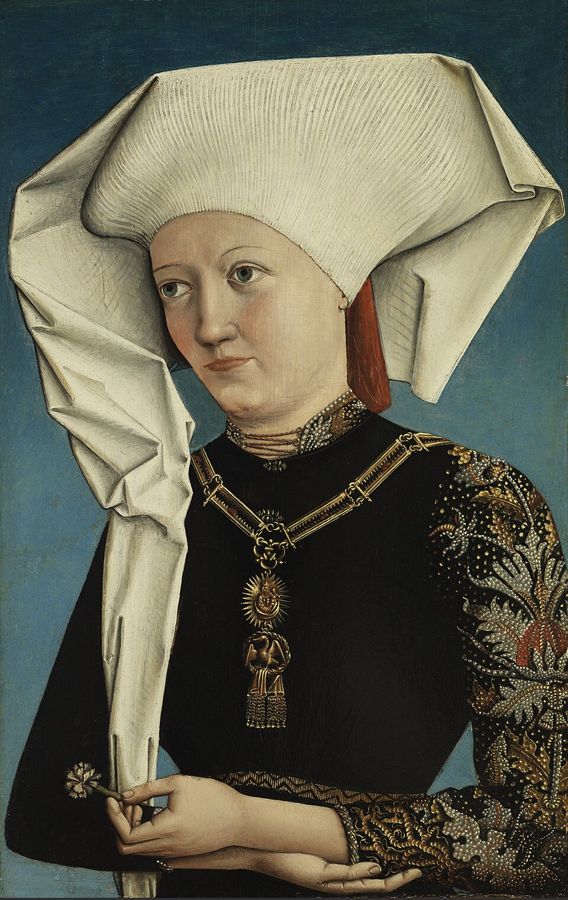
Image: Retrato de una dama con la Orden del Cisne, anónimo alemán.jpg · Unidentified painter · Public domain, via Wikimedia Commons

From Sabine Baring-Gould, The Lives of the Saints, new edition in 16 vols. (London: John C. Nimmo, 1897–98); text from the Internet Archive scan (OCR, lightly cleaned; errors possible). Public domain.

Image: Unidentified painter, Wikimedia Commons (Public domain)

From Sabine Baring-Gould, The Lives of the Saints, new edition in 16 vols. (London: John C. Nimmo, 1897–98); text from the Internet Archive scan (OCR, lightly cleaned; errors possible). Public domain in the United States. Reproduced unedited, except for short bracketed notes in grey that we added to explain names and terms (“S.” is the old abbreviation for Saint). Some history and judgments reflect 19th-century scholarship.