F
Sts. Fusca and Maura
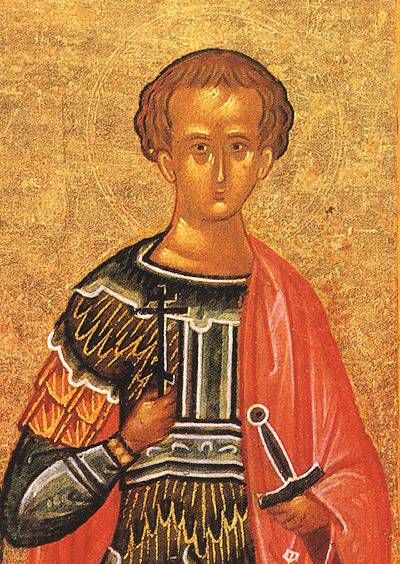
St. Polyeuctus
C
Building a community where women could live the Gospel together.
February 13
February 13
Queen
Abbess
Ermenilda was the daughter of the saintly queen of Kent, Sexburga, who after the death of her husband, and regency till her son was of age, retired to Ely, where she became abbess. Like her mother, it was her desire to offer herself entirely to God; to whom she had finally led back her people; as soon as she became a widow, she took the veil like her mother, and under her mother—for it was to Ely that she went to live in humility and chastity, under a doubly maternal rule.
Choose humility over status. The account singles out humility.
Learn from the kind of life it was. Building a community where women could live the Gospel together.
Ermenilda was the daughter of the saintly queen of Kent, Sexburga, who after the death of her husband, and regency till her son was of age, retired to Ely, where she became abbess. Ermenilda was married to Wulfhere, king of Mercia [the Anglo-Saxon kingdom of the English Midlands], and became the mother of S. Wereburga. She used all the influence which the love of her husband gave her to extirpate the last vestiges of idolatry in the country which had been the centre and last bulwark of Anglo-Saxon heathenism. The example of her virtues was the most effectual of sermons, and it was, above all, by her incomparable sweetness, her pity for all misfortunes, her unwearied kindness, that she touched the hearts of her subjects most. Like her mother, it was her desire to offer herself entirely to God; to whom she had finally led back her people; as soon as she became a widow, she took the veil like her mother, and under her mother—for it was to Ely that she went to live in humility and chastity, under a doubly maternal rule. The mother and daughter contended which should give the finest examples of humility and charity. At last, and still following in her mother's steps, Ermenilda, on the death of Sexburga, became abbess, and was thus the third princess of the blood of the Uffings who ruled the flourishing community of Ely. The local chronicle affirms that it was not her birth, but her virtues, and even her love of holy poverty, which made her preferred to all others by the unanimous suffrages of her numerous companions. She showed herself worthy of their choice; she was less a superior than a mother. After a life full of holiness and justice, her soul went to receive its eternal reward in heaven, and her body was buried beside those of her mother and aunt, in the church of the great abbey, which had thus the singular privilege of having for its three first abbesses, a queen of Northumbria [the Anglo-Saxon kingdom of northern England and south-east Scotland], a queen of Kent, and a queen of Mercia.
Feast: February 13
One short email a day for nine days. The day's prayer, a line from St. Ermenilda's story, and a nudge to keep going.
From Sabine Baring-Gould, The Lives of the Saints, new edition in 16 vols. (London: John C. Nimmo, 1897), digitized text from Project Gutenberg. Public domain.
From Sabine Baring-Gould, The Lives of the Saints, new edition in 16 vols. (London: John C. Nimmo, 1897), digitized text from Project Gutenberg. Public domain in the United States. Reproduced unedited, except for short bracketed notes in grey that we added to explain names and terms (“S.” is the old abbreviation for Saint). Some history and judgments reflect 19th-century scholarship.