G
St. Gorgo
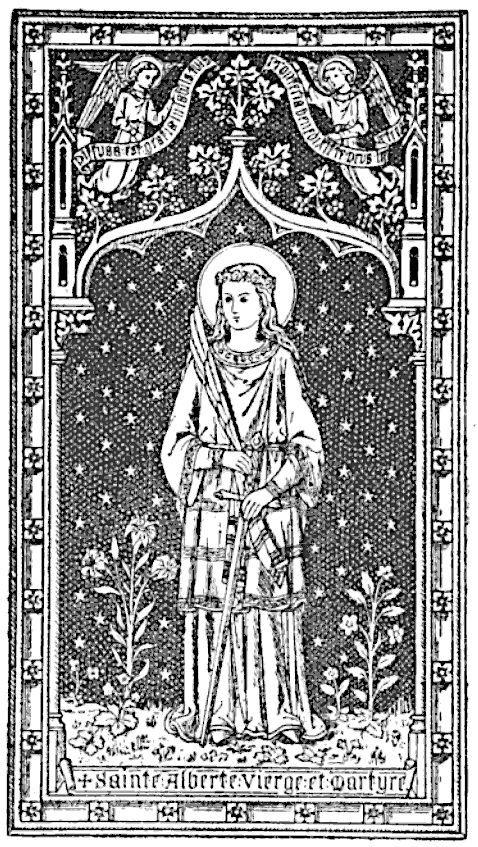
St. Alberta
V
Faithfulness to Christ when it cost everything.
March 11
Not verified yet
Martyr
Bishop
S. Euthymius, bishop of Sardis, was one of the most zealous defenders of images against the Iconoclastic emperors. He flourished under the empress Irene, and her son, Constantine VI., as abbot, but was then created bishop, and took a prominent part in the second council of Nicæa. Under the emperor Nicephorus he was sent into exile, together with other bishops, to Patalarea, for having admitted a virgin to the religious life.
Stay faithful when it costs you. This account is about holding firm under pressure.
Learn from the kind of life it was. Faithfulness to Christ when it cost everything.
S. Euthymius, bishop of Sardis, was one of the most zealous defenders of images against the Iconoclastic emperors. He flourished under the empress Irene, and her son, Constantine VI., as abbot, but was then created bishop, and took a prominent part in the second council of Nicæa. Under the emperor Nicephorus he was sent into exile, together with other bishops, to Patalarea, for having admitted a virgin to the religious life. For the next nine-and-twenty years he did not see his diocese. When Leo the Armenian assumed the purple, he recalled Euthymius, but before restoring him to his see, he demanded of him whether he venerated images. The saint boldly replied, "O emperor, it belongs not to thee to meddle with the affairs of the Church. To thee is given the care of the State and the government of the army. Attend to them, and suffer the Church to remain faithful." This answer so angered Leo, that he ordered him to be banished to Assos. On the death of Leo by assassination, his successor, Michael the Stammerer, recalled Euthymius, and again demanded whether he reverenced sacred images. And when Euthymius protested that he reverenced whatever represented or recalled Christ, the tyrant banished him to Acrita, where he was cast into a noisome dungeon, and afterwards, by the emperor's orders, was brought out and stretched on the ground, with his hands and feet attached to posts, at the utmost distention possible, and then was cut and lashed with cow-hide scourges, till he died.
Feast: March 11
One short email a day for nine days. The day's prayer, a line from St. Euthymius of Sardis's story, and a nudge to keep going.
From Sabine Baring-Gould, The Lives of the Saints, new edition in 16 vols. (London: John C. Nimmo, 1897), digitized text from Project Gutenberg. Public domain.
From Sabine Baring-Gould, The Lives of the Saints, new edition in 16 vols. (London: John C. Nimmo, 1897), digitized text from Project Gutenberg. Public domain in the United States. Reproduced unedited, except for short bracketed notes in grey that we added to explain names and terms (“S.” is the old abbreviation for Saint). Some history and judgments reflect 19th-century scholarship.