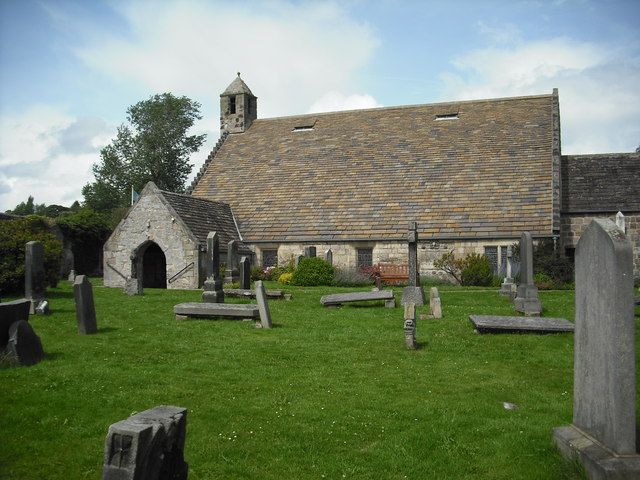
St. Fillan

Building a community where people could actually live the Gospel.

Read the essentials →
January 9 · Abbot

St. Fillan

St. Fillan

Building a community where people could actually live the Gospel.

Traditional feast

January 9
1914 / pre-1969 calendar, per Baring-Gould (1914)

Current feast

June 20
Secondary source · Wikipedia

Represents

Abbot

Their story

Adapted in modern English from Baring-Gould (1914) · original text below

Fillan, famous in old Scottish and Irish calendars, was the son of a noble, Feriach, and the holy Kentigerna, daughter of a king of Leinster. The legend says he was born somewhat misshapen, and his father ordered him drowned in a lake, but at his mother's prayer angels brought him safely ashore. He was sent to the abbot Munna to be educated. Writing at night, he would hold up his left hand, and it shone so brightly that he could write by its light with his right.

When Munna died, Fillan became head of his monastery. Later he resigned and joined his uncle Congan in the Scottish highlands, where with seven helpers he built a church. He was buried at Strathfillan, and his relics were long honored. Scottish historians credit his intercession for Robert Bruce's victory at Bannockburn in 1314. His staff (the Quigrich) and bell still exist and are in the National Museum of Scotland. The early details are legend, written down long after his time.

Why they’re the patron of…

  • Bannockburn and the healing of the mentally ill · Tradition
    Bruce's tradition about the battle. His pool at Strathfillan was long used for the insane.

Early life

Selected sentences from the original account, unaltered.

Thin entry · the 1914 book gives only 230 words. We have not filled the gap with invented detail.

S. Fillan, whose name is famous in ancient Scottish and Irish Calendars, was the son of Feriach, a noble, and his saintly wife Kentigerna, daughter of Cualann, king of Leinster. His father ordered him to be thrown into the lake, near his castle, and drowned, when he was shown to him, for he was somewhat unshapely. But, by the ministry of the angels, at the prayer of his mother, he floated ashore.

What they represent

How they teach us to live

Drawn from themes in the original account

Pray a little every day. Prayer runs all through this account.

Make time for silence. Solitude and withdrawal to pray shape this life.

Build up the community you belong to. This life was lived with and for a community.

Learn from the kind of life it was. Building a community where people could actually live the Gospel.

Read more

The full original · 230 words

Read Baring-Gould’s full account

Baring-Gould’s sources: Scottish and Irish Martyrologies. Life in the Aberdeen Breviary.

S. Fillan, whose name is famous in ancient Scottish and Irish Calendars, was the son of Feriach, a noble, and his saintly wife Kentigerna, daughter of Cualann, king of Leinster. His father ordered him to be thrown into the lake, near his castle, and drowned, when he was shown to him, for he was somewhat unshapely. But, by the ministry of the angels, at the prayer of his mother, he floated ashore. S. Fillan was given by Bishop Ibar to the abbot Munna, to be educated. As he wrote at night in his cell, he held up his left hand, and it shone so brilliantly that he was able to write with the right hand by the light shed by the left hand.

When the abbot Munna died ( a.d. 635), S. Fillan was elected to succeed him as head of the monastery of Kilmund in Argyleshire. After some years, he resigned his charge, and retired to his uncle Congan, brother to his mother, in a place called Siracht, a mountainous part of Glendarshy, in Fifeshire, where, with the assistance of seven others, he built a church. He was buried at Straphilline, and his relics [the bodily remains of a saint, or objects they used, kept with honor] were long preserved there with honour. The Scottish historians attribute to his intercession a memorable victory obtained by King Robert Bruce, in 1314, over the English at Bannockburn. His pastoral staff and bell still exist.

Feast days

Feast: June 20
Traditional: January 9

Nine days · Free

Pray the novena
with us.

One short email a day for nine days. The day's prayer, a line from St. Fillan's story, and a nudge to keep going.

Also on January 9
M

St. Marciana

January 9 · Virgin, Martyr
J

Sts. Julian

January 9 · Martyrs
P

St. Peter of Sebaste

January 9 · Bishop
← All 1726 saints in the library
Sources & notes

Feast-day sources

Story sources

Sources

Credits

Image: St Fillan's Church - geograph.org.uk - 1419612.jpg · Jim Smillie · CC BY-SA 2.0, via Wikimedia Commons

From Sabine Baring-Gould, The Lives of the Saints, new and revised edition (Edinburgh: John Grant, 1914; first edition 1872). Public domain.

Image: Jim Smillie, Wikimedia Commons (CC BY-SA 2.0)

From Sabine Baring-Gould, The Lives of the Saints, new and revised edition (Edinburgh: John Grant, 1914; first edition 1872). Public domain in the United States. Reproduced unedited, except for short bracketed notes in grey that we added to explain names and terms (“S.” is the old abbreviation for Saint). Some history and judgments reflect 19th-century scholarship.