Baring-Gould’s sources: Roman Martyrology. In the ancient Carthaginian Kalendar, Genes the actor is commemorated, but on which day cannot be distinguished on account of a defect in the MS. On this day, in the ancient Roman Kalendar pub. by Fronto, and which dates from before a.d. 731. A church also existed in Rome, the roof of which was repaired in a.d. 74T, by Pope Gregory III. The Martyrology of S. Jerome, so called, and other Latin Martyrologies. There are several versions of the Acts of this Saint, some long, amplifications of the shorter ones. The latter are ancient, and trustworthy.] a certain day when Diocletian the emperor was in Rome,2 Genes the actor was performing on the stage before the emperor and a great crowd. He was a clever mimic, and the subject chosen for burlesque was a sick man troubled in mind, doubting the truth of his gods, alarmed at the future, of which he knew nothing; then hearing of Christ, of heaven, of a judgment to come, believing and crying out for baptism.
York Kalendar, on account of a translation [the solemn moving of a saint’s relics to a new shrine] of her body on this day. But her death on Nov. 17th, to which day the reader is referred for her biography. 2 Diocletian [Roman emperor 284–305, who began the ‘Great Persecution’ of Christians in 303] was in Rome in 303; the Acts state only that Genes appeared before Diocletian in Rome, and it is therefore probable that the martyrdom took place then. The curtain rose on Genes lying on a bed, sick unto death, and groaning.
“I am weighed down,” moaned the actor, “the burden of the past is on my conscience; my sins oppress me unendurably. Oh ! that I could obtain relief — that I were light and free !”
“Why, how so, good fellow?” said the other actors round the sick couch; “ if you are burdened, how can we lighten you ?”
“ Ah, ah !” laughed the clown to the audience; “ there is only one way: we must take him to a carpenter’s, and have him sawn and planed down, and so lighten him.” This sally provoked a roar of laughter. “No,” said the sick man, “I wish to die a Christian: by that means only can I obtain relief.”
“ Why ! what do you desire to be a Christian for ?” “ To fly to my God.” “ Call in a priest and an exorcist.” In came two actors dressed up for their parts. The priest sat down by the bedside, put on a commiserating air, and said, “ Why hast thou sent for me, my son ?” “I desire the favour of Christ,” answered Genes, “by which I may be born again to a new, a holier, a purer life.” Then a great vat of water was brought down upon the stage, and the ceremony of baptism was gone through upon the sick man, who was drawn out of bed for the purpose, and amidst the reiterated bursts of merriment from the audience, was plunged in the water, and then clothed in white.. Scarcely had this been effected, when from the sides rushed on some of the company dressed as Roman soldiers, who seized on the new convert and drew him before the emperor’s stall, that he might be tried and sentenced by Diocletian. It was part of the jest, the concerted spectacle.
Genes shook off his guards, and springing upon a pedestal S. Genes. from which he threw down the statue of Venus, exclaimed, “ Sire, and all you present, hear what I say. I have ever hated the Christian name, and when I have seen Christians brought before the magistrate I have exulted. My parents and kinsmen have been Christians, and from them I heard all concerning the faith, and the manner of conducting the sacraments. But all I heard I turned to mockery, and this day have used my knowledge so obtained for the purpose of a merry jest against them. But lo ! sire, as I lay on the bed, the realities of sickness and approaching death stood naked before me. And all my sins from infancy rose up before my eyes, filling a long dark scroll. Sire, believe me, when the water touched me, and I renounced the evil one, and accepted Christ with my lips, my heart went with my words. And I saw a great light, and angels shining above me, and the darkness of sin seemed to roll away before the clear dawn of a heavenly light. And now, sire, and all you people, who have been laughing so heartily, believe me when I say that I confess Christ as very God, and that He is the true light shining, and the eternal truth, and perfect goodness, and in Him, and Him only, do I trust.” There was something in his look, his attitude, his voice, too real to be mistaken for mimicry. You might have heard a pin fall in that great theatre. No man knew what to think.
Diocletian called the actor before him. “ Jesting may be carried too far. The spectacle was well produced, now return behind the scenes, and change the piece.”
“ Sire, I am in earnest.” “ Then I shall be in earnest also. Ho ! let him be beaten.” Blows were showered on the actor. He bore them with the utmost patience.
“ Take him away to the prefect,” said the emperor; and fAugust 25. Genes the actor was drawn from the theatre. Plautianus the prefect tortured him on the rack.
“ There is no king but Him whom I have seen, and whom I adore,” repeated Genes. “ His I am, and His I shall be. Bitterly do I repent that I know Him only so late.” Then Plautianus, seeing his determination, delivered him over to an executioner that his head might be severed from his body with a sword.
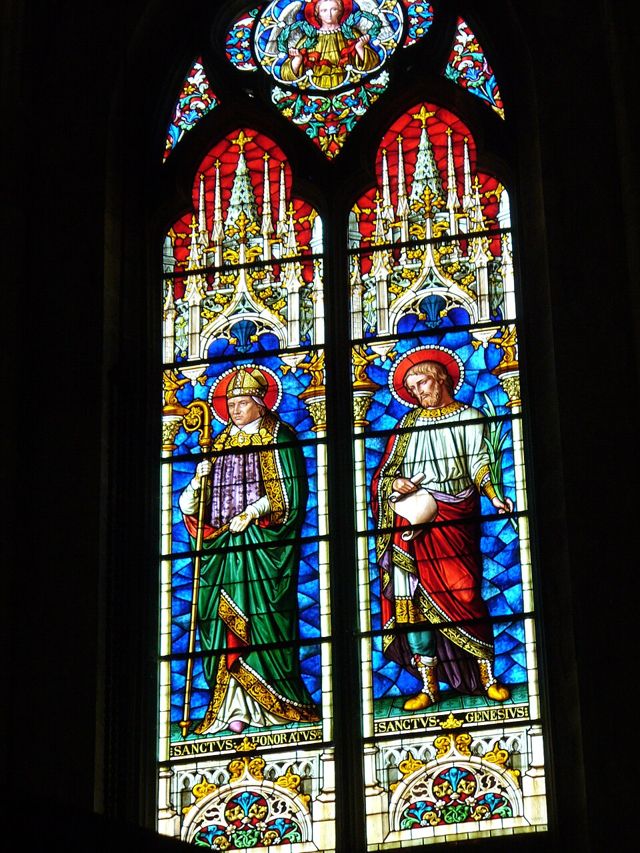
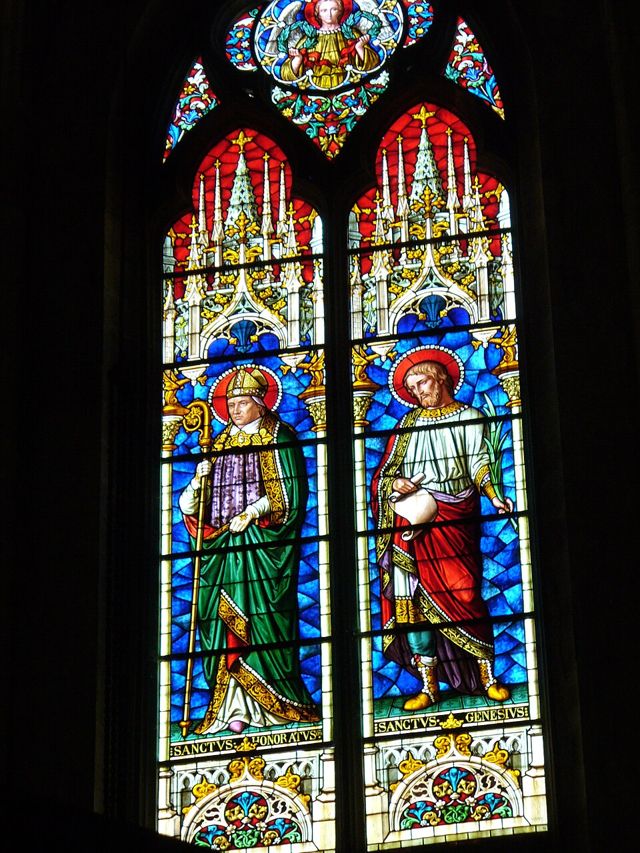
In Art S. Genes is represented with a clown’s cap and bells.1