Baring-Gould’s sources: Roman and Belgian Martyrologies. Authority: — a Life by an anonymous writer, apparently a monk of Brogne, dedicated to Gunthe, abbot of Brogne in 1031.] At the close of the 9th century, there lived at Staves, in Lumai, a man named Stant, of noble birth, being akin to Hagen, Count of Austrasia, 1 married to Plectrudis, sister of Stephen, Bishop of Tongres. They had a son named Gerard, who entered the castle of Berengar, Count of Namur, and was one of his military suite. One day, when out hunting, Gerard at dinner-time hitched up his horse beside the forest chapel of Brogne, which was on his own family estate, and went within to take his midday nap. 1 Hagen subscribed an agreement with Charles the Simple and Henry of Germany [Oct j.
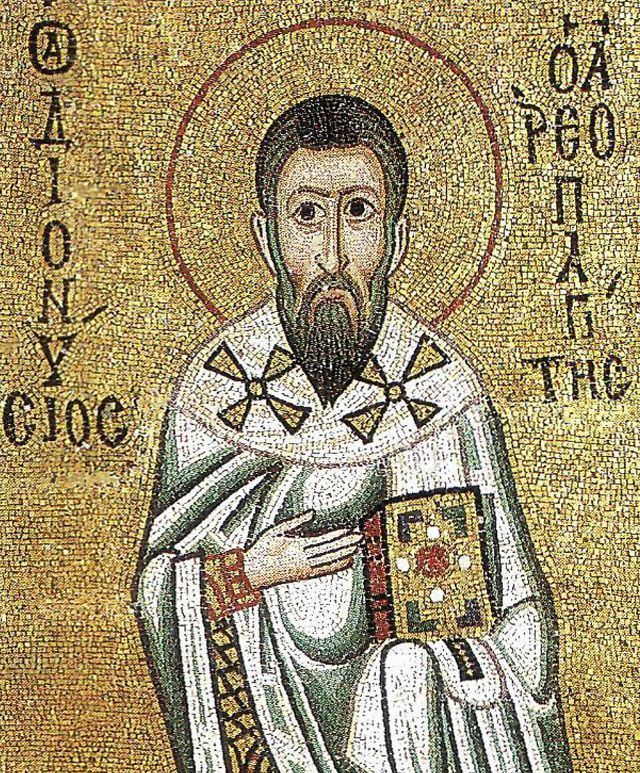
In dream he beheld S. Peter, who slipped his hand within that of the sleeper, and conducted him round the chapel, saying to him, “ Hither shalt thou bring the body of my son Eugenius, the martyr.” When Gerard woke up, he was much puzzled with his dream. It hung about him, but how to fulfil the order of S. Peter he knew not. Not long after he was sent to Paris, and there, entering the church of S. Denys, he heard among the saints invoked the name of Eugenius. Full of eagerness, he went to the monks and asked who Eugenius was, and how his body might be obtained. They informed him that Eugenius had been a disciple of S. Dionysius, who they fondly imagined was the Areopagite, and commissioned to Gaul [roughly modern France and Belgium] by S. Peter himself; and as for getting the body of Eugenius, it was sheer impossibility, “ for the people of Paris loved him as an angel of God.” Gerard, however, did not despair; he hasted back to Namur, communicated his design to the Count and the Bishop of Tongres, and returned to Paris, where he was shaven, and assumed the habit of religion in the abbey of S. Denys. After many years, he had so won the love of the monks, that he ventured to ask again for the bones of S. Eugenius, and this time they were not refused him. He returned with them to the county of Lumai, and they were exposed to the veneration of the neighbourhood with extraordinary pomp.
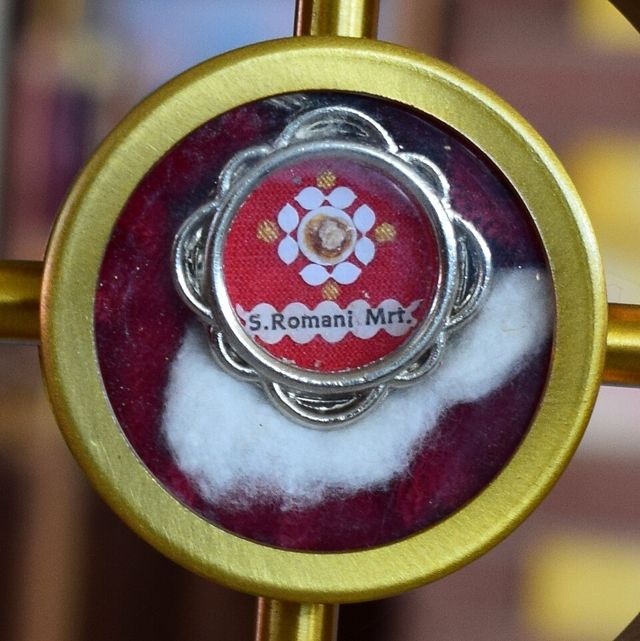
Some persons, however, complained to the Bishop of Ltege that Gerard was inciting all the district in which he was to the highest enthusiasm of devotion to the bones of an unknown man. He burned candles before them, as though they were the relics [the bodily remains of a saint, or objects they used, kept with honor] of, at least, an apostle, and as to the genuineness of the relics there was not a particle of evidence; he had no proof that they belonged to a martyr. 1 ' "Ecce nupcr advectus e Franco™ m finibus, Bronii colitur, nescio quis martyr Eugenius, cui in cereis aliisque oblationibus tanta veneratio exhibetur ab omnibus, ac S. Gerard.
The advice was no doubt sensible. The bishop felt it was so, and started from Fosses, where he was then staying, for Ltege, with full purpose to forbid the worship of the relics till he was satisfied as to whose they were. But on his way, at Maloignes, he was taken with violent cramp in his bowels, so that he thought he would have died. He lay down flat on the ground, and ordered candles to be lighted about him, and S. Eugenius to be invoked. The spasms ceased, the bishop got up, was quite satisfied with the authenticity of the relics, and the power and virtue of Eugenius, and forthwith made the festival of S. Eugenius a day to be observed annually, the same as a Sunday, throughout his diocese. A council was summoned at Lidge, the bishop gave a graphic description of his sufferings, and relief when Eugenius was invoked. No further scrutiny into the history of the martyr and the genuineness of the relics was deemed necessary, and the decree of the bishop was confirmed by acclamation. At the request of Ghislebert, Duke of Lorraine, S. Gerard undertook the reformation of the monastery of S. Ghislain, near Mons. For S. Ghislain had appeared in dream to the duke, and had complained to him that the monks of the monastery where he was had allowed him no rest, but carried him about the country incessantly, to excite the people to bring them large alms, all which they spent on their own amusements and riotous living. In fact, they were using the body as a mere show to get money for scandalous purposes. Gerard turned these monks out, deprived them of the sacred body, and replaced them by severe Benedictines [monks following the Rule of St. Benedict]. Amulf, Marquis of Flanders, was troubled with the stone. He applied to S. Gerard, who fasted for three days, and then said mass. During the mass the marquis was freed from the si credatur ex Apostolis unus. Ubinam textus martyrii ejus? ubinam scriptura continent ejus gesta ? Vestram profecto prudentiam oportet summoperc pcrscrutari et inrestigare, si sit a Deo, an non, Eugenius iste.” calculus. Full, graphic, and grotesque details are given by his biographer. Amulf was so delighted with his cure, that he appointed S. Gerard to the inspection and reformation of all the monasteries in Flanders.
When he had spent nearly twenty years in this most hard and thankless labour, he retired into a cell at Brogne, where he died on October 3, a.d. 959.
He is said to have reformed the monasteries of Marchiennes, of Saint-Amand, of Hasnon, of Saint -Vaast in Arras, of S. Bertin, of Wormhoudt, of Auchy-les-Moines, of Saint-Wulmer, of Blangy, of Renaix, and of S. Ame at Douai, all of which were in a demoralised condition. The Abbey of Brogne obtained several privileges from the Holy See, which S. Gerard procured on a visit to Rome. His relics are preserved at Brogne.