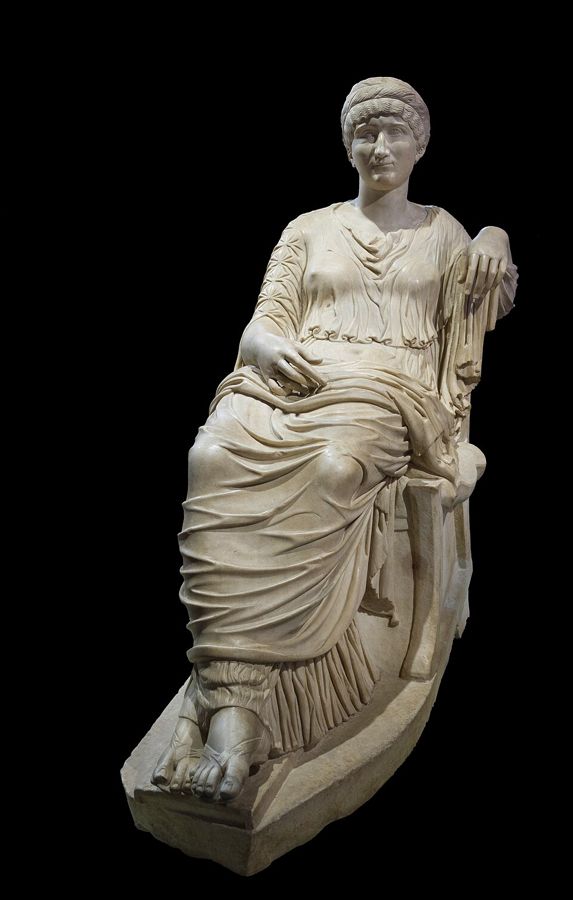
Baring-Gould’s sources: Roman Martyrology. Not in the Sarum or York, or the Scottish Kalendars, nor found in any early Welsh lists of Saints, nor in ancient Latin Martyrologies. By the Greeks on May 2r. The Authorities for the life of S. Helena are mentioned in the text.], Much uncertainty prevails relative to the place of birth of S. Helena, and her condition in life previous to her marriage. In a.d. 306 Constantine the Great was proclaimed Emperor of Rome, upon the death of his father Constantius Chlorus, an event which, took place in Britain. “ O fortunate Britain, and now happier than all countries, which hast first seen Constantine made Csesar !” exclaimed Eumenius the Rhetorician; and another panegyrist, “ He (thy father Constantius) delivered Britain from bondage, but thou by arising from thence hast made it illustrious.”1 These passages mean no more than that Constantine made Britain glorious by his accession there to the title of Csesar, to a share in the Imperial Government.
On the strength of this, the Armenian Chronicle, or Chronicle of Mont S. Michel (a.d. 1056), gave forth to the world the story that Constantine was born in Britain, and that his mother Helena was a daughter of Coel, a British king.
Such a story was too flattering to native pride not to be eagerly seized upon and amplified. Henry of Huntingdon (a.d. 1154) says that “Helena, a noble child of Britain, is said to have surrounded London with the wall still standing, and to have fortified Colchester.” And he adds that she was “ the daughter of the British King of Colchester, named 1 “Tu enim nobilis illic oriendo fecisti.” Eumenius describes the accession of Constantius in similar terms. “ Oriendo ” applies to the accession to the empire, not to birth.
•S. Helena. Coel.” Geoffrey of Monmouth tells the story thus — “ Coel, duke of Kaer Colvin, or Colchester, made an insurrection against King Asclepiodotus, and in a pitched battlekilled him, and took possession of his crown. The senate, hearing this, sent Constantins the Senator, who had reduced Spain under their subjection. Coel, hearing of his coming, was afraid to engage in battle. Therefore, as soon as Constantius was arrived in the island, Coel sent ambassadors to him with offers of peace and submission, on condition that he should enjoy the kingdom of Britain, and pay no more than the usual tribute to Rome. Constantius agreed to this proposal, and after exchange of hostages, peace was confirmed between them. The following month Coel was seized with a sore sickness, of which he died within eight days. After his decease, Constantius was crowned, and married the daughter of Coel, whose name was Helena. She surpassed all the ladies of the country in beauty, as she did all others of the time in her skill in music and the liberal arts. Her father had no other issue to succeed him on the throne; for this reason he was very careful about her education, that she might be better qualified to govern the kingdom. Constantius, therefore, having made her his partner, had a son by her called Constantine. After eleven years were expired, he died at York, and bestowed the kingdom on his son.”1 It is unnecessary to quote Richard of Cirencester, as his Itinerary, in which he speaks of S. Helena, is probably a forgery by C. J. Bertram.
The King Coel of Colchester, the father of Helena, according to the story, is the famous monarch of nursery rhyme, addicted to his glass and pipe and the society of his fiddlers.
The story of the origin of Helena, and the birth of Constantine in Britain, must be abandoned as a fable. It cannot be made to accord with known dates and facts. Constantius Chlorus visited Britain for the first time in a.d. 296. He had divorced Helena, in order to marry the step-daughter of Maximian [Diocletian’s co-emperor in the West, 286–305], on his elevation to be Caesar in a.d. 286, just ten years before he visited Britain. It is, therefore, very clear that Helena was not a British princess, and that Constantine could not have been born in Britain.
Eutropius, a contemporary, whose compendium of Roman history is carried down to a.d. 364 (the probable date of his death), says plainly that Constantine was the son of Constantius, by an “ obscure marriage.”1 Zosimus, who lived in the time of the younger Theodosius [name of Roman emperors; Theodosius I (379–395) made Christianity the state religion], says “Constantine was bom of a woman not by legitimate birth, for she was not lawfully married to Constantius.” The Chronicon Alexandrinum says, “ Constantius died; he was succeeded by Constantine, his illegitimate son by Helena."
The chronicle of Eusebius [Eusebius of Caesarea (d. c. 339), the first historian of the Church], the panegyrist of Constantine, and his contemporary, says also plainly, “ Constantine was bom of the concubine Helen.”
Bede [English monk and historian (d. 735)] also says that Helena was the concubine of Constantius. In the “ Excerpta de Constantio Chloro et Constantino Magno,” published at the end of Ammianus Marcellinus, by Gronovius, which are generally accurate and founded on the best authorities, we read, “ Constantine was born of Helena his mother, of vilest birth in the city of Naisus.”2 S. Ambrose [bishop of Milan (d. 397)], in his oration on the death of Theodosius (a.d. 395) some sixty-seven years after the death of Helena, says, “ She is said to have been a hostleress (stabularia), 1 *' Ex obscurlori matrimonio ejus films." u Constantius natus Helena matre vilissima in oppido Naiso." August a] S. Helena. 167 and thus to have made the acquaintance of Constantius the elder. A good hostleress, who so devotedly sought the manger of the Lord ! A good hostleress, who remembered Him who healed the wounds of him who was wounded of robbers ! A good hostleress, who loved to be counted as dung that she might win Christ ! Therefore Christ raised her from the dung-heap to the kingdom.”
That Helena was a native of Drepanum, in the Gulf of Nicomedia, hardly admits of doubt. It was because Drepanum was the birthplace of his mother that Constantine changed its name to Helenopolis.1 It is probable that Constantius made acquaintance with her on his return from the Persian embassy in the reign of Aurelian [Roman emperor 270–275], and he may have persuaded her to accompany him thence, either as his concubine or as his wife. That she was a concubine only is doubtful; as had she been such Diocletian [Roman emperor 284–305, who began the ‘Great Persecution’ of Christians in 303] would not have insisted on a divorce when Constantius married Theodora.
Eutychius of Alexandria (d. 940), probably from tradition, says that “ Constantius having gone into the parts of Mesopotamia and Rhoas, whilst tarrying at the city of Rohar Caphar Phacar, saw there a pretty, handsome woman, named Helena, who had been converted by Barsicas, Bishop of Rhoae, to the Christian faith, but who could not read. Pie asked the maiden in marriage of her father, and she became pregnant by him. Constantius having returned to Byzantium, Helena gave birth to a beautiful son, gentle and intelligent — Constantine; and he was brought up at Rhose, and learned the sciences of the Greeks.”2 This statement is perhaps founded on an obscure tradition that the connexion between Constantius and Helena began either on his way out to Persia or on his return 1 Procop. Cass., De asdificiis Justiniani, v. 2; Niceph. Callist., vii. 49. There was a Bishop of Edessa in Osrhoene named Barses, between a.d. 361 — 378, so that the statement exhibits an apparent anachronism.
Not only do English mediaeval historians claim S. Helena as a native of Britain, but so also does the tradition of the Church of Treves [Trier in Germany] assert her to have been bom in that ancient city, the capital of Belgic Gaul [roughly modern France and Belgium]. It is as worthless as the tradition that she was daughter of King Coel of Colchester. The Cathedral at Treves is said to have been the palace of S. Helena, given by Constantine to the Church. It was certainly a Roman palace, consisting of an open atrium, a peristyle, and a tablinum. The atrium was roofed over in the nth century, the peristyle lengthened into a nave, and the tablinum enlarged into a choir; traces of the early construction remain. But that it was the palace of Helena and Constantius is not easy of proof. It was in a.d. 292 that Constantius was nominated Ctesar, and Governor of Gaul, and therefore then probably took up his residence in Treves. That same year he repudiated Helena and married Theodora. It is scarcely possible that Helena should have followed Constantius and his new wife to Treves. Constantine was aged about eighteen when his father was promoted to the rank of Ctesar, and his mother was divorced. He did not then follow his father, but remained in the service of Diocletian, signalized his valour in the wars of Egypt and Persia, and gradually rose to the honourable station of a tribune of the first order. The favour of the people and soldiers, who had named him as a worthy candidate for the rank of Caesar, served to exasperate the jealousy of Galerius [Diocletian’s co-emperor in the East and driving force of the Great Persecution]. His danger, and the anxiety of his father increased; Constantius wrote to him repeated letters, expressing the warmest desire to embrace his son in a place of security. By a timely flight from Nicomedia in the night, by rapidly traversing Bithynia, Thrace, Dacia, Pannonia [a Roman province roughly covering western Hungary and parts of Austria and Croatia], Italy and Gaul, ConAugust 18.} S'. Helena.
stantine escaped the secret assassination prepared for him by Galerius; and reached the port of Boulogne, at the very moment when his father was preparing to embark for Britain, a.d. 304. Constantine was twenty-two years old when his father sailed to Britain to meet — so runs the fable — the jovial King Coel, and see and love his beautiful daughter Helena. Constantius died at York, fifteen months after he had received the title of Augustus, and almost fourteen years and a half after he had been promoted to the rank of Caesar. His death was immediately succeeded by the elevation of Constantine (a.d. 306), who remained in Britain six years.
It is most probable that Helena remained at Drcpanum in Bithynia, her native place, whilst Constantine was at Nicomedia; the son may have, and probably did, resent the divorce of his mother, and for this cause did not follow his father into Gaul. His mother, to whom he always showed a warm attachment, would probably reside in the neighbourhood. She could not have accompanied him in his rapid flight from Nicomedia, but, perhaps, as soon as he was Caesar, he sent for her to Britain, or to Treves. He visited Treves in 306, and exhibited in the amphitheatre a horrible spectacle, the massacre of many thousand unarmed Franks [the Germanic people who ruled Gaul and gave France its name]. It was between 306 — 313 that S. Helena must have lived at Treves, and thus have given rise to the tradition of her having been born there. She was not at that time a Christian, nor did she believe till after the conversion of her son, as may be gathered from Eusebius.1 The conversion of Constantine took place a.d. 3T2, and S. Helena must have been about sixty-four years old when she embraced Christianity.
The first wife of Constantine was Minervina; by her he had an only son, named Crispus. He afterwards married 1 Vit. Constant., iii. 47.
Fausta, daughter of Maximian, who became the mother of Constantius and other children. The jealous Constantine suspected that his son was meditating revolt; perhaps Fausta encouraged him in this belief. In 326 he ordered the execution of his son. Then, finding out that he had been mistaken, and that the youth was innocent, he had Fausta his wife suffocated in her bath. The aged Helena is said to have unwittingly incited the Emperor to this second atrocious crime, by her laments over the murdered Crispus, and her reproaches for his culpable credulity.1 To expiate the crimes wherewith her son was stained, the aged Helena, in 325, in about her seventy-seventh year, went a pilgrimage to Jerusalem, to visit the places made sacred by the footsteps of the Saviour. She erected two churches — one at Bethlehem, another on the Mount of the Ascension, and the Emperor richly endowed both these churches. The grave of Christ, Constantine cleaned out of all the earth and rubbish which had gradually accumulated in it.
That S. Helena dug on Calvary and found the true Cross is a matter of tradition dating from the time of S. Ambrose, but it was unknown to Eusebius, who was a contemporary,2 and the Cross had not been found in a.d. 333, when the Bordeaux Itinerary of the Holy Land was composed. For further particulars the reader is referred to the article 011 the “ Invention of the Cross ” (May 3, p. 56). In her eightieth year Helena died, having first made her will, and constituted her son heir to all she possessed, along with her grandsons. She died holding the hand of Constantius. 1 Sext. Aurel. Victor. "Constantin us Fausta conjuge, ut putant, suggerente, Crispum filium necari jubet. Dehinc uxorem suam Faustam, in balneas ardentes conj’ectam, intercmit; cum eum mater Helena dolore nimio nepotis mortem increparet.” Zosimus says he murdered Fausta to " console his mother Helena.” 2 Euseb. Vit, Const., iii. 42.
.S'. Helena. The body was brought with great pomp to Constantinople,1 and was buried there with splendour in the Church of the Holy Apostles, lately erected in his new capital by Constantine. But this is not certain. By some it is supposed that she died near Rome, and was buried there. Among the relics [the bodily remains of a saint, or objects they used, kept with honor] of S. Helena are a head at Treves, some bones in the Vatican, and others at Lisbon; others at Altrelle, near Reims.
The bodies of Gaspar, Melchior, and Balthazar, now shown at Cologne, it is pretended were brought from the East by S. Helena, and given to the cathedral of Milan, whence they were taken by Frederick II. She also is said to have given the Holy Coat, the seamless robe of Christ, to the Cathedral of Treves. Several churches claim to have had S. Helena as their foundress, such as Treves, Bonn, and Reims.
S. Helena is the subject of several romances. The legend of the Je.w Cyriacus, or the Finding of the Cross, is one. Another is the mediaeval tale of “ La Belle He'lhne de Constantinople,” in which the legend is transformed into pure romance. An outline of the story will suffice to give an idea of its contents.
King Antony of Constantinople wished to marry his own daughter, the beautiful Helen; but she ran away at night hearing that the Pope, her uncle, had granted a dispensation to permit the marriage, “ because he wanted help against the Saracens [medieval Christian name for Arab and Muslim peoples].” She got into a boat alone, and the wind bore her away to Ecluse, in Flanders, but that country was then in the hands of the Saracens, under King Cantebron, who, when he saw her, fell in love with her, and she fled away again. Her boat was broken, only one plank remained, she stepped thereon and was wafted to London. And when she reached London, she went into an orchard by a fountain 1 “To the royal city/' certainly Constantinople, not Rome. and sat down. Now King Henry was then reigning along with his mother, in England; and he came into the orchard and saw fair Helen there, dressed in cloth of gold, under an apple tree; but when he spoke to her she fainted away. So he bade his almoner run and bring bread and wine; and he went and brought them. Then the king made sops and put them into fair Helen’s mouth, and presently her great blue eyes opened. Then said the king, “ Lady, you have spoiled your fair dress!” “Sire!” answered she, “my boat fell among pirates, and all perished but I, and I came drifting over the sea on one plank.”
And when the king saw how beautiful she was, he commended her to his mother, who took care of her. But many a bright day they walked together in the orchard of red apples.
One day the king said to her, “Lady, you are surely of noble race; tell me your story and I will make you my wife.” But she said, “ Sire, I am a poor girl without a denier.” Then the king held out his hand, and raised her from the grass where she was sitting, and said, “ Lady, I have got money enough for both of us.”
But when the queen-mother heard of this, she was full of wrath, and meditated treason. But the king called all his nobles together, and they spread a rich carpet, and drank wine, and made good cheer, and he held his wedding feast, and for two years they lived together in great love, and had two sons — S. Martin [St. Martin of Tours (d. 397), soldier turned bishop] and S. Brice.
Now Buthor of Armenia laid siege to Rome; so Pope Clement sent and called the King of England to his aid. And Henry bade the Earl of Gloucester take the regency, and he bade farewell to Helen, and went his way to Rome. Now, before he went, he gave to Helen his royal seal. And after he was departed, Helen was left alone in the city August 1 8.] S. Helena.
of London, and the queen-mother often came from Dover and dined with the Queen Helen and Mary Countess of Gloucester. And after dinner one day the ladies went out into the garden to play, and left Helen alone with the queen mother; and Helen’s eyes were heavy. Then said the queen-mother, “ Lay thy head on my lap ! ” So Helen laid her fair head on the old woman’s lap, and went to sleep. Then the queen-mother stole the royal seal, and went her way. Now, after a while the fair Helen was brought to bed of two lovely babes. Then the Earl of Gloucester wrote a letter to King Henry to apprize him thereof. But as the messenger tarried for a boat at Dover, the queen-mother got possession of this letter, opened it and wrote a letter to say that Helen had become the mother of two black doggies. And she sealed it with the royal signet, and the messenger went his way, and wot not that the letter had been changed.
Now, when King Henry read the letter, he was grieved to the heart, so he went to the Pope and told him all the story of how he had met Helen first in an orchard by a well, and had married her. Then said Clement the Pope, “ I trust me that this is my niece, the daughter of the King of Constantinople.’' Now, when King Henry heard this, he was as glad as if he had received the revenues of two kingdoms, yet withal, when he thought of the two black dogs, he was sad. He wrote letters back, but they were taken by the queen-mother at Dover, and for them was substituted an order that Helen and her two children were incontinently to be burned alive.
Now, when the letter reached the Earl of Gloucester and Queen Helen, great was their dismay. The Earl dared not disobey the orders; but his niece Mary fell on her knees and prayed him, saying, “ Let me be burned instead of my queen, and I will hold two puppets of linen in my arms for the babes.” And the Earl said, “ But I must give evidence to the king that his wife is destroyed.” Then he bethought him and went to the queen, and said, “ What token shall I bear to my lord that I have fulfilled his orders ? ” And she held out her finger with the wedding ring on it, and said, “ Cut this off. With this ring he made me his, and he will know it again.” So he cut off her finger with the ring upon it. And on the morrow Mary of Gloucester was burned in the room of Helen.
But the poor queen fled away into Brittany with her babes. It is unnecessary to follow all her adventures and those of the children. King Constantine is introduced, — he is Prince of Bordeaux, he goes to Palestine, and runs away with Placentia the wife of King Priam, after having first baptized her. The story of course ends with the joyful reunion of Helen and King I-Ienry and their children, the finger of Helen is replaced and healed by her son, S. 'Martin; and the wicked queen-mother is burnt alive.1 1 For die whole legend, sec Migne's Diet, dcs Lcgendcs Chrdticnncs, p, 533— -576. For the bibliography of it, Grllsse: Litcrilrgeschicht nllcr bekannten VOlkcr, II, Abe. 3, H. x, p. 284, The story occurs in Matthew Paris, I-Iist. Maj., told of a daughter of Ofla, King of Mercia [the Anglo-Saxon kingdom of the English Midlands]. It was versified in the 13th cent, by the Trouvcro Philip ' of Reims.