Hilarus was a Sardinian by birth; his father’s name was Crispin.
Read the essentials →Hilarus was a Sardinian by birth; his father’s name was Crispin.
September 9
November 17 (also listed: February 28)
Feast
Thin entry · the 1897 book gives only 237 words. We have not filled the gap with invented detail.
Hilarus was a Sardinian by birth; his father’s name was Crispin.
Pray a little every day. Prayer runs all through this account.
Keep their day. Remember them on September 9 with a short prayer, and ask for their help.
Hilarus was a Sardinian by birth; his father’s name was Crispin. Nothing is known of him till he appears as legate [an official representative sent by the pope] of the Pope with two others in the Council of Ephesus. When that council condemned S. Flavian, Hilarus fled, uttering his protest against its decisions, and writing an indignant letter to S. Pulcheria, who, however, was powerless to help the truth, save with her prayers, as the eunuch Chrysalphus ruled the weak Theodosius [name of Roman emperors; Theodosius I (379–395) made Christianity the state religion], and threw his influence into the scale in favour of Eutychianism [followers of Eutyches, who said Christ had only a divine nature; condemned at Chalcedon in 451]. [Sept. ro.
On his return to Italy, he was created an archdeacon, and on the death of S. Leo, in 461, was elected Pope. When seated on the apostolic throne, he issued a letter, addressed to the Eastern faithful, condemning Eutyches, Nestorius [Nestorius (d. c. 451), whose teaching split Christ into two persons; condemned at Ephesus in 431], and Dioscorus, and upholding the famous Tome of S. Leo. In the West he maintained, to the utmost extent, the authority which had been claimed over the churches of Gaul [roughly modern France and Belgium] and Spain.
Rusticus, Bishop of Narbonne, on his death-bed, nominated Hermes as successor to his see. This precedent of a bishop making his see, as it were, a subject of testamentary bequest, seemed dangerous, though in this case the lawful assent had been obtained from the clergy and the people. Hilarus, at the head of a synod at Rome, condemned the practice, but for the sentence of degradation, substituted the lesser punishment, the deprivation of the right to confer ordination.
Feast: November 17
Traditional: September 9
One short email a day for nine days. The day's prayer, a line from St. Hilarus's story, and a nudge to keep going.
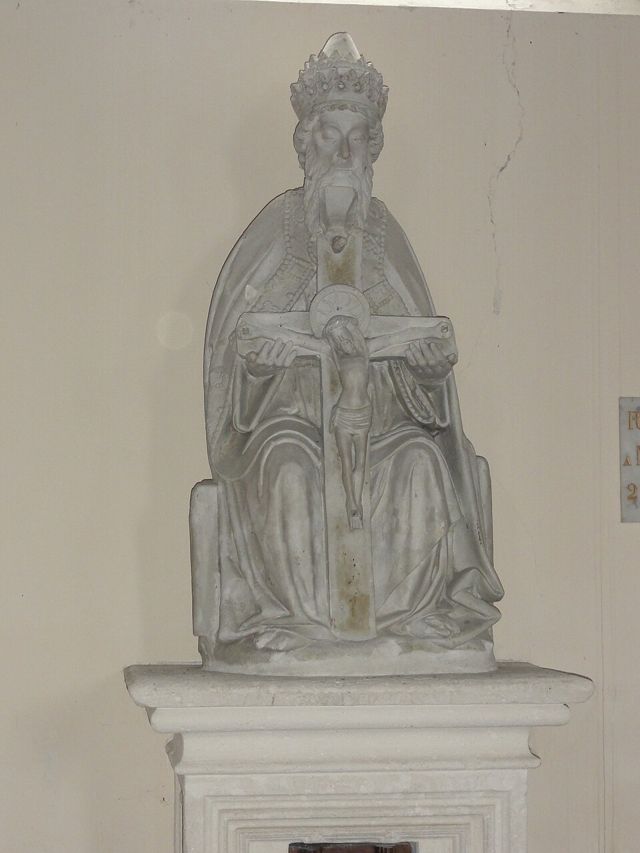
Image: Carville-Pot-de-Fer (Seine-Mar.) église, statue 03 Saint Hilaire pape.jpg · Havang(nl) · CC0, via Wikimedia Commons
From Sabine Baring-Gould, The Lives of the Saints, new edition in 16 vols. (London: John C. Nimmo, 1897–98); text from the Internet Archive scan (OCR, lightly cleaned; errors possible). Public domain.
Image: Havang(nl), Wikimedia Commons (CC0)
From Sabine Baring-Gould, The Lives of the Saints, new edition in 16 vols. (London: John C. Nimmo, 1897–98); text from the Internet Archive scan (OCR, lightly cleaned; errors possible). Public domain in the United States. Reproduced unedited, except for short bracketed notes in grey that we added to explain names and terms (“S.” is the old abbreviation for Saint). Some history and judgments reflect 19th-century scholarship.