In 1255, a woman of Lincoln lost her son, a child of eight years old, named Hugh.
Read the essentials →In 1255, a woman of Lincoln lost her son, a child of eight years old, named Hugh.
Read the essentials →In 1255, a woman of Lincoln lost her son, a child of eight years old, named Hugh.
July 26
Not verified yet
Martyr
Thin entry · the 1897 book gives only 197 words. We have not filled the gap with invented detail.
In 1255, a woman of Lincoln lost her son, a child of eight years old, named Hugh. It was found in a well near a Jew’s house. A Jew was seized and promised his life if he would accuse his brethren of the murder.
Stay faithful when it costs you. This account is about holding firm under pressure.
Build up the community you belong to. This life was lived with and for a community.
In 1255, a woman of Lincoln lost her son, a child of eight years old, named Hugh. It was found in a well near a Jew’s house. A Jew was seized and promised his life if he would accuse his brethren of the murder. He did so, but was hanged nevertheless. On this accusation, wrung from the wretched man through hopes of life, ninety-two of the richest Jews in Lincoln were arrested, their goods seized to replenish the exhausted royal exchequer; eighteen were hung forthwith, the rest were reserved in the tower of London for a similar fate.
It is to the credit of the Franciscans that they interceded to save the lives of the remainder. Matthew Paris says they were bribed by the Jews to effect their release; and on May 15th, 1256, thirty-five of the wretched Jews were released. What became of the remaining thirty-nine is not known, perhaps they died in prison of the tortures applied to them. That the innocent child Hugh was murdered cannot De doubted; that he was murdered by the Jews is more than questionable.
The story is charmingly told in Chaucer's Canterbury Tales. July a8J ^VS". Nazarius & Celsus.
Feast: July 26
One short email a day for nine days. The day's prayer, a line from St. Hugh of Lincoln's story, and a nudge to keep going.
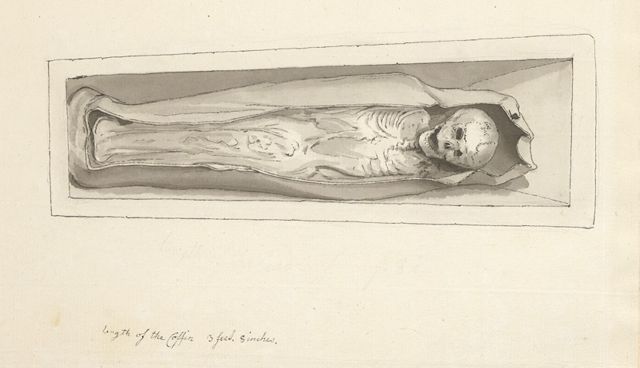
Image: Hugh of Lincoln body.jpg · Samuel Hieronymus Grimm · Public domain, via Wikimedia Commons
From Sabine Baring-Gould, The Lives of the Saints, new edition in 16 vols. (London: John C. Nimmo, 1897–98); text from the Internet Archive scan (OCR, lightly cleaned; errors possible). Public domain.
Image: Samuel Hieronymus Grimm, Wikimedia Commons (Public domain)
From Sabine Baring-Gould, The Lives of the Saints, new edition in 16 vols. (London: John C. Nimmo, 1897–98); text from the Internet Archive scan (OCR, lightly cleaned; errors possible). Public domain in the United States. Reproduced unedited, except for short bracketed notes in grey that we added to explain names and terms (“S.” is the old abbreviation for Saint). Some history and judgments reflect 19th-century scholarship.