J

Jerome Emiliani (Miani) was born in Venice in 1481 and became a soldier.

Read the essentials →
July 20 · Confessor

St. Jerome Emiliani

St. Jerome Emiliani

Jerome Emiliani (Miani) was born in Venice in 1481 and became a soldier.

Traditional feast

July 20
1914 / pre-1969 calendar, per Baring-Gould (1897)

Current feast

Not verified yet

Represents

Confessor

Their story

Adapted in modern English from the Catholic Encyclopedia (1913) · original text below

Jerome Emiliani (Miani) was born in Venice in 1481 and became a soldier. In 1508, defending Castelnuovo against the League of Cambrai, he was taken prisoner. His liberation is described as miraculous, and he made a pilgrimage of thanks to Our Lady of Treviso.

Back in Venice he studied theology and gave his spare time to charity. He was ordained in 1518. In the plague and famine of 1528 he worked everywhere, especially for the many orphans, and rented a house for them. He also cared for the hospital for incurables founded by St Cajetan.

He founded hospitals and orphanages at Verona, Brescia and Bergamo, and a home for women leaving prostitution. In 1532 he founded a society to care for orphans, the poor and the sick, with its motherhouse at Somascha near Bergamo. He caught a disease while nursing at Bergamo and died at Somascha in 1537. He was canonized (officially declared a saint by the pope) in 1767.

Early life

The book says little or nothing about early life. This is how the account begins.

In the darkness of his prison, he reviewed his past life, and resolved, should he escape, to endeavour to recompense for the evil he had done, and the opportunities he had wasted. He made a vow to the Blessed Virgin to visit the pilgrimage chapel at Treviso, dedicated to her, should she deliver him. Scarcely had he done so when, we are told, he found the key to his fetters.

What they represent

How they teach us to live

Drawn from themes in the original account

Look after people who are sick or suffering. The sick come up again and again in this story.

Share your faith, in words and by example. Preaching and conversion are central here.

Give to people in need. The account records care for the poor.

From the Catholic Encyclopedia

1913 · 613 words

Founder of the Order of Somascha; b. at Venice, 1481; d. at Somascha, 8 Feb., 1537; feast, 20 July; son of Angelo Emiliani (popularly called Miani) and of Eleonore Mauroceni, joined the army, and in 1508 defended Castelnuovo against the League of Cambray. Taken prisoner and miraculously liberated, he made a pilgrimage to the shrine of Our Lady of Treviso, in fulfillment of a vow. He was then appointed podestà of Castelnuovo, but after a short time returned to Venice to supervise the education of his nephews. All his spare time was devoted to the study of theology and to works of charity. After his ordination to the priesthood in 1518, the hospitals and the hovels of the poor were his favourite resorts. In the year of plague and famine (1528), he seemed to be everywhere, and showed his zeal especially for the orphans, whose number had so greatly increased. He rented a house for them near the church of St. Rose and, with the assistance of some pious laymen, ministered to their wants. To his charge was also committed the hospital for incurables, founded by St. Cajetan. In 1531 he went to Verona and induced the citizens to build a hospital; at Brescia he erected an orphanage, at Bergamo one for boys and another for girls. Here also he founded the first home for fallen women who wished to do penance. Two priests, Alessandro Besuzio and Agostino Bariso, now joined him in his labours of charity, and in 1532 Jerome founded a religious society, placing the motherhouse at Somascha, a secluded hamlet between Milan and Bergamo. In the rule, Jerome puts down as the principal work of the community the care of orphans, poor, and sick, and demands that dwellings, food and clothing shall bear the mark of religious poverty. Jerome fell a martyr to his zeal; contracting a disease at Bergamo, he died at Somascha. He was beautified by Benedict XIV in 1747, and canonized by Clement XIII in 1767. The Office and Mass in his honour were approved eight years later. His biography was first written by Scipio Albani (1600); another by Andreas Stella (1605). The best was written by Aug. Tortora (Milan, 1620; in "Acta SS.", Feb., II, 217 sq.).

After the death of Jerome his community was about to disband, but was kept together by Gambarana, who had been chosen superior. He obtained the approval (1540) of Paul III. In 1547 the members vainly sought affiliation with the Society of Jesus; then in 1547-1555 they were united with the Theatines. Pius IV (1563) approved the institution, and St. Pius V raised it to the dignity of a religious order, according to the Rule of St. Augustine, with solemn vows, the privileges of the mendicants, and exemption. In 1569 the first six members made their profession, and Gambarana was made first superior general. Great favour was shown to the order by St. Charles Borromeo, and he gave it the church of St. Mayeul at Pavia, from which church the order takes its official name "Clerici regulares S. Majoli Papiae congregationis Somaschae". Later the education of youth was put into the programme of the order, and the colleges at Rome and Pavia became renowned. It spread into Austria and Switzerland, and before the great Revolution it had 119 houses in the four provinces of Rome, Lombardy, Venice, and France. At present the order has ten houses in Italy two of which are in Rome. The general resides in Rome at S. Girolamo della Carita.

HEIMBUCHER, Orden u. Kongregationen (Paderborn, 1908), III, 275; KIENLE in Kirchenlex., s.v. Somasker; Holsten-Brockie, Cod. Regul., III, 199 sqq.; HUBERT, Der hl. Hieronymus Aemiliani (Mainz, 1895).
Read more

The full original · 586 words

Read Baring-Gould’s full account

Baring-Gould’s sources: Roman Martyrology. Beatified by Benedict XIV., and canonized by Clement XIII. In 1769 an office in honour of the saint was approved by the Holy See, and appointed to be recited on July 20th.] This great saint was born at Venice, in the year 1481, and was the son of Angelo Emiliani and Eleonora Marocini, both issued from illustrious houses, which had furnished Venice with senators and grand captains, in the times of her greatness. At fifteen, Jerome, who had lost his father, joined the troops Venice was raising in 1495, and led a dissolute life, which caused both his mother and brother great distress. In 1508, he served in the Venetian troops raised to oppose the league of Cambrai, and the defence of Castelnuovo, on the confines of Treviso, was entrusted to Emiliani. The walls were ruinous, and in spite of a gallant defence, the place was taken by the Germans, the garrison put to the sword, and Emiliani thrown into a noisome dungeon, laden with chains, and linked by the feet to a ball of stone.

In the darkness of his prison, he reviewed his past life, and resolved, should he escape, to endeavour to recompense for the evil he had done, and the opportunities he had wasted. He made a vow to the Blessed Virgin to visit the pilgrimage chapel at Treviso, dedicated to her, should she deliver him. Scarcely had he done so when, we are told, he found the key to his fetters. A fair form stood compassionately ‘at his side, and helped him to shake them off, led the way out of the dungeon, opening all the doors before him, and finally conducted him in disguise out of the castle. He hastened to Treviso, where he published his miraculous escape, and hung up his chains and stone ball to the roof of the chapel. The story no doubt antedates this final incident. He cannot have escaped with his chains and fetters, and stone ball, if he shook them off in the prison. But no doubt later, when the Venetian government gave him the podesta-ship of Castelnuovo, and confirmed it to him and his family for thirty years, he recovered the chains and ball from the dungeon, and sent them to the chapel at Treviso.

After his marvellous escape, Jerome at once cast off the chains of his old sins and evil habits, as he had the bonds in the dungeon. He devoted himself to the care of the sick and starving in 1523, the terrible year of plague and famine. He was himself struck down with disease, but providentially recovered; and this sickness confirmed his resolution to devote himself entirely to the sick and suffering. With his fortune he built several hospitals for the sick, and orphanages for the poor children who had been deprived of their parents by famine or pestilence. He dressed his orphans in white, and on festivals they walked through the streets and squares of Venice chanting litanies. He visited Bergamo, where he founded another orphanage, and also by means of his earnestness, touched the hearts of, and converted a number of unhappy, sinful women. He was joined by others, zealous for the glory of God and the poor, and with the consent of the bishop of Bergamo, they spread through the villages, preaching to the people, and instructing the children. S. J erome Emiliani saw that all the institutions he had founded, and which were worked by men who had placed themselves under his orders, needed some central house, the head-quarters of the society. He pitched on Somasque, between Milan and Bergamo, and founded there a central house. On all who had joined him he imposed the rule of the regular canons of S. Augustine. To the care of orphans, S. Jerome [translator of the Bible into Latin (d. 420)] speedily added the education of Ju'y ao.] S. Jerome Emiliani \ young ecclesiastics. He saw the need there was that those who were destined for the priesthood should receive a religious training. Hitherto this had not been regularly carried out, and the result was, that many of the priests of Upper Italy were deficient in true piety, and some even gave great scandal by their disorderly lives. It was an evil which the Council of Trent sought to remedy by ordering the establishment of diocesan seminaries, but which was never seriously taken in hand till S. Vincent of Paul founded his order of Lazarists in France. S. Jerome died at Somasque, of pestilence, which he caught in nursing the sick. He died on February 8th, 1537, at the age of fifty-six.

Feast days

Feast: July 20

Nine days · Free

Pray the novena
with us.

One short email a day for nine days. The day's prayer, a line from St. Jerome Emiliani's story, and a nudge to keep going.

Also on July 20
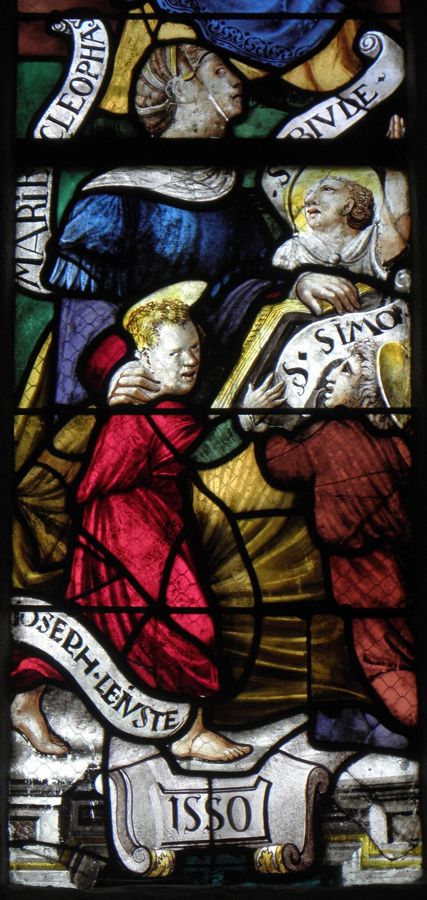
St. Joseph Barsabas

St. Joseph Barsabas

July 20 · Feast
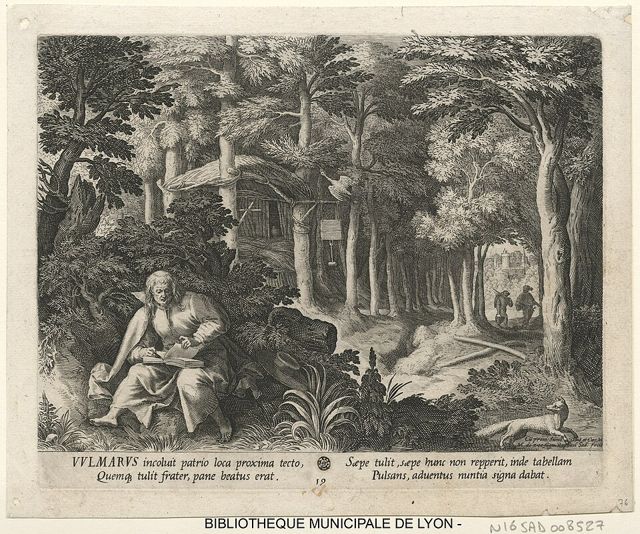
St. Vulmar

St. Vulmar

July 20 · Abbot
A

St. Ansegis

July 20 · Abbot
← All 1726 saints in the library
Sources & notes

Feast-day sources

Story sources

Sources

Credits

From Sabine Baring-Gould, The Lives of the Saints, new edition in 16 vols. (London: John C. Nimmo, 1897–98); text from the Internet Archive scan (OCR, lightly cleaned; errors possible). Public domain.

From “Catholic Encyclopedia (1913)/St. Jerome Emiliani,” The Catholic Encyclopedia (New York: Robert Appleton Company, 1907–1914), via Wikisource. Public domain. Matched by name and feast date; text unedited except for our bracketed notes in grey.

From Sabine Baring-Gould, The Lives of the Saints, new edition in 16 vols. (London: John C. Nimmo, 1897–98); text from the Internet Archive scan (OCR, lightly cleaned; errors possible). Public domain in the United States. Reproduced unedited, except for short bracketed notes in grey that we added to explain names and terms (“S.” is the old abbreviation for Saint). Some history and judgments reflect 19th-century scholarship.