St. Julian of Mans

Julian was the first bishop of Mans, towards the end of the third century, and was succeeded by St. Turibius.

Read the essentials →
January 27 · Bishop

St. Julian of Mans

St. Julian of Mans

Julian was the first bishop of Mans, towards the end of the third century, and was succeeded by St. Turibius.

Traditional feast

January 27
1914 / pre-1969 calendar, per Baring-Gould (1914)

Current feast

February 12
Secondary source · Wikipedia

Represents

Bishop

Their story

Adapted in modern English from Alban Butler's Lives of the Saints · Baring-Gould original below · little is known

Julian was the first bishop of Mans, towards the end of the third century, and was succeeded by St. Turibius.

His head was shown in the cathedral of Mans, but most of his relics were burnt or scattered by the Huguenots who plundered his shrine in 1562. Henry II of England was baptised in the church of St. Julian at Mans. Baring-Gould leaves the date uncertain.

Early life

The book says little or nothing about early life. This is how the account begins.

Thin entry · the 1914 book gives only 73 words. We have not filled the gap with invented detail.

Saint Julian was the first to carry the light of the Gospel into that portion of France of which Le Mans is the capital. There he laboured with great success, destroyed the idol which the people worshipped, and persuaded great numbers to be baptized. His life, written several hundreds of years after his death, is of small authority, and contains little of interest.

What they represent

How they teach us to live

Drawn from themes in the original account

Share your faith, in words and by example. Preaching and conversion are central here.

Keep their day. Remember them on January 27 with a short prayer, and ask for their help.
Read more

The full original · 73 words

Read Baring-Gould’s full account

Baring-Gould’s sources: Called the Apostle of Celtic Gaul; he is commemorated on this day in the Roman Martyrology. In the Paris Martyrology on the 28th Jan., others on the 31st; that of Cologne on 26th Jan. In the Roman Martyrology he is said to have been sent by S. Peter into Gaul; but as Bollandus has shown, this is an error. His life was written by one Brother Lethald in, or about, a.d. 990.

Saint Julian was the first to carry the light of the Gospel into that portion of France of which Le Mans is the capital. There he laboured with great success, destroyed the idol which the people worshipped, and persuaded great numbers to be baptized. His life, written several hundreds of years after his death, is of small authority, and contains little of interest. His relics [the bodily remains of a saint, or objects they used, kept with honor] were given to Paderborn in Westphalia, in 1143.

Feast days

Feast: February 12
Traditional: January 27

Nine days · Free

Pray the novena
with us.

One short email a day for nine days. The day's prayer, a line from St. Julian of Mans's story, and a nudge to keep going.

Also on January 27
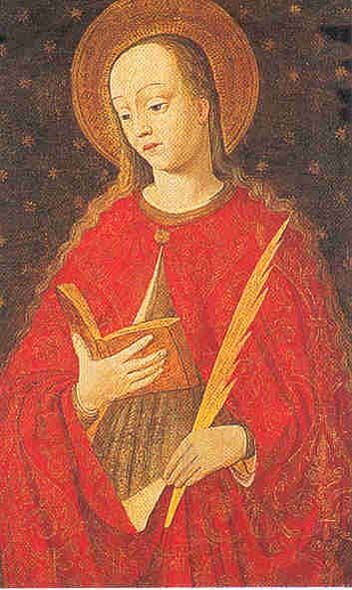
St. Devota in Corsica

St. Devota in Corsica

January 27 · Virgin, Martyr
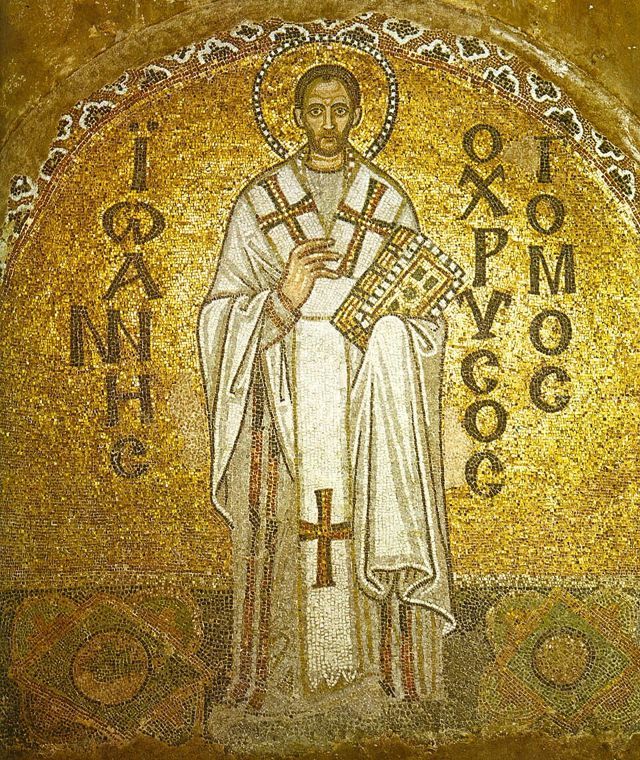
St. John Chrysostom

St. John Chrysostom

January 27 · Bishop, Deacon
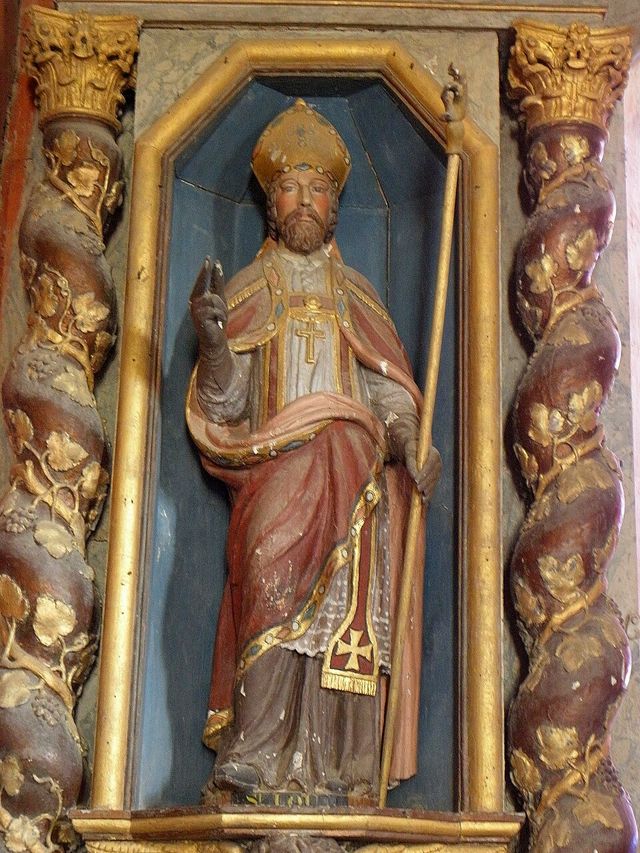
St. Lupus of Chalons

St. Lupus of Chalons

January 27 · Bishop
← All 1726 saints in the library
Sources & notes

Feast-day sources

Story sources

Sources

Credits

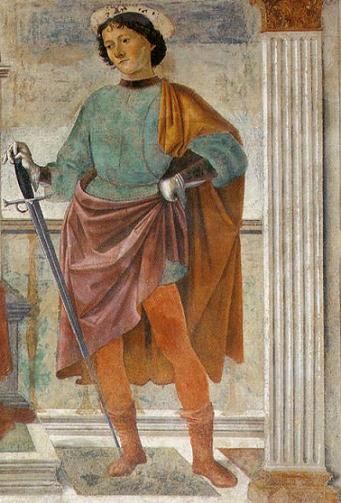
Image: Saintjulianghirlandaio.JPG · Domenico Ghirlandaio · Public domain, via Wikimedia Commons

From Sabine Baring-Gould, The Lives of the Saints, new and revised edition (Edinburgh: John Grant, 1914; first edition 1872). Public domain.

Image: Domenico Ghirlandaio, Wikimedia Commons (Public domain)

From Sabine Baring-Gould, The Lives of the Saints, new and revised edition (Edinburgh: John Grant, 1914; first edition 1872). Public domain in the United States. Reproduced unedited, except for short bracketed notes in grey that we added to explain names and terms (“S.” is the old abbreviation for Saint). Some history and judgments reflect 19th-century scholarship.