K

A shepherd who stayed with his people through hard times.

Read the essentials →
November 9 · Bishop

St. Kenan

St. Kenan

A shepherd who stayed with his people through hard times.

Traditional feast

November 9
1914 / pre-1969 calendar, per Baring-Gould (1897)

Current feast

Not verified yet

Represents

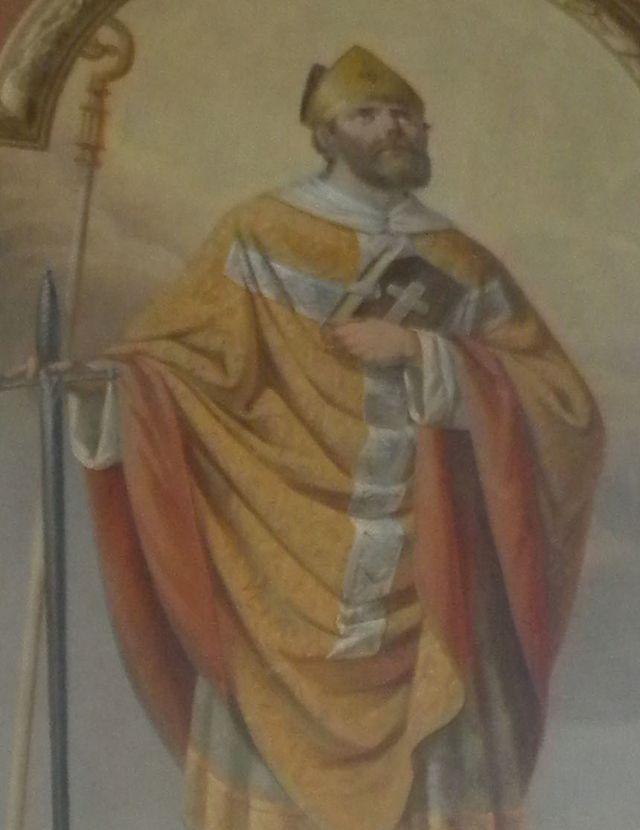
Bishop

Early life

The book says little or nothing about early life. This is how the account begins.

.S’. Kenan. themselves before S. Kenan to draw the plough for him in place of the seven oxen. The place has since been called Guestel Guervet, the Field of Stags.

What they represent

How they teach us to live

Drawn from themes in the original account

Build up the community you belong to. This life was lived with and for a community.

Learn from the kind of life it was. A shepherd who stayed with his people through hard times.

Read more

The full original · 333 words

Read Baring-Gould’s full account

Baring-Gould’s sources: Gallican Martyrology. At Cleder on Oct. 2. Authority s— A Life in Latin by Maurice, vicar of Cleder, late, founded on popular legend; given by Albert Le Grand; -also Lobineau.] S. Kenan, sumamed Colodoc, or “ He who loves to lose himself,” was bom, according to one account, in Britain, of noble parents, Ludun and MereTagu; according to another, he was the son of Leogaire of Ireland. But apparently there has been confusion made between two or three of the same name. Kenan or Kienan, bishop of Duleek, with whom Le Grand confounds him, lived in the days of Leogaire and S. Patrick, and died in Ireland in 489. He was a native of Meath, was of illustrious family, and was baptized by S. Patrick. He wrote a life of the Apostle of Ireland, and his festival is observed on November 24. Another Kenan was a native of Connaught, and is said to have erected a church in the Eugenian sept — Usher thinks at Tyrone; Lanigan more probably at Innis-owen. He had a disciple named Congell, who is probably Coemgal, abbot of Both-chonais in Innis-owen. This Kenan wa 5 also the master of S. Nathy of Achonry. This was no doubt the Kenan who crossed into Wales and became a disciple of the abbot Gildas. It was revealed to him that he should go forward with a little bell till he reached a spot named Ros-ynys, and that there the bell would ring of itself, and there he should rest He asked Gildas for a bell, but the abbot had only a little bit of metal. Kenan blessed it, and the metal multiplied so that he Was able to get a good bell cast from it. He then started on his journey. Having reached an arm of the sea,1 he threw himself down on the grass to rest Then he heard a herdsman shout to his fellow, “ Hey ! have you seen my cows anywhere ? ” “ Yes,” answered the other, “ I saw them at Ros-ynys.” When S. Kenan heard this he was glad, and descended to the shore, which has since borne the name of Kestrenn-ke, or the shore of Kenan; and there he struck the rock, and water flowed forth to quench his thirst and that of his disciples. Having crossed the arm of the sea, he entered a wood, and there his bell began ot its own accord to tingle. He knew therefore that he was at the place where he was to rest, the valley of the Fal estuary in Cornwall There he built cells, and began to till the soiL In the neighbourhood was the castle of a prince named Tewdrig, who, when hunting one day, pursued a stag to the cell of the saint, and because S. Kenan would not tell the prince where the stag had secreted itself, he carried off seven of his oxen and a milch cow. Next day seven stags presented 1 Hir-drec’h; i.t. Hirt racks, the long shore; this seems to be where is now S. Kea's parish.

.S’. Kenan. themselves before S. Kenan to draw the plough for him in place of the seven oxen. The place has since been called Guestel Guervet, the Field of Stags. Tewdrig, hardened at this miracle, struck the saint across the face, and knocked out one of his teeth. He went meekly to wash the blood from his mouth at a fountain, which long after was regarded as efficacious for removing toothache. Tewdrig shortly after, in hunting, fell from his horse and broke his neck. Not long after, S. Kenan determined to cross the sea and visit the saints in Brittany. On reaching the port of Langegu, he sent some of his disciples to entreat a merchant to give him com for provision on the journey. “ No,” said the man, laughing, “ not unless you carry off all my baige-load shall you have a grain.” When the saint embarked, the barge broke its moorings and floated after him all the way to Brittany. He came ashore near S. Pol-de-L^on, at Cleder, and there he built himself a little monastery, in which he placed the Book of the Gospels, transcribed by his own hand. The contest between Modred and Arthur caused Kenan to recross the sea. He is said to have been present at the fatal battle of Camelot, and to have consoled Queen Gweniver after the death of Arthur, and exhorted her to enter a convent He returned to Cleder, and after having buried his disciple Kerian in his church, he fell sick and died, the first Saturday in October.

The monastery was ruined, and the place of his sepulture forgotten, till a villager of Cleder dreamed that an angel told him to exhume the bones of the saint at a certain spot He sought and recovered the relics [the bodily remains of a saint, or objects they used, kept with honor]. A fragment is preserved in the cathedral of S. Brieuc. S. Kenan is popularly called Saint Kt or Saint Quay. S. Kea on the Fal near Truro is dedicated to this saint [Not. s-

Feast days

Feast: November 9

Nine days · Free

Pray the novena
with us.

One short email a day for nine days. The day's prayer, a line from St. Kenan's story, and a nudge to keep going.

Also on November 9
S

St. Salaun

November 9 · Confessor
St. Victorinus

St. Victorinus

November 9 · Bishop, Martyr
T

St. Theodotus of Laodicea

November 9 · Bishop
← All 1727 saints in the library
Sources & notes

Feast-day sources

Sources

Credits

From Sabine Baring-Gould, The Lives of the Saints, new edition in 16 vols. (London: John C. Nimmo, 1897–98); text from the Internet Archive scan (OCR, lightly cleaned; errors possible). Public domain.

From Sabine Baring-Gould, The Lives of the Saints, new edition in 16 vols. (London: John C. Nimmo, 1897–98); text from the Internet Archive scan (OCR, lightly cleaned; errors possible). Public domain in the United States. Reproduced unedited, except for short bracketed notes in grey that we added to explain names and terms (“S.” is the old abbreviation for Saint). Some history and judgments reflect 19th-century scholarship.