L

Faithfulness to Christ when it cost everything.

Read the essentials →
March 15 · Martyr

St. Longinus

St. Longinus

Faithfulness to Christ when it cost everything.

Traditional feast

March 15
1914 / pre-1969 calendar, per Baring-Gould (1897)

Current feast

March 15 (also listed: October 16, October 22, November 14)
Secondary source · Wikipedia

Represents

Martyr

Their story

Adapted in modern English from Baring-Gould (1897) · original text below · little is known

Longinus is the name later given to the soldier who pierced Christ's side; Baring-Gould thinks it comes from the Greek word for spear. Some identify him with the centurion who declared Christ the Son of God, but everything about him is uncertain.

His Greek Acts are a late forgery. His body was claimed to be found at Mantua in 1304, with relics later spread to Prague and Rome; Sardinia and Cappadocia also claim him. The head is also said to have been found in Jerusalem. The sources differ throughout.

Early life

The book says little or nothing about early life. This is how the account begins.

Thin entry · the 1897 book gives only 224 words. We have not filled the gap with invented detail.

The name Longinus, given in the gospel of Nicodemus to the soldier who pierced the side of Christ, is probably due to a mistake. The name is probably Latinized from Longche , a spear. Some think that the soldier who pierced the side, and the centurion who exclaimed at the earthquake, confessing the Sonship of Christ, are the same, but there is the greatest uncertainty on every point connected with Longinus.
What they represent

How they teach us to live

Drawn from themes in the original account

Learn from the kind of life it was. Faithfulness to Christ when it cost everything.

Keep their day. Remember them on March 15 with a short prayer, and ask for their help.

Read more

The full original · 224 words

Read Baring-Gould’s full account

Baring-Gould’s sources: Modern Roman Martyrology. The name of Longinus was not known to the Greeks previous to the patriarch Germanus, in 715. It was introduced amongst the Westerns from the Apocryphal Gospel of Nicodemus. There is no reliable authority for the Acts and martyrdom of this saint.

The name Longinus, given in the gospel of Nicodemus to the soldier who pierced the side of Christ, is probably due to a mistake. The name is probably Latinized from Longche , a spear. Some think that the soldier who pierced the side, and the centurion who exclaimed at the earthquake, confessing the Sonship of Christ, are the same, but there is the greatest uncertainty on every point connected with Longinus. The Greeks commemorate Longinus the Centurion on October 16th. The Latin Acts of S. Longinus confuse the centurion and the soldier together. The Greek Acts pretend to be by S. Hesychius (March 28th), but are an impudent forgery of late date. It is pretended that the body of S. Longinus was found at Mantua in 1304, together with the sponge stained with Christ's blood, wherewith he had assisted in cleansing our Lord's body when it was taken down from the cross. These relics [the bodily remains of a saint, or objects they used, kept with honor] have been distributed in various places. Part are in Prague, others in Carlstein, the body in the Vatican at Rome. But the Sardinians assert that they possess the body of S. Longinus, which was found in their island, where he had suffered under Nero. And the Greeks say he suffered in Gabala, in Cappadocia [a region of central Turkey]. The head is, however, also said to have been found in Jerusalem, and carried into Cappadocia.

Feast days

Feast: March 15

Nine days · Free

Pray the novena
with us.

One short email a day for nine days. The day's prayer, a line from St. Longinus's story, and a nudge to keep going.

Also on March 15
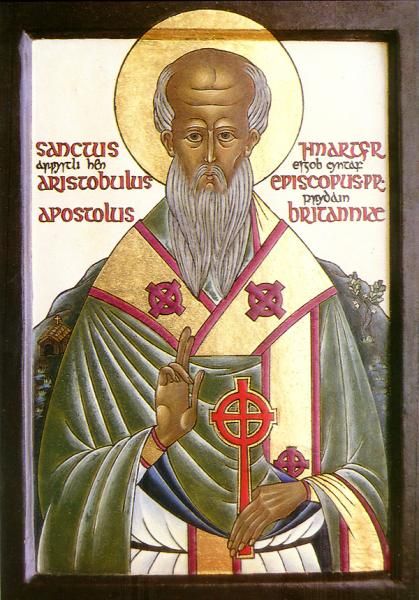
St. Aristobulus

St. Aristobulus

March 15 · Martyr
N

St. Nicander

March 15 · Martyr
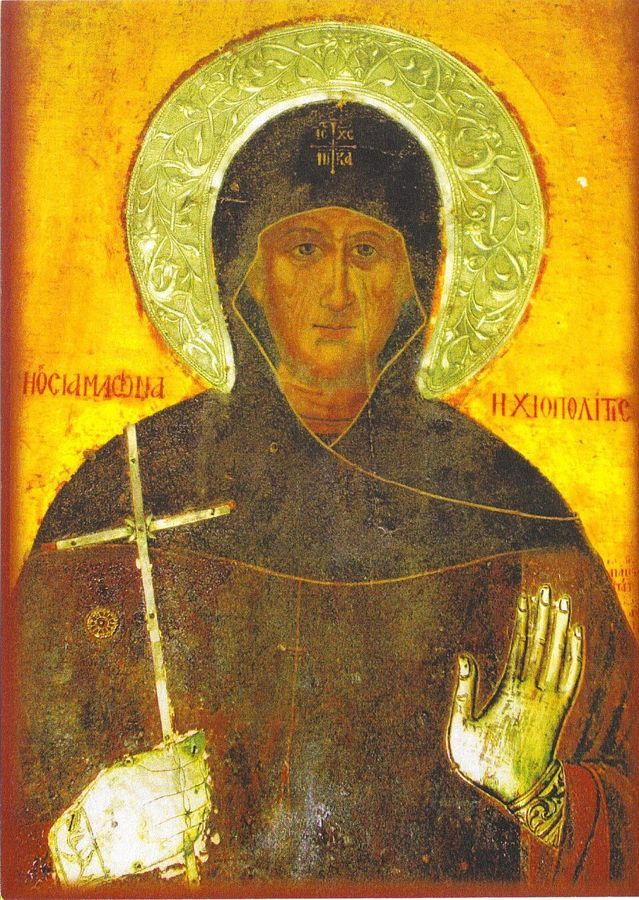
St. Matrona

St. Matrona

March 15 · Virgin, Martyr
← All 1726 saints in the library
Sources & notes

Feast-day sources

Story sources

Sources

Credits

From Sabine Baring-Gould, The Lives of the Saints, new edition in 16 vols. (London: John C. Nimmo, 1897), digitized text from Project Gutenberg. Public domain.

From Sabine Baring-Gould, The Lives of the Saints, new edition in 16 vols. (London: John C. Nimmo, 1897), digitized text from Project Gutenberg. Public domain in the United States. Reproduced unedited, except for short bracketed notes in grey that we added to explain names and terms (“S.” is the old abbreviation for Saint). Some history and judgments reflect 19th-century scholarship.