M

A shepherd who stayed with his people through hard times.

Read the essentials →
September 7 · Bishop

St. M O D O

St. M O D O

A shepherd who stayed with his people through hard times.

Traditional feast

September 7
1914 / pre-1969 calendar, per Baring-Gould (1897)

Current feast

Not verified yet

Represents

Bishop

Early life

The book says little or nothing about early life. This is how the account begins.

Thin entry · the 1897 book gives only 38 words. We have not filled the gap with invented detail.

1 See an exhaustive account of him in Dr. Reeves’ Paper ‘On some Ecclesiastical Bells,' in the “ Transactions of the R. Irish Academy,” vol. viii. p. 446. Also Bishop Forbes' “ Scottish Kalendars,” p. 403. S. Madelberta.

What they represent

How they teach us to live

Drawn from themes in the original account

Learn from the kind of life it was. A shepherd who stayed with his people through hard times.

Keep their day. Remember them on September 7 with a short prayer, and ask for their help.

Read more

The full original · 38 words

Read Baring-Gould’s full account

Baring-Gould’s sources: Dempster’s Scottish Menology. Authority A Life in Capgrave; also see S. Aidan of Ferns, Jan. 31. S. Modoc, commemorated as a Bishop and Culdee this day in Scotland, is unquestionably the same as S. Aedan of Ferns, celebrated in the hagiology of Ireland and Wales, on Jan. 31. The simple form of his name is Aedh (Aeda, Aidus, ^Edeus, Edus, Hugh); with the diminutive it is Aedhan (Aedan, Aidamus, Edanus); with the honorific prefix it is Mo-Edoc (Modocus, Maidocus, Madock, Madoes, Mogue). He was born in a.d. 588 at Inis-breaghmuigh (East Breffny). His father’s name was Sedna, eighth in descent from Colla Nais, King of Ireland in 336. His mother was Eithne of Tirawley. As a child he was a hostage to Ainmire, King of Ireland in 568; after that he studied along with S. Lasrian or Mallaissi of Devenish, in Lough Eame. After a sojourn in Leinster he betook himself to S. David’s Monastery, Killmuine, in Wales. Here he remained some time, renowned for sanctity. He returned to Ui-Ceinnselaigh, in Ireland, was mixed up in the dissensions of his native country, and on the success of his halfbrother, King Brandubh, he had Ferns assigned him as an episcopal see. He returned to Wales on a visit to S. David before he died; then, returning to Ireland, he survived till the beginning of the 7th century. In Scotland he is commemorated at Kilmadock. For legends concerning him see the life of S. Aidan, Jan. 31.

1 See an exhaustive account of him in Dr. Reeves’ Paper ‘On some Ecclesiastical Bells,' in the “ Transactions of the R. Irish Academy,” vol. viii. p. 446. Also Bishop Forbes' “ Scottish Kalendars,” p. 403. S. Madelberta.

Feast days

Feast: September 7

Nine days · Free

Pray the novena
with us.

One short email a day for nine days. The day's prayer, a line from St. M O D O's story, and a nudge to keep going.

Also on September 7
St. Eupsychius

St. Eupsychius

September 7 · Martyr
J

St. John

September 7 · Martyr
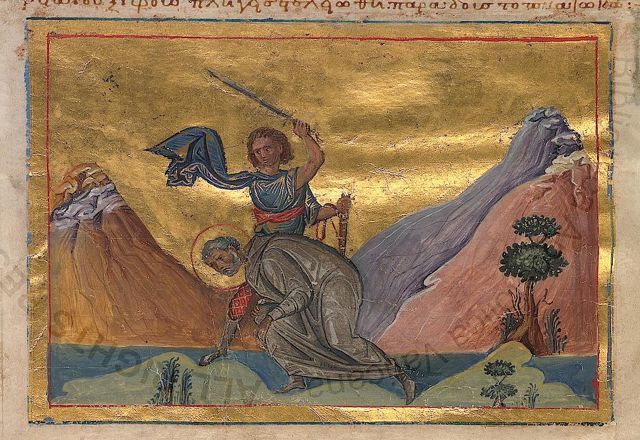
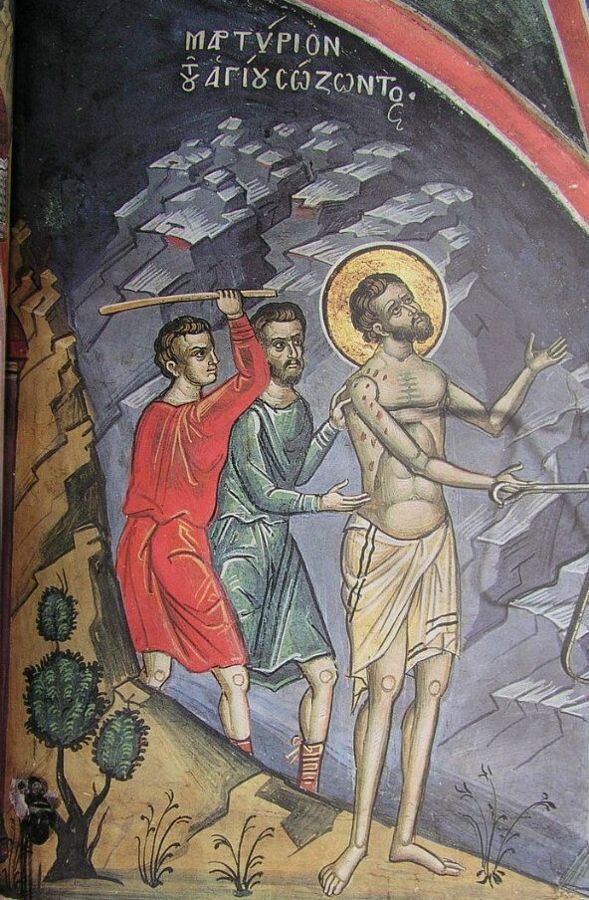
St. Sozon

St. Sozon

September 7 · Martyr
← All 1726 saints in the library
Sources & notes

Feast-day sources

Sources

Credits

From Sabine Baring-Gould, The Lives of the Saints, new edition in 16 vols. (London: John C. Nimmo, 1897–98); text from the Internet Archive scan (OCR, lightly cleaned; errors possible). Public domain.

From Sabine Baring-Gould, The Lives of the Saints, new edition in 16 vols. (London: John C. Nimmo, 1897–98); text from the Internet Archive scan (OCR, lightly cleaned; errors possible). Public domain in the United States. Reproduced unedited, except for short bracketed notes in grey that we added to explain names and terms (“S.” is the old abbreviation for Saint). Some history and judgments reflect 19th-century scholarship.