M

Faithfulness to Christ when it cost everything.

Read the essentials →
August 27 · Martyr

St. Maelrubha

St. Maelrubha

Faithfulness to Christ when it cost everything.

Traditional feast

August 27
1914 / pre-1969 calendar, per Baring-Gould (1897)

Current feast

Not verified yet

Represents

Martyr

Their story

Adapted in modern English from the Catholic Encyclopedia (1913) · original text below

Maelrubha was born in 642 in what is now County Derry. On his father's side he descended from King Niall, and his mother was a niece of St Comgall of Bangor. He was educated at Bangor.

In his thirtieth year he sailed to Scotland with a group of monks. He spent two years travelling, mainly in Argyll, and founded about half a dozen churches. Then he settled at Applecross in Wester Ross among the Picts (the ancient people of northern Scotland). From there he went on missions west to Skye and Lewis, east to Forres and Keith, and north to Durness and Farr.

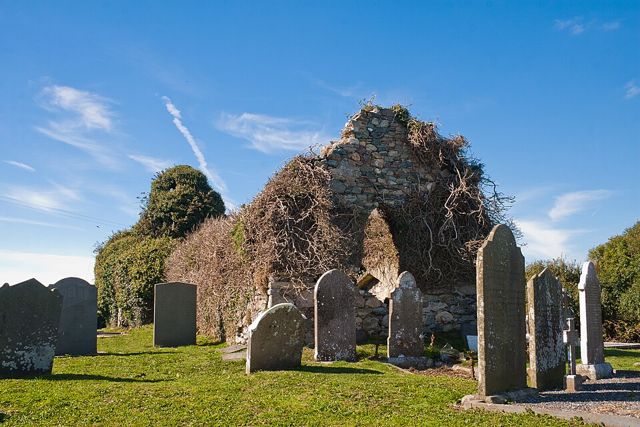
On his last journey he was killed by Danish Vikings, probably at Teampull in Strathnaver, and buried near the River Naver under a rough cross-marked stone. After Columba he was perhaps the most popular saint of north-west Scotland, with at least twenty-one churches dedicated to him. In 1898 Pope Leo XIII restored his feast in Scotland on 27 August.

Early life

The book says little or nothing about early life. This is how the account begins.

Thin entry · the 1897 book gives only 54 words. We have not filled the gap with invented detail.

…chial church, and is now called Urquard. His body was translated to his monastery at Apurcrossan. The name of this saint, made up of consonants apt to be liquefied, occurs in many transmutations, such as Mulruby, Mulrew, Melriga, Marow, Murruy, Arrow, Errew, Olron, Ro, Rufus, and, taking in his title, Suminaruff, Samarevis, and Summereve.

What they represent

How they teach us to live

Drawn from themes in the original account

Build up the community you belong to. This life was lived with and for a community.

Learn from the kind of life it was. Faithfulness to Christ when it cost everything.

From the Catholic Encyclopedia

1913 · 475 words

An abbot and martyr, founder of Abercrossan, b. 642; d. 21 April, 722. He was descended from Niall, King of Ireland, on the side of his father Elganach. His rnother, Subtan, was a niece of St. Comgall the Great, of Bangor. St. Maelrubha was born in the county of Derry and was educated at Bangor. When he was in his thirtieth year he sailed from Ireland for Scotland, with a following of monks. For two years he travelled about, chiefly in Argyll, and founded about half-a dozen churches then settled at Abercrossan (Applecross), in the west of Ross. Here he built his chief church and monastery in the midst of the Pictish folk, and thence he set out on missionary journeys, westward to the islands Skye and Lewis, eastward to Forres and Keith, and northward to Loch Shinn, Durness, and Farr. It was on this last journey that he was martyred by Danish vikings, probably at Teampull, about nine miles up Strath-Naver from Farr, where he had built a cell. He was buried close to the River Naver, not far from his cell, and his grave is still marked by "a rough cross-marked stone". The tradition, in the "Aberdeen Breviary", that he was killed at Urquhart and buried at Abercrossan is probably a mistake arising from a confusion of Gaelic place-names.

This error had been copied by several later hagiologists, as has also the same writers' confusion of St. Maelrubha with St. Rufus of Capua. Maelrubha was, after St. Columba, perhaps the most popular saint of the north-west of Scotland. At least twenty-one churches are dedicated to him, and Dean Reeves enumerates about forty forms of his name. His death occurred on 21 April, and his feast has always been kept in Ireland on this day; but in Scotland (probably owing to the confusion with St. Rufus) it was kept on 27 August. On 5 July, 1898, Pope Leo XIII restored his feast for the Church in Scotland, to be kept on 27 August.

Annals of . . . the Four Masters, ed. O'DONOVAN (Dublin, 1856). ad ann, 671, 722: Annals of Ulster, ed, HENNESSY (Dublin, 1887), ad ann. 670, 672, 721; BARRET, Early Scottish Saints in Dublin Review XV (1899), 348-72; BARRET, Calendar of Scottish Saints (Fort Augustus, 1904), 64-7; Biotiotheca Hagiographica Latina. ed. BOLLANDISTS (Brussels, 1900), 771; CAMPBELL, St. Maelrubha in Scottish Historical Review, VI (1909), 442-3; FORBES, Kalendars of Scottish Saints Edinburgh, 1872), 382-4; GAMMACK in Dict. Christ. Biog., s. v. ; MITCHELL, On Various superstitions in the North-West Highlands and Islands in Proceedings of the Society of Antiquaries of Scotland, IV, 251, PINIUS, De sancto Maelrubio monacho et martyre in Acta SS., Aug., VI, 131-2; REEVES, Saint Maelrubha, his history and churches in Proceedings of the Antiquaries of Scotland, III, 258-96; SCOTT, St. Maelrubha in Scottish Historical Review VI (1909), 260-80.
Read more

The full original · 54 words

Read Baring-Gould’s full account

Baring-Gould’s sources: Irish Martyrologies on April 21; Scottish on Aug. 27. Authorities: — Aberdeen Breviary, &c., see "S. Maelrubha, his History and Churches, "by W. Reeves, D.D. Edinb. r86r, in Proceed. Soc. Antiq. Scot., iii. p. 258. For a curious account of heathen sacrifices offered to this saint, and of the feelings of the clergy on the subject in the 17th cent., see Dr. Mitchell's paper, ‘ 4 Oh Various Superstitions in the North-west Highlands and Islands,” S. Maelrubha was bom in 642, of an ancient Irish royal family; he was descended On his father’s side in a direct line from Niall of the Nine Hostages, and at an early age he became a member of the monastic community of S. Comgal, his mother’s relative, at Banchor in Ireland. In a.d. 671, when he was aged twenty nine, he went to Alba, and after two years he founded Apurcrossan in Mearns, where he resided for fifty-one years. He also founded a church on an island in Loch-maree, which takes its name from him. According to Irish accounts he died a natural death, at the age of eighty, at Apurcrossan, but the Scottish accounts are more likely to be correct, which say that he was killed by the Northmen. He lay for three days wounded before he expired, and then a wooden church was built over the spot, which afterwards was made the paroAugust. 27*] S'. Werenfried.

…chial church, and is now called Urquard. His body was translated to his monastery at Apurcrossan. The name of this saint, made up of consonants apt to be liquefied, occurs in many transmutations, such as Mulruby, Mulrew, Melriga, Marow, Murruy, Arrow, Errew, Olron, Ro, Rufus, and, taking in his title, Suminaruff, Samarevis, and Summereve.

Feast days

Feast: August 27

Nine days · Free

Pray the novena
with us.

One short email a day for nine days. The day's prayer, a line from St. Maelrubha's story, and a nudge to keep going.

Also on August 27
St. Poemen

St. Poemen

August 27 · Hermit
St. Decuman

St. Decuman

August 27 · Hermit, Martyr
← All 1726 saints in the library
Sources & notes

Feast-day sources

Story sources

Sources

Credits

From Sabine Baring-Gould, The Lives of the Saints, new edition in 16 vols. (London: John C. Nimmo, 1897–98); text from the Internet Archive scan (OCR, lightly cleaned; errors possible). Public domain.

From “Catholic Encyclopedia (1913)/St. Maelrubha,” The Catholic Encyclopedia (New York: Robert Appleton Company, 1907–1914), via Wikisource. Public domain. Matched by name and feast date; text unedited except for our bracketed notes in grey.

From Sabine Baring-Gould, The Lives of the Saints, new edition in 16 vols. (London: John C. Nimmo, 1897–98); text from the Internet Archive scan (OCR, lightly cleaned; errors possible). Public domain in the United States. Reproduced unedited, except for short bracketed notes in grey that we added to explain names and terms (“S.” is the old abbreviation for Saint). Some history and judgments reflect 19th-century scholarship.