M

Leaving everything to pray, yet still drawing people who needed wisdom.

Read the essentials →
February 13 · Hermit

St. Martian

St. Martian

Leaving everything to pray, yet still drawing people who needed wisdom.

Traditional feast

February 13
1914 / pre-1969 calendar, per Baring-Gould (1897)

Current feast

Not verified yet

Represents

Hermit

Their story

Adapted in modern English from Baring-Gould (1897) · original text below

Martian, a native of Cæsarea in Palestine, withdrew at eighteen to a nearby mountain and lived there twenty-five years among holy hermits. A courtesan of Cæsarea named Zoe heard of his holiness and set out to seduce him. One stormy night she came to his door crying that she was lost and afraid of wild beasts. He let her in. As she tried to tempt him and he felt himself weakening, he suddenly thrust his legs into the fire, saying to himself that this fire was nothing compared with the fire that awaits the sinner.

Zoe, horrified, was ashamed of her purpose and her way of life. She wept and asked him for a rule of life. He sent her to St. Paula, who ran a convent at Bethlehem, and Zoe became a model of penance, eating once a day or not at all for two days, sleeping on the ground and mourning her past.

When his legs healed, Martian looked for a place safer from temptation and found a cave in a rock a little off the coast. He lived there alone for six years. Then a ship was wrecked nearby, and a girl among the passengers saved herself on his rock. Unwilling to share his retreat but unable to drive her off, he told her a boat would come in two months with his supplies; she could have his bread and water and ask the captain to take her to land. Then he threw himself into the sea and swam ashore. He wandered for two years without a home and finally died at Athens.

The girl, meanwhile, had come to love the solitary life. When the boat came she asked the captain for a warm dress, wool to spin, and bread and water. He came back with his wife bringing all she needed, and from then on visited every three months during the six years she lived there.
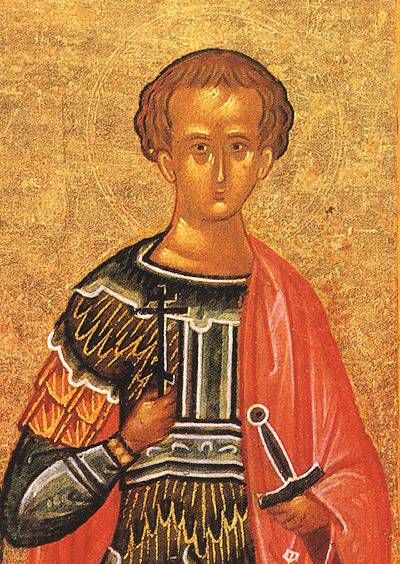
Early life

Selected sentences from the original account, unaltered.

Martian was a native of Cæsarea in Palestine.

What they represent

How they teach us to live

Drawn from themes in the original account

Make time for silence. Solitude and withdrawal to pray shape this life.

Learn from the kind of life it was. Leaving everything to pray, yet still drawing people who needed wisdom.

Read more

The full original · 570 words

Read Baring-Gould’s full account

Baring-Gould’s sources: Commemorated by the Greeks with special solemnity on this day. Authority:—A Life written by a contemporary. Anciently, S. Martian was venerated at Constantinople in the Church of S. Peter, with great honour, probably because his relics reposed there.

Martian was a native of Cæsarea in Palestine. At the age of eighteen he retired to a mountain near that city, where he lived for twenty-five years among many holy solitaries in the practice of all virtues. A courtesan of Cæsarea, called Zoe, having heard of his sanctity, moved by an evil spirit, resolved to endeavour to lead him into sin. One stormy night she presented herself at his door, and cried to be admitted. "Have pity on me!" she pleaded, "I fear the wild beasts, I have lost my way!" Then he admitted her, and when she used all her efforts to fascinate him, and he felt his heart rebel against the law of God, by a sudden act of resolution, he thrust his legs into the fire, crying, "O Martian! how feels this fire to thee now? Yet it is not comparable to that which the devil kindles to consume the sinner."

The woman, horror-struck at his proceeding, was filled with shame at her wicked purpose and manner of life. She burst into tears, and entreated the holy man to give her a rule whereby she might conform her life to the will of God. Then he sent her to S. Paula, [41] who governed a convent at Bethlehem, who received her; and Zoe became a model of penitence, eating only once a day, and sometimes spending two days without food; sleeping on the bare ground, and ever bewailing with many tears her former wicked life.

Martian, after his legs were healed, resolved to escape to some place where he could not be tempted so readily. He therefore found a rock at some little distance from the shore, in the sea, and in that was a cave. Martian spent six years in this solitude, deprived of all human consolations, but full of joy in being separated from all creatures who might draw his heart from God. After the lapse of six years, one stormy day a vessel was wrecked near his islet, and a girl, who was one of the passengers, managed to save herself upon the rock of Martian. The hermit was placed in a sore predicament; he had no wish for the society of a young damsel in his place of retreat, and yet he had no power to drive her from her refuge. He therefore said to her, "My daughter, we must not both live here together. In two months a ship will touch on this island to bring me what is needful for my support. Till then there is bread and water in my cave. Take it, and live here; when the ship arrives, tell the captain how you came here, and he will take you on board and convey you to the main land." Then he flung himself into the sea and swam ashore. For two years he wandered without finding a home, but at last died at Athens. The girl left on the island, had, in the meantime, become attached to the solitary life, and when the boat arrived, she besought the ship-master to give her a warm dress, some wool to spin, and bread and water. The captain readily promised to do as she required, and returned shortly after with his wife, bringing her all she needed; and from that day he came to the island every three months, bringing her what she needed, during the six years she lived there.

Feast days

Feast: February 13

Nine days · Free

Pray the novena
with us.

One short email a day for nine days. The day's prayer, a line from St. Martian's story, and a nudge to keep going.

Also on February 13
F

Sts. Fusca and Maura

February 13 · Martyrs
St. Polyeuctus

St. Polyeuctus

February 13 · Martyr
C

St. Castor

February 13 · Priest, Confessor
← All 1726 saints in the library
Sources & notes

Feast-day sources

Story sources

Sources

Credits

From Sabine Baring-Gould, The Lives of the Saints, new edition in 16 vols. (London: John C. Nimmo, 1897), digitized text from Project Gutenberg. Public domain.

From Sabine Baring-Gould, The Lives of the Saints, new edition in 16 vols. (London: John C. Nimmo, 1897), digitized text from Project Gutenberg. Public domain in the United States. Reproduced unedited, except for short bracketed notes in grey that we added to explain names and terms (“S.” is the old abbreviation for Saint). Some history and judgments reflect 19th-century scholarship.