M

Faithfulness to Christ when it cost everything.

Read the essentials →
November 9 · Martyr

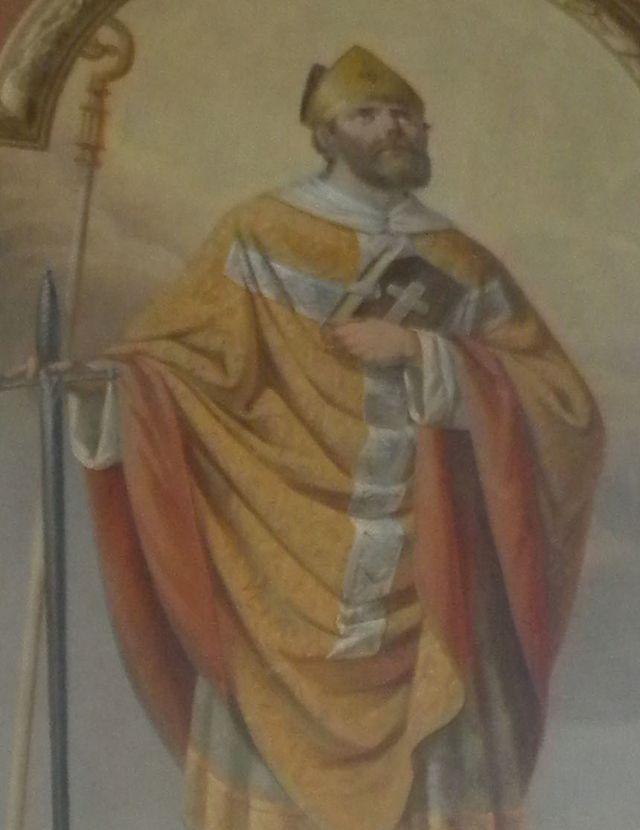
St. Mennas

St. Mennas

Faithfulness to Christ when it cost everything.

Traditional feast

November 9
1914 / pre-1969 calendar, per Baring-Gould (1897)

Current feast

Not verified yet

Represents

Martyr

Their story

Adapted in modern English from Alban Butler's Lives of the Saints · Baring-Gould original below · little is known

Mennas, or Menas, was an Egyptian serving as a soldier in the Roman troops quartered at Cotyaeus in Phrygia while the edicts of Dioclesian were being strictly enforced in the East.

He was arrested and boldly confessed his faith. By order of Pyrrhus, the president, he was cruelly scourged, tortured on the rack, and finally beheaded. His name has always been famous in the calendars of the Church, especially in the East.

Butler gives probably about 304, with his feast on November 11; Baring-Gould, the text on this page, gives 303, with his feast on November 9. The sources differ.

Early life

The book says little or nothing about early life. This is how the account begins.

…people were seeing a martyrs* exhibition, he cried at the top of his voice, “ I am found of them that sought me not”1 All eyes were turned on him. Pyrrhus, the president, sent for him and questioned him, and he said he was a Christian. Thereupon he was consigned to prison.

What they represent

How they teach us to live

Drawn from themes in the original account

Learn from the kind of life it was. Faithfulness to Christ when it cost everything.

Keep their day. Remember them on November 9 with a short prayer, and ask for their help.

Read more

The full original · 319 words

Read Baring-Gould’s full account

Baring-Gould’s sources: Roman Martyrology. Usnardus, Bede, Ado, ftc. Samm, York, Durham, and Hereford Kaiendars. By the Greeks also. The Neapolitan Kalendar of the 9th cent. The Menology of Basil. Constantinopolitan Kalendar of the 8th cent, &c. Authority: — The Acts in Metaphrastes, fairly trustworthy, though very late.] ENNAS was an Egyptian, but a soldier in the Roman army. He professed Christianity. He was at Cotyaeus in Phrygia when the edicts of persecution in the army were published by Diocletian and Maximian in 298. He abandoned the army thereupon, and retired into a solitary place with some other Christians, to escape the rage of the persecutor. There he remained till the general persecution in 303, when, filled with enthusiasm, and burning with desire of martyrdom, he went back to Cotyaeus, and entering the theatre, where the (Not. iz.

…people were seeing a martyrs* exhibition, he cried at the top of his voice, “ I am found of them that sought me not”1 All eyes were turned on him. Pyrrhus, the president, sent for him and questioned him, and he said he was a Christian. Thereupon he was consigned to prison. Next day he was scourged. When the soil was red with his blood one of those present urged him to give way. He replied, “ Retire, miserable one; I have always sacrificed to my God, and to Him alone will I offer sacrifice. These torments are not insupportable. Nay, rather I rejoice in them.” The judge then ordered his sides to be tom with iron hooks, and the wounds to be fretted with horsehair cloth. Finally, wearied with tormenting him, the judge ordered him to be burned alive.

Some Christians succeeded in recovering the bones from among the ashes of the pyre, and they were carried, as he had requested, to be laid in his native land, at Alexandria in Egypt. A basilica was erected over his remains as soon as Constantine gave peace to the Church. Timothy, patriarch [the title of the bishops of the great ancient sees: Rome, Constantinople, Alexandria, Antioch, Jerusalem] of Alexandria (380—385), relates some of the miracles wrought by the saint, some grotesque in their marvellousness.

A traveller, intending to visit the church of S. Mennas, and make an offering at his tomb, lodged for the night in a tavern. The innkeeper, seeing he had a large portmanteau, murdered the man in the night, cut him up, packed his limbs in a sack, and hung up his head to a beam of the roof, intending to take his money and throw the body into the water at the earliest opportunity. But S. Mennas rode up to the inn door, attended by many saints, put the bits of the man together, restored him to life, gave him his portmanteau, scolded the taverner, and vanished. 1 Isaiah. Ixy. i.
Feast days

Feast: November 9

Nine days · Free

Pray the novena
with us.

One short email a day for nine days. The day's prayer, a line from St. Mennas's story, and a nudge to keep going.

Also on November 9
S

St. Salaun

November 9 · Confessor
St. Victorinus

St. Victorinus

November 9 · Bishop, Martyr
T

St. Theodotus of Laodicea

November 9 · Bishop
← All 1726 saints in the library
Sources & notes

Feast-day sources

Story sources

Sources

Credits

From Sabine Baring-Gould, The Lives of the Saints, new edition in 16 vols. (London: John C. Nimmo, 1897–98); text from the Internet Archive scan (OCR, lightly cleaned; errors possible). Public domain.

From Sabine Baring-Gould, The Lives of the Saints, new edition in 16 vols. (London: John C. Nimmo, 1897–98); text from the Internet Archive scan (OCR, lightly cleaned; errors possible). Public domain in the United States. Reproduced unedited, except for short bracketed notes in grey that we added to explain names and terms (“S.” is the old abbreviation for Saint). Some history and judgments reflect 19th-century scholarship.