Their story
Mochteus, also called Mochta, was a Briton, a disciple of St Patrick and the first Bishop of Louth in Ireland.
He died in 535. Butler cites Adamnan's Life of St Columba and Ussher for him.
Mochteus, also called Mochta, was a Briton, a disciple of St Patrick and the first Bishop of Louth in Ireland.
Read the essentials →Mochteus, also called Mochta, was a Briton, a disciple of St Patrick and the first Bishop of Louth in Ireland.
August 19
August 19
Bishop
Mochteus, also called Mochta, was a Briton, a disciple of St Patrick and the first Bishop of Louth in Ireland.
He died in 535. Butler cites Adamnan's Life of St Columba and Ussher for him.
Thin entry · the 1897 book gives only 97 words. We have not filled the gap with invented detail.
It relates how as a child he learned letters from an angel who brought him a waxed slate for the purpose from heaven.
Feed your mind with Scripture and good books. Learning and the Scriptures matter in this life.
Keep their day. Remember them on August 19 with a short prayer, and ask for their help.
The life of the saint, a late composition, is a collection of marvels. It relates how as a child he learned letters from an angel who brought him a waxed slate for the purpose from heaven. This slate the saint afterwards presented to the Pope. Also how, when he sailed with his disciples for Ireland, one who had been inadvertently left behind, tore off a tree bough and was wafted over the waters on the green fronds, to the retreating ship of Mochteus. He received the viaticum from the hands of S. Dageus, and died in 535.
Feast: August 19
One short email a day for nine days. The day's prayer, a line from St. Mochteus of Louth's story, and a nudge to keep going.
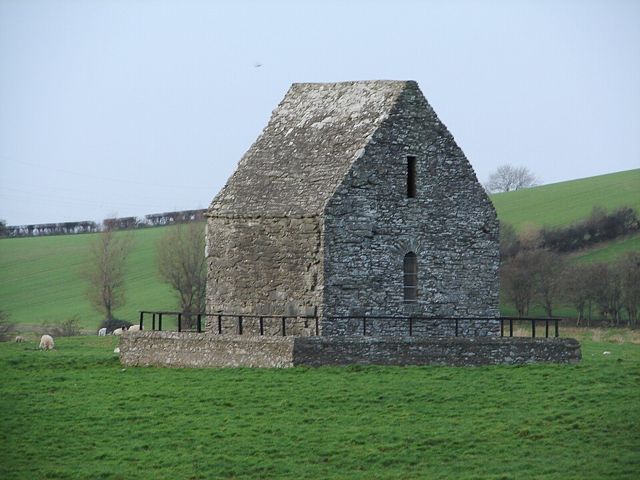
Image: Saint Mochta's 'House', an ancient church.jpg · LouthHeritage · CC BY-SA 4.0, via Wikimedia Commons
From Sabine Baring-Gould, The Lives of the Saints, new edition in 16 vols. (London: John C. Nimmo, 1897–98); text from the Internet Archive scan (OCR, lightly cleaned; errors possible). Public domain.
Image: LouthHeritage, Wikimedia Commons (CC BY-SA 4.0)
From Sabine Baring-Gould, The Lives of the Saints, new edition in 16 vols. (London: John C. Nimmo, 1897–98); text from the Internet Archive scan (OCR, lightly cleaned; errors possible). Public domain in the United States. Reproduced unedited, except for short bracketed notes in grey that we added to explain names and terms (“S.” is the old abbreviation for Saint). Some history and judgments reflect 19th-century scholarship.

