O

A shepherd who stayed with his people through hard times.

Read the essentials →
September 9 · Bishop, Confessor

St. Ome R

St. Ome R

A shepherd who stayed with his people through hard times.

Traditional feast

September 9
1914 / pre-1969 calendar, per Baring-Gould (1897)

Current feast

Not verified yet

Represents

Bishop
Confessor

Their story

Adapted in modern English from the Catholic Encyclopedia (1913) · original text below

Omer was born at Guldendal near Constance, in what is now Switzerland. After his mother died, he and his father both entered the monastery of Luxeuil, probably about 615. Under Abbot Eustace he became expert in the Scriptures.

In 637, at King Dagobert's request, he was made Bishop of Therouanne, the capital of the Morini in Belgic Gaul. The faith had almost vanished there. The Abbot of Luxeuil sent monks to help, among them Bertin, Mommolin and Bertrand, and within a short time the faith was firmly re-established.

About 654 Omer founded the Abbey of St Peter at Sithiu, later called St Bertin's, which came to rival Luxeuil for learning. He also built the Church of Our Lady at Sithiu. He is thought to have been buried there. That church later became the cathedral of the town that bears his name, Saint-Omer.

Early life

The book says little or nothing about early life. This is how the account begins.

He found the people of that low watery land but half Christianized, and he laboured diligently among them to sow the seeds of life. In his journey round his diocese he came to Boulogne, and entering into the church preached to the people and said mass. He was very tired, and when his duties were accomplished he flung himself on his bed for a nap.

What they represent

How they teach us to live

Drawn from themes in the original account

Learn from the kind of life it was. A shepherd who stayed with his people through hard times.

Keep their day. Remember them on September 9 with a short prayer, and ask for their help.

From the Catholic Encyclopedia

1913 · 301 words

Born of a distinguished family towards the close of the sixth or the beginning of the seventh century, at Guldendal, Switzerland; died c. 670. the death of his mother, he, with his father, the monastery of Luxeuil in the Diocese of Besançon probably about 615. Under the direction o Eustachius, Omer studied the Scriptures, in which he acquired remarkable proficiency. When King Dagobert requested the appointment of a bishop important city of Terouenne, the capital of the ancient territory of the Morini in Belgic Gaul [roughly modern France and Belgium], he was appointed and consecrated in 637.

Though the Morini had received the Faith from Saints Fuscian and Victoricus, and later Antmund and Adelbert, nearly every vestige of Christianity had disappeared. When Saint Omer entered upon his episcopal duties the Abbot of Luxeuil sent to his asistance several monks, among whom are mentioned Saints Bertin, Mommolin, and Ebertran, and Saint Omer had the satisfaction of seeing the true religion firmly established in a short time. About 654 he founded the Abbey of Saint Peter (now Saint Bertin's) in Sithiu, soon to equal if not surpass the old monastery of Luxeuil for the number of learned and zealous men educated there. Several years later he erected the Church of Our Lady of Sithiu, with a small monastery adjoining, which he turned over to the monks of Saint Bertin. The exact date of his death is unknown, but he is believed to have died about the year 670. The place of his burial is uncertain; most probably he was laid to rest in the church of Our Lady which is now the cathedral of Saint Omer's. His feast is celebrated on 9 September-when and by whom he was to the altar cannot be ascertained.

BOLLANDISTS, Acta S. S., September, III, BUTLER, Lives of the Saints, III (Baltimore), 437-9.

Read more

The full original · 466 words

Read Baring-Gould’s full account

Baring-Gould’s sources: Roman and Gallican Martyrologies. Authorities: — A Life probably by Folcard, monk of S. Bertin, who died circ. a.d. 1050; a second Life containing no fresh material; and a third containing additional matter, but for the composition of which the first Life was also used.] S. Omer (in Latin Audomaras ), was a native of Goldenthal near Constance, and was the son of Friulf and Domitta. On the death of Domitta, whom he tenderly loved, the singlehearted German noble, Friulf, went with his little son to Luxeuil, that they might assume the cowl together, under S. Eustace, the successor of the great Columbanus. Omer grew up in that stern cloister to be a monk in heart and soul. He did not leave it till he was summoned to be bishop of Therouanne by S. Acharius, Bishop of Noyon, and Dagobert, King of the Franks.

He found the people of that low watery land but half Christianized, and he laboured diligently among them to sow the seeds of life. In his journey round his diocese he came to Boulogne, and entering into the church preached to the people and said mass. He was very tired, and when his duties were accomplished he flung himself on his bed for a nap. Then a servant lad said to him, “ Whilst you are asleep, let me go down to the sea-shore to play ?” “ No,” said the bishop, “you shall not go. Tarry here till I wake up.’7 And presently he was fast asleep. But the boy was very eager to see the tumbling waves, a novelty to him, and stealing on tiptoe out of, the room, he ran down to the beach and began to play about on it. Presently he cameto the mouth of the little stream called theLianne,and finding a skiff attached to the bank, thought he would paddle out to sea in it. But he had not reckoned on tides and a wind off shore, and the poor little fellow found himself being swept out to sea without being able to manage the boat, the waves also danced his cockleshell about, and frightened him nearly out of his senses. He drifted out till turn of tide, when, having invoked his master, whom he had deserted, tide and wind turned, and he was driven ashore near Boulogne. He rushed to the bishop and told him the story. S. Omer rebuked him mildly for his disobedience, and bade him be silent on the matter till after his death. Finding that he could make little way without assistance, S. Omer sent to Luxueil for S. Bertin and S. Mummolin, as has been already related.1 He settled them first at Vieux Moutiers, and afterwards at Sithieu.

In his old age S. Orner lost his sight. He was invited by S. Authbert, of Cambrai, to assist at the translation [the solemn moving of a saint’s relics to a new shrine] of the body of S. Vedast to a church he had built. The blind old bishop accordingly went to him, and it is said for a few moments recovered his sight; but the clouds again rolled over his eyes and left him in darkness as before. But of this momentary illumination neither of the earlier biographers say a word, nor do they state that he assisted at the translation of S. Vedast, the date of which event cannot be fixed with certainty.

He died at Waorans, not far from the present city of Saint-Omer, in the year 670, and was buried by S. Bertin in the church dedicated to Our Lady, which afterwards became the Cathedral of S. Omer. Part of the skull is all that is preserved of his relics [the bodily remains of a saint, or objects they used, kept with honor] in this church.
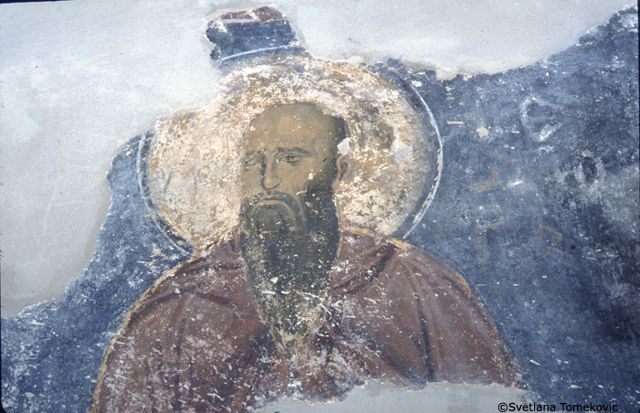
Feast days

Feast: September 9

Nine days · Free

Pray the novena
with us.

One short email a day for nine days. The day's prayer, a line from St. Ome R's story, and a nudge to keep going.

Also on September 9
St. Theophanes

St. Theophanes

September 9 · Hermit, Confessor
D

Sts. Dorotheus and…

September 9 · Martyrs
S

St. Severian

September 9 · Martyr
← All 1726 saints in the library
Sources & notes

Feast-day sources

Story sources

Sources

Credits

From Sabine Baring-Gould, The Lives of the Saints, new edition in 16 vols. (London: John C. Nimmo, 1897–98); text from the Internet Archive scan (OCR, lightly cleaned; errors possible). Public domain.

From “Catholic Encyclopedia (1913)/St. Omer,” The Catholic Encyclopedia (New York: Robert Appleton Company, 1907–1914), via Wikisource. Public domain. Matched by name and feast date; text unedited except for our bracketed notes in grey.

From Sabine Baring-Gould, The Lives of the Saints, new edition in 16 vols. (London: John C. Nimmo, 1897–98); text from the Internet Archive scan (OCR, lightly cleaned; errors possible). Public domain in the United States. Reproduced unedited, except for short bracketed notes in grey that we added to explain names and terms (“S.” is the old abbreviation for Saint). Some history and judgments reflect 19th-century scholarship.