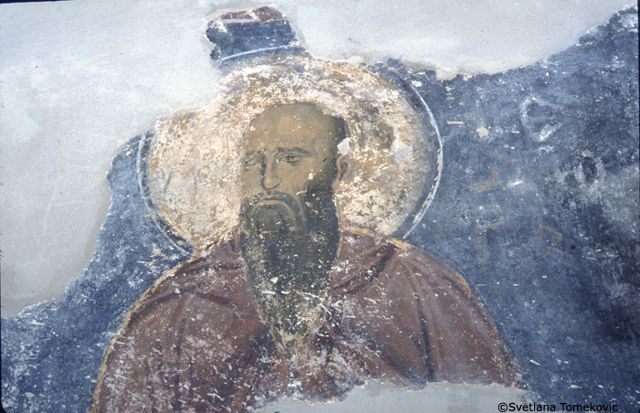
Baring-Gould’s sources: Roman and Gallican Martyrologies. Authorities: — A Life probably by Folcard, monk of S. Bertin, who died circ. a.d. 1050; a second Life containing no fresh material; and a third containing additional matter, but for the composition of which the first Life was also used.] S. Omer (in Latin Audomaras ), was a native of Goldenthal near Constance, and was the son of Friulf and Domitta. On the death of Domitta, whom he tenderly loved, the singlehearted German noble, Friulf, went with his little son to Luxeuil, that they might assume the cowl together, under S. Eustace, the successor of the great Columbanus. Omer grew up in that stern cloister to be a monk in heart and soul. He did not leave it till he was summoned to be bishop of Therouanne by S. Acharius, Bishop of Noyon, and Dagobert, King of the Franks.
He found the people of that low watery land but half Christianized, and he laboured diligently among them to sow the seeds of life. In his journey round his diocese he came to Boulogne, and entering into the church preached to the people and said mass. He was very tired, and when his duties were accomplished he flung himself on his bed for a nap. Then a servant lad said to him, “ Whilst you are asleep, let me go down to the sea-shore to play ?” “ No,” said the bishop, “you shall not go. Tarry here till I wake up.’7 And presently he was fast asleep. But the boy was very eager to see the tumbling waves, a novelty to him, and stealing on tiptoe out of, the room, he ran down to the beach and began to play about on it. Presently he cameto the mouth of the little stream called theLianne,and finding a skiff attached to the bank, thought he would paddle out to sea in it. But he had not reckoned on tides and a wind off shore, and the poor little fellow found himself being swept out to sea without being able to manage the boat, the waves also danced his cockleshell about, and frightened him nearly out of his senses. He drifted out till turn of tide, when, having invoked his master, whom he had deserted, tide and wind turned, and he was driven ashore near Boulogne. He rushed to the bishop and told him the story. S. Omer rebuked him mildly for his disobedience, and bade him be silent on the matter till after his death. Finding that he could make little way without assistance, S. Omer sent to Luxueil for S. Bertin and S. Mummolin, as has been already related.1 He settled them first at Vieux Moutiers, and afterwards at Sithieu.
In his old age S. Orner lost his sight. He was invited by S. Authbert, of Cambrai, to assist at the translation [the solemn moving of a saint’s relics to a new shrine] of the body of S. Vedast to a church he had built. The blind old bishop accordingly went to him, and it is said for a few moments recovered his sight; but the clouds again rolled over his eyes and left him in darkness as before. But of this momentary illumination neither of the earlier biographers say a word, nor do they state that he assisted at the translation of S. Vedast, the date of which event cannot be fixed with certainty.
He died at Waorans, not far from the present city of Saint-Omer, in the year 670, and was buried by S. Bertin in the church dedicated to Our Lady, which afterwards became the Cathedral of S. Omer. Part of the skull is all that is preserved of his relics [the bodily remains of a saint, or objects they used, kept with honor] in this church.