St. Paschal I., Pope

The death of Leo, and the unpopular election of his successor, Stephen IV., exasperated rather than allayed the tumult; and in the third month of his pontificate, Stephen was compe

Read the essentials →
May 14 · —

St. Paschal I.

St. Paschal I., Pope

The death of Leo, and the unpopular election of his successor, Stephen IV., exasperated rather than allayed the tumult; and in the third month of his pontificate, Stephen was compe

Traditional feast

May 14
1914 / pre-1969 calendar, per Baring-Gould (1897)

Current feast

May 14 (also listed: February 11, May 16)
Secondary source · Wikipedia

Represents

Feast

Their story

Adapted in modern English from the Catholic Encyclopedia (1913) · original text below · little is known

Paschal, son of a Roman named Bonosus, joined the Roman clergy young. As head of the monastery of St Stephen by St Peter's, he cared for pilgrims. He was unanimously elected pope in January 817 and obtained from Emperor Louis a charter confirming the Holy See's (the pope and the Vatican's central offices) rights. In 823 he crowned Lothair emperor.

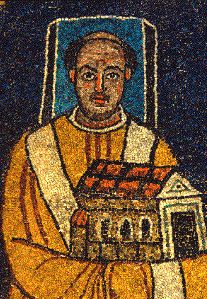
He encouraged St Theodore the Studite against the revived iconoclasm (the movement to destroy religious images) and welcomed Greek monks driven out by Emperor Leo, housing them in new monasteries in Rome. He rebuilt Santa Prassede, Santa Cecilia and Santa Maria in Domnica, whose mosaics survive, moved the relics of many martyrs from the catacombs, and found and enshrined the body of St Cecilia. He died in 824.

Early life

The book says little or nothing about early life. This is how the account begins.

The death of Leo, and the unpopular election of his successor, Stephen IV., exasperated rather than allayed the tumult; and in the third month of his pontificate, Stephen was compelled to take refuge, or seek protection, at the feet of the emperor, against his intractable subjects. In Rome the awe of Louis commanded at least some temporary cessation of the conflict, and a general amnesty. Stephen returned to Rome, and died almostly immediately after, in 817.

What they represent

How they teach us to live

Drawn from themes in the original account

Stay faithful when it costs you. This account is about holding firm under pressure.

Keep their day. Remember them on May 14 with a short prayer, and ask for their help.

From the Catholic Encyclopedia

1913 · 751 words

​Paschal I, Pope (817-824), the date of his birth is unknown; he died in April, May, or June, 824. He was the son of a Roman named Bonosus. While still young he joined the Roman clergy and was taken into the papal patriarchate (Lateran [St. John Lateran, the pope’s cathedral in Rome] Palace) where he was instructed in the Divine Service and the Holy Scripture. Leo III having appointed him superior of the monastery of St. Stephen near the Basilica of St. Peter in the Vatican, he took care of the pilgrims who came to Rome. On the death of Stephen IV (24 January, 817) Paschal was unanimously chosen as his successor. On the following day he was consecrated and enthroned. He entered into relations with Emperor Louis, sending him several ambassadors in rapid succession. In 817 he received from the emperor a document, "Pactum Ludovicianum", confirming the rights and possessions of the Holy See. This document with later amendments is still extant (cf. especially Sickel, "Das Privileg Ottos I für die römische Kirche", Innsbruck, 1883, 50 sqq., 174 sqq.). Paschal remained on friendly terms with the Frankish nobility and sent a special legation with rich gifts to the marriage of King Lothair I, son of Emperor Louis. In spring, 823, Lothair went to Rome and on 5 April he was solemnly crowned emperor by Paschal. Although the pope himself opposed the sovereignty of the Frankish emperors over Rome and Roman territory, high officials in the papal palace, especially Primicerius Theodore and his son-in-law Leo Nomenculator, were at the head of the party which supported the Franks [the Germanic people who ruled Gaul and gave France its name], and advocated the supremacy of the emperor. Shortly after the departure of King Lothair in 823, both these officials were blinded and killed by the pope's servants. Paschal himself was accused of being the originator of this deed, but he cleared himself of suspicion by an oath. The ambassadors sent to Rome by Emperor Louis to investigate the affair could not punish the perpetrators, as the pope declared the murdered officials guilty of treason. Paschal supported new missionary expeditions which went out from the Frankish Empire. He sent a letter of introduction to Bishop Halitgar of Cambria, and appointed Archbishop Ebo of Rheims as papal legate [an official representative sent by the pope] to the pagan countries in Northern Europe.

In 814 under Leo the Armenian, the Iconoclastic controversy broke out with renewed violence in the Byzantine Empire. Theodore of Studium, the great champion of orthodoxy, wrote repeatedly to Pope Paschal, who encouraged him to persevere. At the same time Theodosius [name of Roman emperors; Theodosius I (379–395) made Christianity the state religion] of Constantinople, unlawfully made patriarch [the title of the bishops of the great ancient sees: Rome, Constantinople, Alexandria, Antioch, Jerusalem] by Emperor Leo, sent a legation to the pope. The latter, however, remained loyal to the cause of Theodore of Studium, and dispatched legates to Leo to win him from the Iconoclasts, but without success. Numerous monks who had been driven out of Greece by Leo came to Rome where the pope received them kindly, assigning them places in the newly-erected monasteries, such as St. Praxedis, St. Cecilia, Sts. Sergius and Bacchus, near the Lateran Palace. Paschal was very active in completing, restoring, and beautifying churches and monasteries. The basilicas of St. Praxedis, St. Cecilia, and S. Maria in Dominica were completely rebuilt by him. The mosaics, which at that time ornamented the apses of these three churches as well as the chapel of St. Zeno in St. Praxedis, demonstrate to-day the deterioration of this art. In St. Peter's he erected chapels and altars, in which the remains of martyrs from the Roman catacombs, especially those of Sts. Processus and Marinianus, were placed. He also placed the relics [the bodily remains of a saint, or objects they used, kept with honor] of many Roman martyrs in the church of St. Praxedis where their names are still legible. The discovery of the relies of St. Cecilia and companions, and their translation to the new church of St. Cecilia in Trastevere, are well described in "Liber Pontificalis" (cf. Kirsch, "Die hl. Cäcilia in der römischen Kirche des Altertums", Paderborn, 1910). He made great improvements in the choir of the church of S. Maria Maggiore. Paschal was interred in the church of St. Praxedis, and is honoured as a saint on 14 May.

Liber Pontificalis, ed. Duchesne, II, 52 sqq.; Einhardi Annals in Mon. Germ, hist.: Script., I, 124 sqq.; Jaffé, Regesta Rom. Pont., 2nd ed., I (Leipzig, 1885), 318 sqq.; Simson, Jahrbücher der deutschen Reiches unter Ludwig dem Frommen (Leipzig, 1874-76); Duchesne, Les premiers temps de l'Etat pontifical in Revue d'hist. et de littér. religeuses, I (Paris, 1896), 297 sqq.; Hartmann, Geschichte Italiens im Mittelalter, III, pt. i (Gotha, 1008); Marucchi, Basiliques el églises de Rome (Rome, 1902).

Read more

The full original · 716 words

Read Baring-Gould’s full account

Baring-Gould’s sources: Roman Martyrology. Authorities: — His life by Anastasius the Librarian, almost ca. contemporary, and mention in Eginhard's Annals, Thegan’s life of Louis the Pious, and the anonymous author, commonly called the Astronomer, in his life of the Emperor Louis the Pious, all contemporary writers.] Pope Leo IIL and the Romans had been in constant feud; and he was obliged to appeal to Charlemagne to support him against his rebellious vassals. A conspiracy was formed in 815 to depose Pope Leo and to put him to death. Leo attempted to suppress the tumult with unwonted vigour; he seized, and publicly executed the conspirators. The city burst into rebellion. Rome became a scene of plunder, carnage and conflagration. Intelligence was rapidly conveyed to the court of Louis the Pious, who had succeeded Charlemagne. He sent his kinsman Bernard to interpose, and whilst he was in Rome ah was quiet. But no sooner had he withdrawn than, on the illness of Leo, a new insurrection broke out. The Romans sallied forth, plundered and burned the farms on the pope's estates in the neighbourhood. They were only compelled to peace by the armed interference of the Duke of Spoleto.

The death of Leo, and the unpopular election of his successor, Stephen IV., exasperated rather than allayed the tumult; and in the third month of his pontificate, Stephen was compelled to take refuge, or seek protection, at the feet of the emperor, against his intractable subjects. In Rome the awe of Louis commanded at least some temporary cessation of the conflict, and a general amnesty. Stephen returned to Rome, and died almostly immediately after, in 817.

On his death, Paschal I. was chosen by the impatient clergy and people, and compelled to assume the pontificate without the Imperial sanction. But Paschal was too prudent to defy the emperor and entail thereby on his people a sharp castigation, he therefore sent a deprecatory embassy across the Alps, throwing the blame of his elevation on the disloyal precipitancy of the people. Louis sent his son Lothair to be king of Italy and the Rhine country, invested with imperial dignity. Lothair visited Rome to be crowned by Pope Paschal, and to reduce the turbulent Romans to obedience. Hardly, however, had he recrossed the Alps when he was overtaken with intelligence of new tumults.

Two men of the highest rank, Theoderic, Primicerius of the church, and Leo the Nomenclator, had been seized, dragged to the Lateran [St. John Lateran, the pope’s cathedral in Rome] palace, blinded, and afterwards beheaded. The faction opposed to the pope accused him of being privy to, if not the instigator of this inhuman act.1 Two imperial commissioners, Adelung, abbot of S. Yedast, and Hnnffed, count of Coire, were despatched with full power from the emperor to investigate the affair. The imperial commissioners were baffled in their inquiry. Paschal refused to produce the murderers; he asserted that they were guilty of no crime in putting to death men themselves guilty of treason; he secured them by throwing around them a half-sacred character as servants of the church of S. Peter.3 Himself he exculpated by a solemn expurgatorial oath, before thirty bishops, from all participation in the deed. The emperor received with respect the exculpation of the pope, sent him by legates, John, bishop of Silva Candida, the librarian Sergius, and two others. On 1*,Erant et qui dixerunt, veljussu vel consilio Paschalis Pontificis rem fuisse perpetratam.” — Eginhard, Annal. sub ann. 823. <l Qua in re fauna Pontificis quoque ludebatur, dum ejus consensui totum ascriberetur.” — Vita S- Hludovici imp. auct. anonym.

8 Thegan., Vit. Hlndovic. apud Pertz, c. 30. Eginhard sub ann. S. Paschal /. their return to Rome they found the pope dying, and he expired on May the nth, 824, after having occupied the see seven years, three months, and seventeen days. Paschal has made himself to be remembered by his care for the churches in Rome, many of which he restored or rebuilt with great splendour. He discovered the body of S. Cecilia. From the year 500 there had been a church in Rome dedicated to the Virgin Martyr, but it had fallen into decay. Pope Paschal began to rebuild it, but he hardly hoped to find the body of the saint, thinking it might have been lost or carried away by the Lombards [a Germanic people who ruled much of Italy from 568 to 774] when they besieged Rome, under their King Astolf, in 755. But one morning, as the pope was assisting at matins, he fell asleep, and saw S. Cecilia in a dream, who told him where her body lay, in the catacomb of Prsetextatus on the Appian way.

In the persecution of the Iconoclasts at Constantinople, the patriarch [the title of the bishops of the great ancient sees: Rome, Constantinople, Alexandria, Antioch, Jerusalem] Theodotus, who had been intruded into the see, wrote to him, but the pope refused to receive his letters. He received letters from the great champion of the images, S. Theodore of the Studium, and wrote to Constantinople in hopes of allaying the violence of the persecutors, but in vain.

It is not very clear what claims S. Paschal has to his place among the Saints, as little is known of him that gives token of his having been at all eminent in sanctity, and in the case of the murder of the two men in his palace, he acted with unquestionable indiscretion, to use the mildest term by which his conduct can be designated. Though he may not have been in any way guilty of the crime that was committed, he was certainly wrong in screening the murderers from justice.
Feast days

Feast: May 14

Nine days · Free

Pray the novena
with us.

One short email a day for nine days. The day's prayer, a line from St. Paschal I.'s story, and a nudge to keep going.

Also on May 14
P

St. Pontius

May 14 · Martyr
B

St. Boniface

May 14 · Martyr
P

St. Pachomius

May 14 · Abbot
← All 1726 saints in the library
Sources & notes

Feast-day sources

Story sources

Sources

Credits

Image: Pope Paschalis I. in apsis mosaic of Santa Prassede in Rome.png · Unknown · Public domain, via Wikimedia Commons

From Sabine Baring-Gould, The Lives of the Saints, new edition in 16 vols. (London: John C. Nimmo, 1897–98); text from the Internet Archive scan (OCR, lightly cleaned; errors possible). Public domain.

Image: Unknown, Wikimedia Commons (Public domain)

From “Catholic Encyclopedia (1913)/Pope Paschal I,” The Catholic Encyclopedia (New York: Robert Appleton Company, 1907–1914), via Wikisource. Public domain. Matched by name and feast date; text unedited except for our bracketed notes in grey.

From Sabine Baring-Gould, The Lives of the Saints, new edition in 16 vols. (London: John C. Nimmo, 1897–98); text from the Internet Archive scan (OCR, lightly cleaned; errors possible). Public domain in the United States. Reproduced unedited, except for short bracketed notes in grey that we added to explain names and terms (“S.” is the old abbreviation for Saint). Some history and judgments reflect 19th-century scholarship.