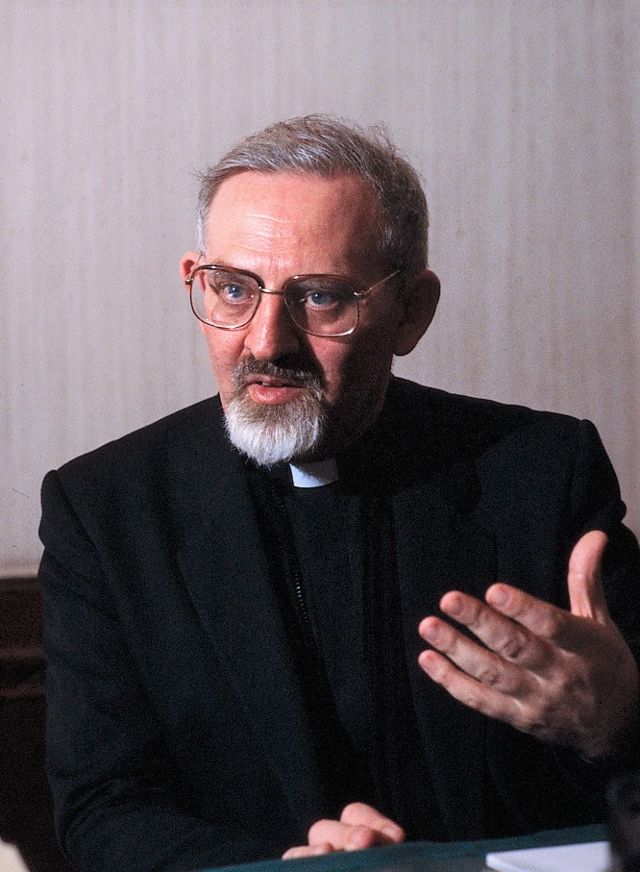
St. Peter the Spaniard

Leaving everything to pray, yet still drawing people who needed wisdom.

Read the essentials →
March 11 · Hermit

St. Peter the Spaniard

St. Peter the Spaniard

Leaving everything to pray, yet still drawing people who needed wisdom.

Traditional feast

March 11
1914 / pre-1969 calendar, per Baring-Gould (1897)

Current feast

Not verified yet

Represents

Hermit

Their story

Adapted in modern English from the Catholic Encyclopedia (1913) · original text below

Peter Regalado was born at Valladolid in 1390 to a noble, wealthy and devout family. His father died when Peter was young, and his mother brought him up in the faith. At ten he begged to join the Franciscans (the order of friars founded by St. Francis of Assisi), and three years later he was admitted to the friary of his home town. In 1404 he became one of the first followers of Peter de Villacreces, who had brought the stricter Observant reform to Spain. In the new friary at Aguilera he found the solitude, prayer and deep poverty he had always longed for.

In 1415 he became superior at Aguilera, and in 1422 also of the house at El Abrojo. He kept nine Lents a year on bread and water, and was known for the gift of miracles and prophecy. He died at Aguilera on 30 March 1456. When his body was exhumed thirty-six years later at the request of Queen Isabella the Catholic, it was found incorrupt (not decayed after death). He was canonized (officially declared a saint by the pope) in 1746 and is shown in art with flames bursting from his heart.
Early life

Selected sentences from the original account, unaltered.

Thin entry · the 1897 book gives only 175 words. We have not filled the gap with invented detail.

S. Peter was the son of noble parents in Spain, and was brought up in the profession of arms. His parents having insisted on his marriage, he yielded with great repugnance, for his heart was drawn elsewhere, and he desired to live a virgin life to his dear master Jesus. The marriage ceremony took place, and when the banquet was over, he retired to the bridal chamber, where he saw the fair young girl who had given him her hand lying asleep on the bed.

What they represent

How they teach us to live

Drawn from themes in the original account

Pray a little every day. Prayer runs all through this account.

Make time for silence. Solitude and withdrawal to pray shape this life.

Learn from the kind of life it was. Leaving everything to pray, yet still drawing people who needed wisdom.

From the Catholic Encyclopedia

1913 · 332 words

A Friar Minor and reformer, born at Valladolid, 1390; died at Aguilera, 30 March, 1456. His parents were of noble birth and conspicuous for their wealth and virtue. Having lost his father in his early youth, he was piously educated by his mother. At the age of ten years Peter begged to be admitted into the Seraphic Order, which favour was granted him three years afterwards in the convent of his native town. In 1404 he became one of the first disciples of Peter de Villacreces, who in 1397 had introduced into Spain the reform of the Observance of which he became one of the most zealous propagators. In the newly-founded convent at Aguilera Peter found the life of solitude, prayer, and eminent poverty, which had always been the greatest object of his desire. In 1415 he became superior of the convent at Aguilera and, on the death of Peter de Villacreces (1422), also of that at Tribulos or del Abroyo. He observed nine Lents, fasting on bread and water, and was endowed with the gift of miracles and prophecy and of every virtue. When his body was exhumed thirty-six years after his death, at the instance of Isabella the Catholic, it was found incorrupt and placed in a more precious tomb. He was beatified by Innocent XI, 11 March, 1684, and canonized by Benedict XIV, 29 June, 1746. His feast is celebrated 13 May, the day of the translation [the solemn moving of a saint’s relics to a new shrine] of his body. In art he is represented with flames bursting from his heart.

CLARY, Lives of the Saints and Blessed of the Three Orders of St. Francis, II (Taunton, 1886), 150-9; DAZA, Excelencias de lao ciudad de Valladolid, con la vida y milagros de s. fray Pedro Regalado etc. (Valladolid, 1627), Lat. tr. in Act. SS., III, March, 850-64; Relatio pro canonizatione, ibid., 864-70; WADDING, Ann. Min., XII, 2-9, 445-74; BERGUIN, St. Pierre Régalat, prêtre de l'ordre des Frères Mineurs de l'Observance, restaurateur de la discipline régulière en Espagne (Périgueux, 1898).

Read more

The full original · 175 words

Read Baring-Gould’s full account

Baring-Gould’s sources: Roman Martyrology. Authorities:—A Life from MS. of Babuco, published by Bollandus.

S. Peter was the son of noble parents in Spain, and was brought up in the profession of arms. In the army he distinguished himself as much by his zeal for souls and purity of life, as by his courage. His parents having insisted on his marriage, he yielded with great repugnance, for his heart was drawn elsewhere, and he desired to live a virgin life to his dear master Jesus. The marriage ceremony took place, and when the banquet was over, he retired to the bridal chamber, where he saw the fair young girl who had given him her hand lying asleep on the bed. She looked so pure and innocent in her slumber, that he gazed on her with reverence, and kneeling at her feet, prayed long and earnestly; and then stealing away, left the house, and fled the country. Taking his passage on a boat for Italy, he reached the eternal city, and going forth into the Campagna, found a place suitable for a cell, and there buried himself from the world.

Feast days

Feast: March 11

Nine days · Free

Pray the novena
with us.

One short email a day for nine days. The day's prayer, a line from St. Peter the Spaniard's story, and a nudge to keep going.

Also on March 11
G

St. Gorgo

March 11 · Martyr
St. Alberta

St. Alberta

March 11 · Virgin, Martyr
V

St. Vincent

March 11 · Abbot, Martyr
← All 1727 saints in the library
Sources & notes

Feast-day sources

Story sources

Sources

Credits

Image: Peter Hans Kolvenbach, head of Jesuits, cropped.jpg · Gotfryd, Bernard, photographer · Public domain, via Wikimedia Commons

From Sabine Baring-Gould, The Lives of the Saints, new edition in 16 vols. (London: John C. Nimmo, 1897), digitized text from Project Gutenberg. Public domain.

Image: Gotfryd, Bernard, photographer, Wikimedia Commons (Public domain)

From “Catholic Encyclopedia (1913)/St. Peter de Regalado,” The Catholic Encyclopedia (New York: Robert Appleton Company, 1907–1914), via Wikisource. Public domain. Matched by name and feast date; text unedited except for our bracketed notes in grey.

From Sabine Baring-Gould, The Lives of the Saints, new edition in 16 vols. (London: John C. Nimmo, 1897), digitized text from Project Gutenberg. Public domain in the United States. Reproduced unedited, except for short bracketed notes in grey that we added to explain names and terms (“S.” is the old abbreviation for Saint). Some history and judgments reflect 19th-century scholarship.