Faithfulness to Christ when it cost everything.
February 24
Not verified yet
Bishop
Martyr
Sigebert had espoused Brunhild, daughter of Athanagild, king of the Visigoths. Brunhild, his widow, sued for protection to Meroveus, son of Chilperic by his first wife, who was at Rouen, where Chilperic had imprisoned her. Meroveus, dreading the power of Fredegund, who wished to secure the succession to the crown for her son, took up arms against his father, and making common cause with Brunhild, his aunt, married her.
Stay faithful when it costs you. This account is about holding firm under pressure.
Share your faith, in words and by example. Preaching and conversion are central here.
Learn from the kind of life it was. Faithfulness to Christ when it cost everything.
On the death of Clothair, sole king of the Franks [the Germanic people who ruled Gaul and gave France its name], ( a.d. 561), his dominions were divided amongst his four sons, Charibert, who became king of Paris and the adjacent country; Guntram, of Orleans; Chilperic, of Soissons; and Sigebert, of Austrasia. The reign of Charibert was unattended by any important event; he died at the expiration of eleven years from the date of his accession, leaving an only daughter, Bertha, who married Ethelbert, king of Kent, and converted him to Christianity. The brothers Sigebert and Chilperic were engaged in bloody wars with each other. Sigebert had espoused Brunhild, daughter of Athanagild, king of the Visigoths. Chilperic was married at three several periods to as many wives: first, to Audovera, by whom he had three sons; Theodebert, Meroveus, and Clovis; secondly, to Gailesuinth, sister of Brunhild, by whom he had a daughter. During the lifetime of his second queen, Chilperic became enamoured of Fredegund, and his passion led him to put Gailesuinth to death, and elevate her rival to the throne. This barbarous action induced Sigebert to take up arms against his brother, urged thereto by the vehement Brunhild, desirous of revenging the murder of her sister; and a destructive war ensued, in the course of which Chilperic and his guilty consort were driven from their country, and became exiles in a foreign land.
At no very distant interval of time, in 575, Sigebert was assassinated by the directions of his unnatural brother. Brunhild, his widow, sued for protection to Meroveus, son of Chilperic by his first wife, who was at Rouen, where Chilperic had imprisoned her. Meroveus, dreading the power of Fredegund, who wished to secure the succession to the crown for her son, took up arms against his father, and making common cause with Brunhild, his aunt, married her.
At that time, Prætextatus was bishop of Rouen. His position was difficult. The insurgent son had made Rouen his head-quarters, and expected, or exacted contributions from the Church, which Prætextatus was unwilling to grant, but which the prince was strong enough to obtain. To make the case more difficult, Meroveus was the spiritual son of this bishop, that is, Prætextatus had baptized him, and this spiritual relationship was then regarded as a sacred and dear tie. Chilperic heard exaggerated accounts of what the bishop had done, and hastily concluding that Prætextatus was privy to the revolt of Meroveus, ordered a council of prelates to meet in Paris, to try and sentence Prætextatus either to have his episcopal habit rent in twain, and to have Psalm cviii. ( A. V. 109), said over him, in token that his bishopric was taken from him, or that he should be excommunicated. Prætextatus was first charged by the king with having broken the canons by marrying Meroveus to his aunt, and with having fomented rebellion by giving large contributions to the prince. The bishop denied both charges. The king in person pressed the charge. S. Gregory, bishop of Tours, who gives us a full account of the affair, and Aetius, archdeacon of Paris, were the only two who had courage to take the part of the bishop, on whose destruction the king was resolved. Gregory steadfastly refused to condemn Prætextatus on charges which could not be substantiated. Then the king sent for him privately, and endeavoured by flattery to break his resolution, but in vain. Then bursting out in a passion, he exclaimed, "Hah! bishop, you who have to dispense justice, will not show justice to me. True, by my faith! is the proverb, Hawks will not peck out hawks' een. Here is a collation I had prepared for you," pointing to a table on which were roast fowl and other delicacies. Gregory refused to eat, till the king had sworn that he would not violate the laws of the realm and the canons of the Church, by forcing the council to condemn an innocent man. After that he took, so he tells us, some bread, and even a little wine; and so departed. That night queen Fredegund sent to his lodgings a large sum of money, in hopes of bribing him to consent to the sentence on Prætextatus, but Gregory refused the bribe.
The king next raked up another charge against the bishop of Rouen, of having stolen some handsome birds he valued at three thousand sous, but this charge broke down also. Then some false friend urged Prætextatus to deliver the bishops who tried him from their perilous predicament, by confessing himself guilty, assuring him that this would satisfy the king, who would not press further punishment on him. Prætextatus was weak enough to yield to this treacherous advice, [66] and thus to remove it out of the power of his two defenders to maintain their opposition to the majority. The bishop of Rouen was at once condemned and banished to a little island off Coutances, probably Jersey.
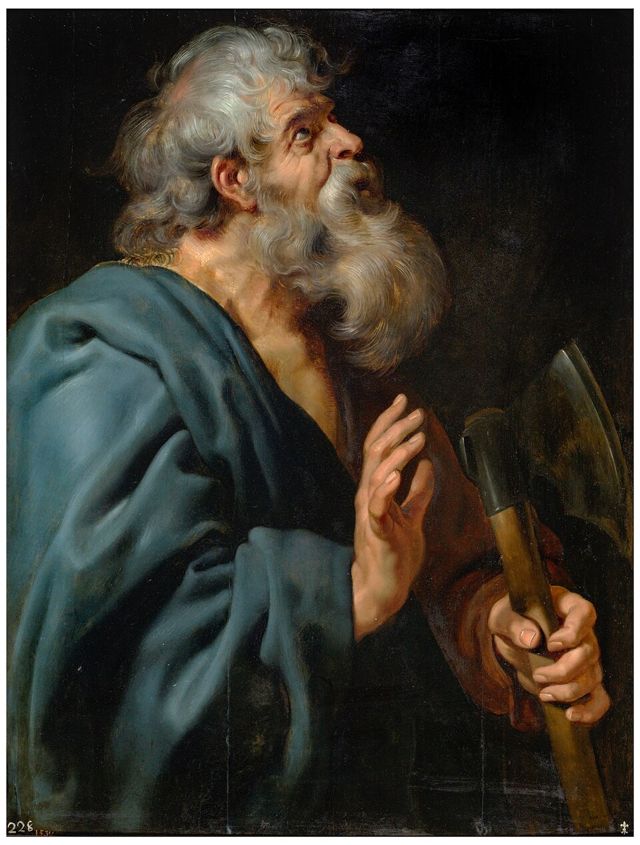
The ferocious Fredegund now cleared the way for her own son to the throne of her husband, by causing Meroveus, Theodobert, and Clovis, the sons of Chilperic by his first wife, Audovera, to be put to death. The only remaining obstacle to the accession of her child, was Chilperic, her husband; but that impediment was speedily removed by his assassination, (584), after which his son ascended the vacant throne. On the death of Chilperic, Prætextatus returned to Rouen, with the sanction of Guntram, second son of Clothair, king of Soissons, much against the wishes of Fredegund. A council was assembled at Macon, and the Bishop of Rouen was reinstated, against the protest of Fredegund, who asserted that it was indecent to overthrow the sentence of deprivation pronounced against him by forty-five bishops. In 586 the queen was at Rouen, where words passed between her and Prætextatus. Seeing him on her arrival, she greeted him with, "The time is coming when thou shalt revisit the place of thine exile." "I was a bishop always, whether in exile or out of exile," answered Prætextatus; "and a bishop I shall remain; but as for thee, thou shalt not for ever enjoy thy crown;" and then he earnestly besought her to abandon her wicked life, and seek reconciliation with God. This was shortly before Easter. On Easter morning he went after midnight to the church to sing Matins [the night prayer of the Divine Office]; he precented the antiphons, and then during the psalms rested in his seat; an assassin, sent by the queen, approached at this time, and stabbed him under the armpit. He rose with a cry, and staggered to the altar, on which he placed his hands, dabbled with blood, and received the Holy Sacrament. He was then carried to his bed, where he died. His death took place on April 14th, 586; but Feb. 24th is observed in his honour, as being probably the day of his translation.
Feast: February 24
One short email a day for nine days. The day's prayer, a line from St. Prætextatus of Rouen's story, and a nudge to keep going.
From Sabine Baring-Gould, The Lives of the Saints, new edition in 16 vols. (London: John C. Nimmo, 1897), digitized text from Project Gutenberg. Public domain.
From Sabine Baring-Gould, The Lives of the Saints, new edition in 16 vols. (London: John C. Nimmo, 1897), digitized text from Project Gutenberg. Public domain in the United States. Reproduced unedited, except for short bracketed notes in grey that we added to explain names and terms (“S.” is the old abbreviation for Saint). Some history and judgments reflect 19th-century scholarship.