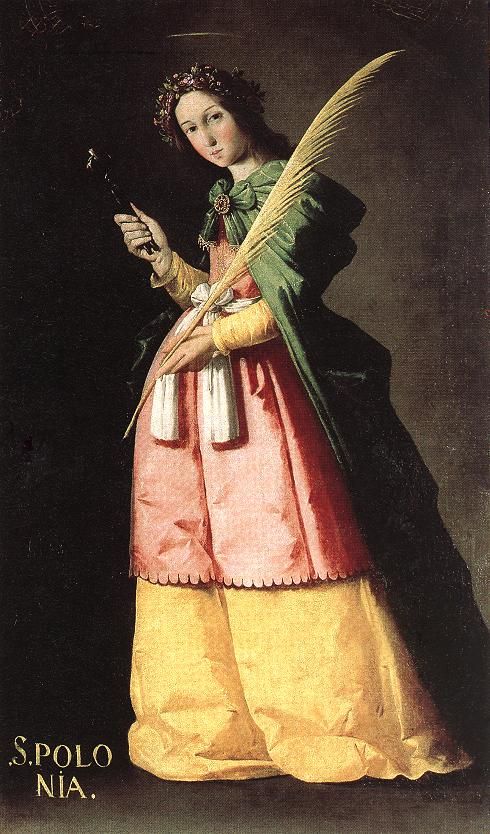
A shepherd who stayed with his people through hard times.
February 9
Not verified yet
Bishop
This saint belonged to a noble family at Canosi, in the present arch-diocese of Bari, in Italy. Theodoric, king of the Goths, had been succeeded by Athalaric, son of his daughter Amalasvintha, but he, being a minor, the public affairs were administered by his mother, who did not spare any pains in the education of her child.
Learn from the kind of life it was. A shepherd who stayed with his people through hard times.
Keep their day. Remember them on February 9 with a short prayer, and ask for their help.
This saint belonged to a noble family at Canosi, in the present arch-diocese of Bari, in Italy. He was elected to the see of his native city, and distinguished himself by his zeal in building and adorning churches, as also by his learning. He was one of the prelates present at the consecration of the Church of S. Michael, on the scene of the apparition of the archangel, on Monte Gargano, journeying thither in company with the blessed Roger of Canosi. And as the sun was hot in the heavens, and they fainted with the burning of its rays, Sabine raised his eyes to heaven, and prayed that a cool breeze might spring up and fan their fevered brows. But his prayer was heard and answered in other sort, for a great eagle came between the travellers and the sun, and floated over their heads with wings expanded, accompanying them, so that they walked on in the shadow. Now, Sabine's ardour in prosecuting his studies raised the suspicion of the multitude, and they denounced him as addicted to the arts of magic; so this report came to the ears of the Pope, and he summoned him to Rome, to clear his character from the aspersion cast upon it. Then Sabine hasted and went to Rome, and arrived in the evening, and was lodged in the palace of the Holy Father, who, prejudiced against him, received him coldly, and harshly bade him not set foot outside the house till his case were heard. And at midnight, a strange, unearthly music resounded through the courts, and men started from sleep to listen. Then they were aware of chanting, as of a multitude, and they rose, and the Pope also, and they followed the sound, and till they came to the door of the hall in which the Bishop of Canosi lay. And beneath the door was a streak of dazzling light. Then they burst in, and beheld the accused prelate standing in a blaze of heavenly radiance, amidst angel forms, chanting the Psalms of David. So the Pope cast himself at his feet, and acknowledged his complete innocence.
Now, on his way home, the holy bishop doubtless visited S. Benedict [father of Western monks (d. c. 547), author of the Rule], at Monte Cassino, for between them there existed a warm friendship; and we find that S. Placidus, the loved disciple of Benedict, often visited and was entertained by the Bishop of Canosi, for the love he bare to the great Patriarch of the Monks of the West.
A pretty incident of his life is as follows,—it is but a trifle, but these trifling anecdotes give the character of the man. He was walking in his garden one day, among the flower-beds, reciting psalms and hymns, when a bright smile broke out over his face. Those accompanying him were surprised, and asked the reason of that smile. "Listen to those sparrows," said he, "there is a wagon upset yonder, which was laden with corn, and they are all eagerly communicating to one another the joyful news of an abundant feast. Oh! the charity to one another of those dear little birds!" [30]
In the year 535, Pope Agapetus sent an embassy to the Emperor Justinian [Byzantine emperor 527–565] at Constantinople, of which the bishop of Canosi was a member. Agapetus was himself obliged to follow his embassy, the following year, on a deputation to the emperor from Theodatus, the Gothic king. Theodoric, king of the Goths [Germanic peoples who invaded the Roman Empire, many of them Arian Christians], had been succeeded by Athalaric, son of his daughter Amalasvintha, but he, being a minor, the public affairs were administered by his mother, who did not spare any pains in the education of her child. But the young king fell a victim to intemperance, before he had attained the age of manhood. On the failure of issue in the male line, Amalasvintha, in order to maintain herself on the throne, gave her hand to Theodatus, her cousin, and allowed him to participate in the sovereign power. But Theodatus grasping at supreme sovereignty, suffocated his wife and benefactress in a bath, and then, in abject terror for the consequences, sent off Pope Agapetus to Constantinople, to deprecate the wrath of the Emperor Justinian. Agapetus arrived in Constantinople, when that see was vacant, Epiphanius, the patriarch [the title of the bishops of the great ancient sees: Rome, Constantinople, Alexandria, Antioch, Jerusalem], being dead. He found the Empress Theodora in power, favouring the Eutychian [followers of Eutyches, who said Christ had only a divine nature; condemned at Chalcedon in 451] heretics, and encouraging Anthimus, bishop of Trebizond, a ringleader of the sect. Agapetus at once deposed Anthimus, and ordained one Mennas, a Catholic, in his place; then, feeling his end approach, he exhorted Sabine and his companions to stand by and maintain the new bishop of Trebizond. Agapetus died in 536, and the same year a council was held against Anthimus the heretic, at which Sabine was present, and the anathemas of which he subscribed. In consequence of this decided action, the bishop of Canosi suffered much from the anger of the Empress Theodora. In 537 he returned to Italy, and according to some accounts, died on his way, and was buried at Tripalta on the Sabbato, above Benevento, near Avellino, where his body, entire, still rests enshrined. But at Bari is the body of S. Sabine, bishop of Canosi, and it is believed that there were two saints of this name, and that the first Sabine, bishop of Canosi, is at Bari, and that the events we are about to relate, occurred to the second bishop of this name, who lies at Tripalta. That there were two is most probable, as it is hardly possible that he who was bishop in 493, could have sat till 566, which would give an episcopate of over seventy-three years.
Totila, king of the Goths, the seventh of that race who had governed Italy, swept Campania and Samnium with his barbarian army, occupied Naples, and in the midst of his victorious course, visited S. Benedict on his rock of Cassino. The incident of the meeting between the barbarian king and the ascetic patriarch shall be recorded in the life of S. Benedict. S. Gregory relates in his Dialogues, (lib. iii. c. 5), that Totila, hearing of S. Sabine of Canosi, now blind with age, that he was endued with the spirit of prophecy, visited him and invited him to dinner, and to prove the old bishop, when the page brought wine round, the king took the goblet from the boy's hand, and himself offered it to the prelate. Then Sabine, taking the goblet, and turning his darkened eyes on the royal bearer, said, "May that hand that offers live long!" And the king blushed, joyous at receiving this part blessing, part prophecy. S. Gregory relates another story of this saint. The Archdeacon of Canosi, a man full of ambition and pride, desiring the episcopate, and impatient of the long life of Sabine, bribed his butler to poison him. The deadly cup was offered him, and the aged prelate drank it off, but instantly the Archdeacon was seized with all the symptoms of having been poisoned, and died in agony, whereas the bishop remained unhurt.
It is unfortunate, that owing to the carelessness of the historian, who wrote two hundred years after the death of S. Sabine I., the records of the two bishops of that name should have been so run together as to render it almost impossible to dissever them.
There seems also to have been a third S. Sabine of Canosi, bishop of Lesina, a ruined and deserted city, on the lagoon of the same name in the Capitanta. Lesina, in the 10th century, was the seat of a bishop. No records of this saint exist, but in November, 1597, the cathedral and second church of Lesina being thoroughly ruinous, officials were deputed to remove from the deserted churches such relics [the bodily remains of a saint, or objects they used, kept with honor] as could be found, and works of value that remained. They found the roof of the cathedral fallen in, doors and windows broken and open, and grass growing on the sacred floor. The crypt was in better preservation, and there they found altars standing, containing sacred relics. In one of these they found a marble sarcophagus, on which was inscribed, S. Sabinus Canusinus, "S. Sabine of Canosi." Within was a leaden coffin, on which was engraved, S. Sabinus Canusianus, pontifex Lesinensis. "S. Sabine of Canosi, bishop of Lesina." The skeleton in this was perfect. This body, together with others there discovered, was removed to Naples, where it now reposes in the church of the Annunciata.
Feast: February 9
One short email a day for nine days. The day's prayer, a line from St. Sabine of Canosi's story, and a nudge to keep going.
From Sabine Baring-Gould, The Lives of the Saints, new edition in 16 vols. (London: John C. Nimmo, 1897), digitized text from Project Gutenberg. Public domain.
From Sabine Baring-Gould, The Lives of the Saints, new edition in 16 vols. (London: John C. Nimmo, 1897), digitized text from Project Gutenberg. Public domain in the United States. Reproduced unedited, except for short bracketed notes in grey that we added to explain names and terms (“S.” is the old abbreviation for Saint). Some history and judgments reflect 19th-century scholarship.