St. Stephen of Grandmont

Building a community where people could actually live the Gospel.

Read the essentials →
February 8 · Abbot

St. Stephen of Grandmont

St. Stephen of Grandmont

Building a community where people could actually live the Gospel.

Traditional feast

February 8
1914 / pre-1969 calendar, per Baring-Gould (1897)

Current feast

February 8
Secondary source · Wikipedia

Represents

Abbot

Their story

Adapted in modern English from Baring-Gould (1897) · original text below

Stephen was born in 1046 in the castle of Thiers in Auvergne, son of the Viscount de Thiers. At twelve he went with his father on pilgrimage to Italy. When he fell ill at Benevento, he was left in the care of Archbishop Milo, a fellow Auvergnat, who raised him in holy learning and ordained him subdeacon and then deacon. After Milo died, Stephen spent four years in Rome. He longed to imitate some holy hermits of Calabria he had once visited, and Pope Gregory VII, who at first thought him too frail, gave him leave in 1073.

After a short time with his parents and a stay near Limoges under St. Gaucher, he withdrew in 1076 to Muret, a rocky, wooded mountain near Limoges, and built a little hut. Keeping only a ring from his father's house, he put it on his finger and vowed himself to God: 'I, Stephen, renounce the devil and all his pomps, and offer myself to God the Father, Son and Holy Ghost.' He commended his body and soul to the Virgin Mary.

There he spent the rest of his long life in prayer and fierce austerity. At first he lived on herbs and roots. In his second summer shepherds found him and brought him coarse bread, and country people kept him supplied for the rest of his life. He wore a spiked hair shirt under a single coarse garment, summer and winter, and slept briefly on boards shaped like a coffin. Disciples gathered, but he would not let them call him abbot or master, only 'corrector'. He was gentle with them, warning them against excessive fasting, but never with himself. When two papal legates asked whether he was a monk, a hermit or a canon, he answered, 'I am a sinner.'

Soon afterward he knew his end was near. 'My sons,' he told his disciples, 'I leave you only God. If you love poverty, and cleave to God constantly, He will give you all things that you shall need.' Carried into the chapel, he heard Mass, received the last sacraments, and died on Friday, February 8, 1124, aged nearly eighty.

Early life

Selected sentences from the original account, unaltered.

S. Stephen was born in the year 1046, in the castle of Thiers, in Auvergne, belonging to his father, the Viscount de Thiers. On their return, the lad fell ill at Benevento, and the father was obliged to leave him in the charge of Milo, archbishop of that city, a native of Auvergne. This prelate took the greatest care of the young Stephen and reared him in all holy lore; and as he grew up intent on serving God in a spiritual and ecclesiastical state, he ordained him, first sub-deacon, and afterwards deacon.

What they represent

How they teach us to live

Drawn from themes in the original account

Make time for silence. Solitude and withdrawal to pray shape this life.

Practise small acts of self-denial. The account dwells on fasting and penance; a skipped snack or a phone-free hour is a start.

Learn from the kind of life it was. Building a community where people could actually live the Gospel.

Read more

The full original · 780 words

Read Baring-Gould’s full account

Baring-Gould’s sources: Roman Martyrology. Authority: a life by Gerald Itherius, prior of Grandmont.

S. Stephen was born in the year 1046, in the castle of Thiers, in Auvergne, belonging to his father, the Viscount de Thiers. At an early age of twelve he was taken by his pious father a pilgrimage into Italy. On their return, the lad fell ill at Benevento, and the father was obliged to leave him in the charge of Milo, archbishop of that city, a native of Auvergne. This prelate took the greatest care of the young Stephen and reared him in all holy lore; and as he grew up intent on serving God in a spiritual and ecclesiastical state, he ordained him, first sub-deacon, and afterwards deacon.

After the death of the archbishop, Stephen, being then twenty-four years old, went to Rome and remained there four years. There the vocation to the religious life growing stronger in him, he formed the resolution of imitating certain monks of Calabria, living in great holiness, of whom he had heard Milo speak, and whom he had once visited. He therefore asked permission of Pope Gregory VII. to live apart in some solitude, following the rule of the Calabrian hermits. The pope hesitated for some while, thinking him too delicate of constitution, but at length yielded to his pressing solicitations in 1073. Stephen then returned to France, and resided at Thiers for a short time with his parents; and then, departing, established himself at Aureille or Soviat, a few leagues from Limoges, where he placed himself under the direction of S. Gaucher, who had built a monastery of regular Canons, called S. Jean d'Aureille. But S. Gaucher having erected a nunnery in the neighbourhood, S. Stephen disliking the proximity to women, left Aureille, and retired to Muret, in 1076. This is a mountain near Limoges, where, amongst the rocks and trees, he built a small cabin, and vowed himself to Jesus Christ in a very special manner. Having retained a ring, the only thing belonging to his father and home, that he had not given away or refused, he placed it on his finger saying, "I, Stephen, renounce the devil and all his pomps, and offer myself to God the Father, Son and Holy Ghost, the One true God in Three Persons." Then having written these words, he placed them on his head, and added, "O God Almighty, who livest eternally, and reignest One in Three Persons, I promise to serve Thee in this hermitage in the Catholic faith; in sign whereof I place this writing on my head, and place this ring on my finger, that at the hour of my death this promise may serve as my defence against my enemies." Then addressing himself to the Holy Virgin he said, "Holy Mary, Mother of God, I commend my body, soul, and senses to thy Son and to thee."

In this wild solitude, amidst rocks and trees, Stephen passed forty-six years in prayer, and the practice of such austerities as almost surpassed the strength of a human body. He lived at first on wild herbs and roots. In the second summer he was discovered by certain shepherds who brought him a little coarse bread; which some country people from that time continued to do as long as he lived. He always wore next his skin a hair-cloth with iron plates and hoops studded with sharp spikes, over which his only garment, made of the coarsest stuff, was the same both in summer and winter. When overcome by sleep, he took a short rest on rough boards, laid in the form of a coffin. By degrees, disciples gathered about him, and placed themselves under his rule. He would not suffer them to call him abbot or master, but only corrector. To them he was ever compassionate, urging them not to discipline their bodies by excessive fasting, but with himself he was never lenient.

Gregory de Papercesis and Pierre de Léon, two legates of the Holy Father, having visited him in his retreat, asked him what he was, a monk, a hermit, or a canon. "I am a sinner," was his answer.

Eight days after their departure, he knew that his end was nigh. He therefore called his disciples about him, and said to them, "My sons, I leave you only God, to whom all things belong, and for whom you have renounced all things, and your own selves. If you love poverty, and cleave to God constantly, He will give you all things that you shall need." Five days after he was carried into the chapel, where, having heard Mass, and received extreme Unction and the Holy Viaticum, he died on Friday, February 8th, 1124, at the age of nearly eighty.
Feast days

Feast: February 8

Nine days · Free

Pray the novena
with us.

One short email a day for nine days. The day's prayer, a line from St. Stephen of Grandmont's story, and a nudge to keep going.

Also on February 8
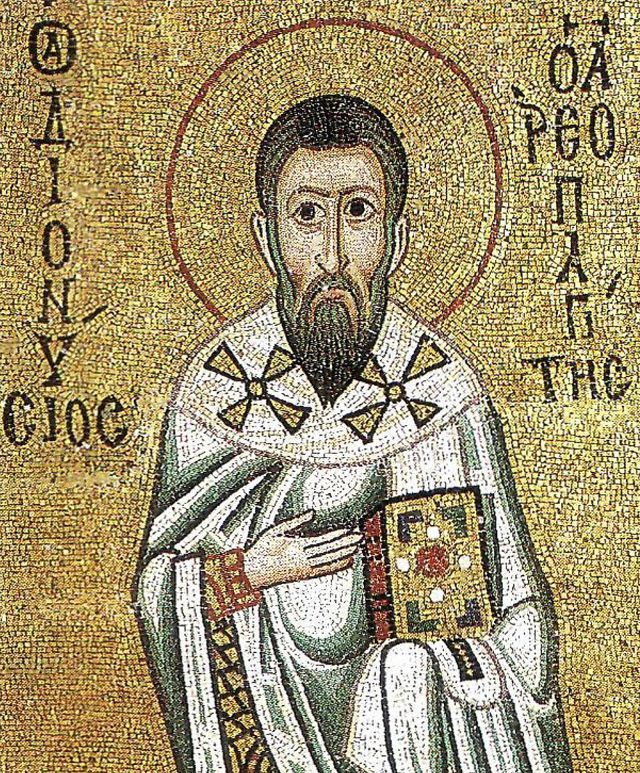
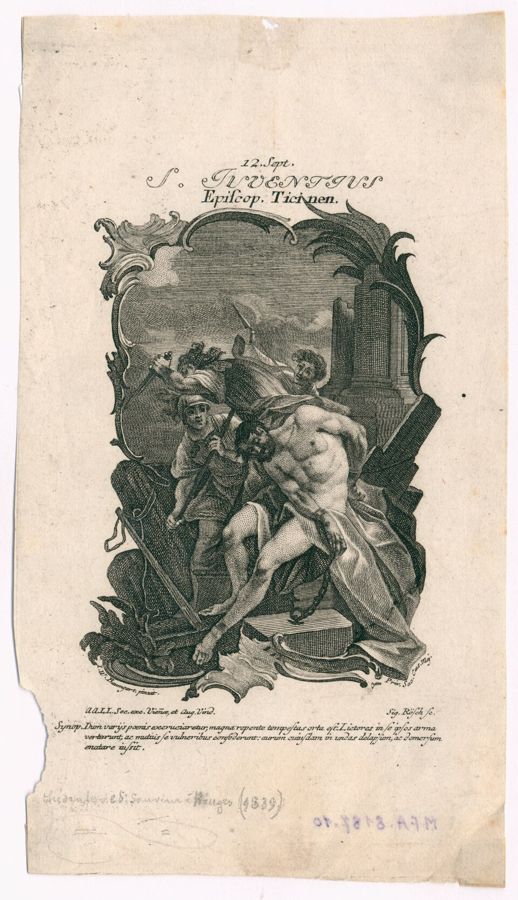
St. Juventius

St. Juventius

February 8 · Bishop, Confessor
Sts. Dionysius, Æmilian and Sebastian

Sts. Dionysius

February 8 · Martyrs
P

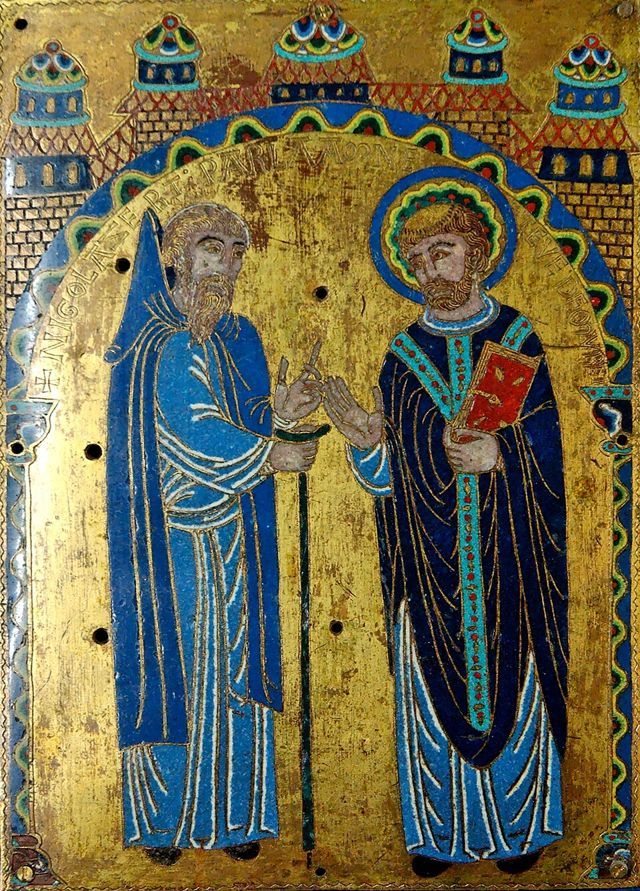
St. Paul of Verdun

February 8 · Bishop
← All 1726 saints in the library
Sources & notes

Feast-day sources

Story sources

Sources

Credits

Image: Stephen Muret Hugh Lacerta MNMA Cl956a.jpg · Unknown artistUnknown artist · Public domain, via Wikimedia Commons

From Sabine Baring-Gould, The Lives of the Saints, new edition in 16 vols. (London: John C. Nimmo, 1897), digitized text from Project Gutenberg. Public domain.

Image: Unknown artistUnknown artist, Wikimedia Commons (Public domain)

From Sabine Baring-Gould, The Lives of the Saints, new edition in 16 vols. (London: John C. Nimmo, 1897), digitized text from Project Gutenberg. Public domain in the United States. Reproduced unedited, except for short bracketed notes in grey that we added to explain names and terms (“S.” is the old abbreviation for Saint). Some history and judgments reflect 19th-century scholarship.